
19kg Gas Cylinder: Cape Town Homeowner's Guide (2026)

Imagine it's a freezing July evening in Cape Town and your heater suddenly dies because you've run out of fuel. Most homeowners dread the thought of lugging a heavy replacement through the rain or wondering if they've secured the valve correctly. Choosing a 19kg gas cylinder offers a reliable middle ground for your home energy needs. It provides enough capacity to last through the worst cold snaps without the massive footprint of industrial tanks.
We understand that you want a seamless experience that keeps your kitchen and living room running smoothly. You shouldn't have to worry about heavy lifting or technical safety checks on your own. This guide explains why this specific size is the ideal choice for domestic stoves and heaters in 2026. We'll cover everything from bottle longevity and regulator compatibility to how to organise professional installation. By the end, you'll know exactly how to keep your home powered safely and efficiently all year round.
Key Takeaways
- Identify why the 19kg gas cylinder is the most efficient choice for powering large hobs and geysers during a cold Cape Town winter.
- Compare physical dimensions and capacity to determine if this mid-sized bottle fits your home's storage space and energy requirements.
- Learn how to perform vital safety checks, such as the soapy water test, to ensure your connection remains leak-free and secure.
- Discover the benefits of professional delivery services that handle the heavy lifting and connection to ensure your appliances are ready for immediate use.
- Understand the straightforward exchange process to keep your energy supply consistent and reliable without any domestic stress.
Understanding the 19kg Gas Cylinder: Specifications and Capacity
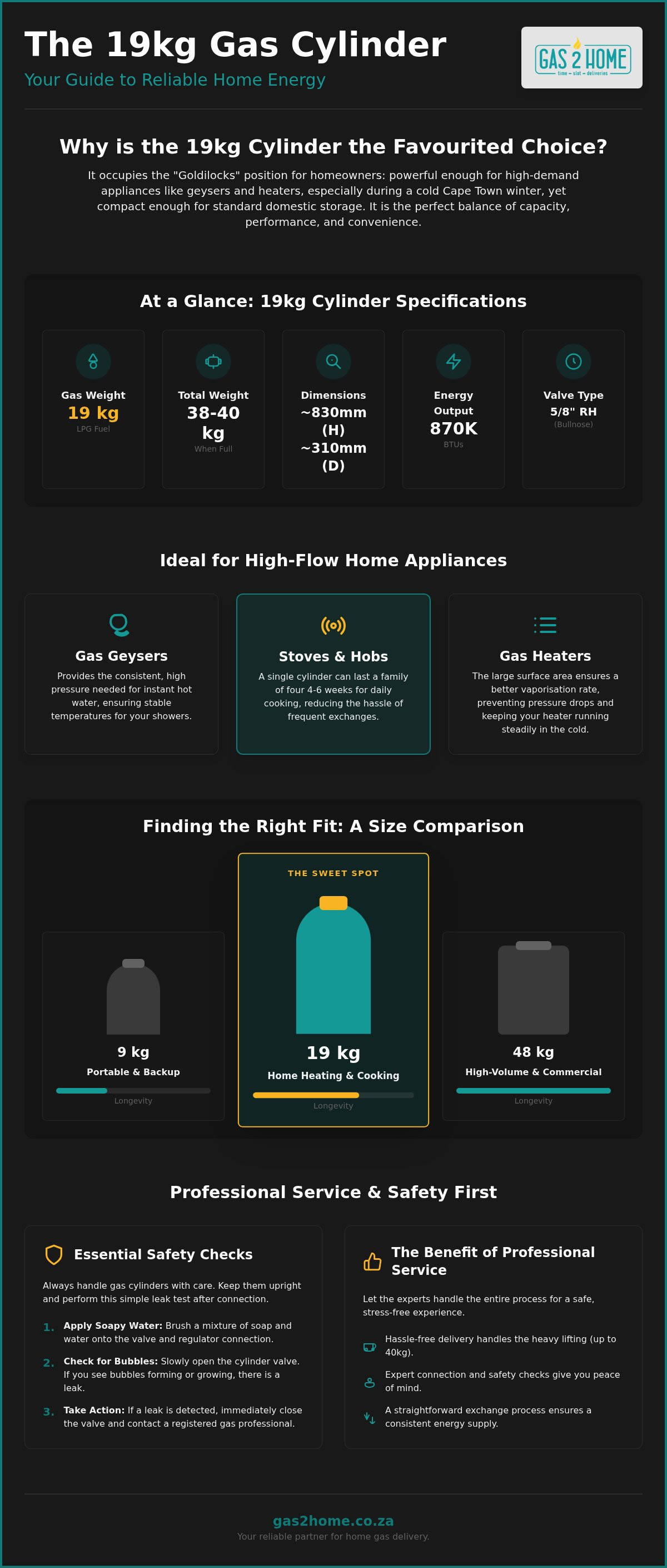
The 19kg gas cylinder is the standard energy solution for Cape Town homeowners who need more than just a backup for load-shedding. It occupies a "Goldilocks" position in the market; it's large enough to power a whole house but small enough to fit into most standard external gas cages. This unit stores liquefied petroleum gas under pressure, providing a consistent flow of energy for everything from hot showers to evening meals.
When you order a 19kg gas cylinder, it's vital to understand that the "19kg" label refers specifically to the weight of the gas inside. It doesn't account for the heavy steel casing that protects the fuel. Knowing the total weight and physical footprint helps you prepare a safe, accessible spot for your installation before our delivery team arrives.
Total Weight and Dimensions
Most 19kg units stand roughly waist-high, measuring between 800mm and 830mm in height with a diameter of approximately 310mm. You should plan your storage area on a flat, stable surface that allows for easy access. A full bottle typically weighs between 38kg and 40kg, which makes professional delivery a sensible choice for most households. You can check the "tare weight" stamped on the metal shroud near the valve to see exactly how much the empty steel container weighs; adding 19 to this number gives you the total weight when full. A full 19kg cylinder provides approximately 870,000 BTUs of energy, offering significant longevity for high-demand household appliances.
Valve and Regulator Compatibility
Safety and consistency are the priorities when connecting your appliances. In South Africa, a 19kg gas cylinder uses a standard 5/8" Right Hand (Internal) valve. This is the same connection type found on 9kg and 48kg bottles, meaning you likely won't need to purchase a new regulator if you're switching between these sizes. The bullnose regulator fits directly into the valve to create a secure, airtight seal.
Always ensure your cylinder remains in a vertical, upright position during use and storage. Never lay the bottle on its side while it's connected to an appliance. Keeping it upright ensures that the liquid gas inside can vapourise correctly. If the bottle is tilted, liquid could enter the hose and regulator, which creates a significant safety risk and can damage your equipment. Our team checks the orientation and connection of every bottle we deliver to give you total peace of mind.
Primary Uses: Why the 19kg Size is Favourited for Home Heating and Cooking
Cape Town winters are notoriously wet and cold, making reliable domestic energy a top priority for every household. The 19kg gas cylinder has become the local standard because it handles high-draw appliances without flinching. While a smaller bottle might struggle to provide enough pressure during a cold snap, this mid-sized unit keeps the flame steady. It offers the perfect balance between high capacity and manageable storage.
One technical reason for its popularity is the vaporisation rate. As you use gas, the liquid inside the cylinder must boil into a vapour to reach your appliance. This process draws heat from the metal walls of the bottle. In a small 9kg bottle, the surface area is limited. If you draw gas too quickly, the bottle can "freeze up," causing the pressure to drop and your heater to sputter. The larger surface area of a 19kg unit ensures a consistent flow of fuel even when the temperature hits single digits.
LPG for Gas Geysers and Stoves
High-flow gas geysers require a significant volume of fuel to heat water instantly for your morning shower. Most professional installers recommend a 19kg bottle as the minimum starting point for these systems. It provides the necessary pressure to keep the water temperature stable throughout the house. Using this size is also more cost-efficient over time. You'll pay for fewer deliveries and spend less time managing exchanges compared to smaller units.
For a typical family of four using gas for both daily cooking and water heating, a single bottle usually lasts between four and six weeks. This longevity removes the domestic stress of frequent refills. If you're still weighing up your options, you can read our detailed breakdown on what size gas bottle do I need to see how different sizes compare for your specific appliances.
The Best Choice for Gas Heaters
When Cape Town faces prolonged load-shedding during a winter storm, a gas heater becomes an essential tool rather than a luxury. A 19kg gas cylinder powers large indoor space heaters for much longer durations than portable 9kg alternatives. It's designed to sit outside in a cage, piped into your living area, which keeps the bulky bottle out of sight while providing maximum warmth.
- Eliminate the risk of running out of fuel during a cold weekend.
- Ensure your gas stove has a consistent flame for complex meals.
- Maintain high-pressure hot water for multiple bathrooms.
- Reduce the frequency of heavy lifting and cylinder swaps.
Peace of mind comes from knowing your home remains functional regardless of the power grid's status. You can arrange a 19kg gas delivery through our simple WhatsApp service to ensure you're prepared for the next cold front. Our team handles the connection, so you don't have to worry about the technical details.
Comparing Sizes: Is a 19kg Bottle Right for Your Household?
Choosing the right fuel capacity depends on your daily consumption and available storage space. The 19kg gas cylinder sits perfectly between the small portable bottles used for camping and the massive industrial tanks found at commercial sites. It represents the "sweet spot" for domestic energy. It's high enough in capacity to power a busy home for weeks, yet it remains the largest size that a single delivery professional can safely move and connect to your system. This makes it a highly efficient choice for those who want to avoid the hassle of frequent refills without committing to an industrial-sized installation.
Deciding whether this size fits your lifestyle involves looking at how you use energy every day. If you find yourself running to the petrol station every few weeks to swap a small bottle, it's likely time to upgrade. A larger cylinder provides a more stable pressure flow and better value over the long term. We've broken down the key differences between this mid-sized workhorse and its smaller or larger counterparts to help you make an informed choice.
19kg vs 9kg: The Domestic Debate
The primary difference between these two sizes is the intended application. A 9kg bottle is excellent for a standard Cape Town braai or a small portable heater that you move from room to room. However, for a permanent kitchen stove or a built-in gas geyser, the smaller bottle often falls short. Whilst the initial deposit for a 19kg cylinder is higher, the cost per kilogram of gas is usually more economical. You'll also save on delivery fees over the year because you're exchanging your bottle half as often. If you only need fuel for outdoor cooking, our 9kg gas cylinder guide covers those portable options in more detail.
19kg vs 48kg: When to Level Up
Some homeowners consider the 48kg units to ensure they never run out of fuel. These massive tanks are generally reserved for restaurants or large estates with extensive, whole-home central heating systems. For a standard household, a 48kg tank is often overkill and requires a significant amount of dedicated outdoor space and specialized cages. It also requires two people to handle safely. In contrast, the 19kg model fits into compact gas cages and provides more than enough fuel for a family of four. If you're managing a business or a very large property, you can refer to our 48kg gas guide to see if a commercial-scale solution is necessary.
Ultimately, the 19kg gas cylinder offers the best balance of longevity and practicality for the average Cape Town home. It provides the peace of mind that comes with a large fuel reserve while remaining easy for our team to deliver and install in your existing setup. It's the most reliable way to ensure your hot water and cooking hobs stay functional throughout the year.
Safety and Professional Connection: Handling Your 19kg Cylinder
Safety starts the moment your fuel arrives at your doorstep. You must always keep your 19kg gas cylinder in a vertical, upright position. The internal design relies on liquid gas sitting at the bottom while the valve draws vapour from the top. If you tilt or lay the bottle down, liquid could escape into the regulator. This creates a significant fire risk and can cause your appliances to flare or malfunction. Always ensure the bottle sits on a flat, stable surface to prevent it from tipping over.
Once you've connected the bottle, verify the seal yourself using the "soapy water test." Mix a small amount of dishwashing liquid with water and apply it to the valve and regulator connection. If you see growing bubbles, you have a leak. Turn the valve off immediately and tighten the connection. Never use a lighter or any open flame to check for leaks. This simple, proactive check ensures your home remains safe throughout the high-demand winter months.
Pay close attention to the rubber "nose" or O-ring on your regulator. This small component is the primary seal between the bottle and your gas line. If the rubber looks cracked, brittle, or flattened, it won't create an airtight seal. Replace the O-ring or the entire regulator if you notice any signs of wear. A worn O-ring is the most common cause of minor gas leaks in domestic setups, and catching it early prevents domestic stress and wasted fuel.
Cape Town Storage Considerations
Cape Town's coastal environment presents unique challenges for gas equipment. Salt air can lead to rapid corrosion of the steel bottle and the brass valve components. Store your cylinder in a cool, sheltered area that is protected from direct rain but stays well-ventilated. Never store gas bottles near drains, pits, or basement entrances. LPG is heavier than air and will pool in low spots if a leak occurs. In South Africa, the legal limit for indoor LPG storage is a maximum of 19kg per household. If you use this size indoors, ensure the room has constant ventilation to prevent the buildup of dangerous fumes.
The Value of Professional Connection
Handling a heavy bottle can be daunting, and mistakes during installation are easy to make. Our team provides a Gas Connection Service with every delivery to remove this burden and ensure your system is safe. We check that the threads align perfectly; you should never force a connection if it feels tight. Forcing the valve leads to cross-threading and permanent damage. We also inspect the expiry date on your orange gas hoses. These hoses typically need replacement every two to three years to prevent the rubber from perishing or cracking over time.
Reliable 19kg Gas Delivery and Exchange in Cape Town
Running out of fuel shouldn't disrupt your entire day or leave your family in the cold. We've designed our service to be as frictionless as possible, moving quickly from your initial request to a warm home. Our same-day delivery service ensures that your 19kg gas cylinder arrives exactly when you need it, especially during those busy winter months. We operate from Monday to Saturday, providing a reliable safety net even for weekend emergencies. You don't need to wait around all day; we provide scheduled time slots so you can keep your schedule on track and plan your household activities with confidence.
The exchange process is straightforward and efficient. We swap your empty 19kg gas cylinder for a certified full one, ensuring you only pay for the gas and the professional service. For added convenience, we offer payment on delivery via card or cash, or you can settle up through our secure online platform before we arrive. Most of our customers prefer using WhatsApp for its speed and simplicity. It allows for direct, real-time communication with our local team who understand the specific logistics of Cape Town's streets and neighbourhoods. This local expertise ensures we never get lost and always arrive on time.
Our Cape Town Service Areas
We cover a wide range of neighbourhoods to ensure no household is left without energy. Whether you're based in Sunset Beach, Milnerton, or the busy CBD, our drivers are already familiar with your area. You can find a full list of our coverage on our reliable gas delivery Cape Town page. By focusing on local logistics, we maintain a fast-paced rhythm that larger, distant corporations simply can't match. Our goal is to provide peace of mind through consistent performance and a strong local presence. We understand the urgency of a cold house, so we prioritise efficiency in every route we plan.
How to Order Your 19kg Exchange
Getting your gas delivered is a simple three-step process that respects your time. First, reach out via our website or send us a quick message on WhatsApp. Tell us how many cylinders you need and provide your delivery address. If you don't have an empty bottle to swap, don't worry. We use a transparent deposit system that allows you to start your journey with a brand-new unit immediately. This removes the barrier for new homeowners who are setting up their gas systems for the first time.
Once your order is confirmed, we'll assign you a specific delivery slot that fits your day. When our professional driver arrives, they won't just leave the heavy bottle on your pavement or in your driveway. We stand by our "we connect it for you" promise. Our team handles all the physical assistance and performs the safety checks mentioned earlier in this guide. This ensures your appliances are ready to use the moment we leave, removing all domestic stress from the transaction. Trust us to handle the heavy lifting while you focus on what matters most in your home.
Secure Your Home Energy for the Season Ahead
Choosing a 19kg gas cylinder is the most efficient way to keep your Cape Town home running smoothly throughout the year. It provides the high capacity needed for geysers and large stoves while remaining compact enough for domestic storage. You don't have to struggle with heavy lifting or technical safety checks when you choose a reliable local partner. We've explored why this size is the standard for modern households and how to ensure your connection remains leak-free and secure at all times.
Stop worrying about running out of fuel in the middle of a cold winter night. Our team offers same-day delivery across the city from Monday to Saturday, with a professional connection service included in every visit. You can even pay on delivery for total peace of mind. Order your 19kg gas cylinder exchange for Cape Town delivery here and let us handle the logistics for you. It's time to enjoy the convenience of a steady, reliable energy supply without any domestic stress.
Frequently Asked Questions
How long does a 19kg gas cylinder last for cooking?
A 19kg gas cylinder typically lasts between four and six months for a standard family of four using a four-plate gas hob daily. This timeframe varies based on how often you use the oven and the size of the burners you prefer. It's a significantly more efficient choice than smaller bottles, reducing the frequency of exchanges. Heavy users who cook multiple meals every day might find it lasts closer to three months.
Can I use a 19kg gas bottle for my indoor gas heater?
Yes, you can use this size for an indoor gas heater, provided it's connected correctly and the room stays well-ventilated. Most portable heaters are designed for 9kg bottles, but a 19kg unit can be piped in from an external position. This is often the preferred setup for large heaters during a Cape Town winter. It ensures a consistent heat output without the risk of the bottle freezing up during long periods of use.
What is the current 19kg gas refill price in Cape Town?
Gas prices in South Africa are regulated by the government and change on the first Wednesday of every month. These fluctuations depend on international petroleum prices and the Rand-Dollar exchange rate. You should check the latest Department of Mineral Resources and Energy (DMRE) schedule for the most accurate monthly rate. We always align our pricing with these official regulations to ensure you receive a fair and transparent deal every time.
Do I need a different regulator for a 19kg gas bottle?
No, you generally don't need a different regulator if you're already using a standard South African bullnose regulator. The 19kg gas cylinder uses the same 5/8" Right Hand (Internal) valve found on 9kg and 48kg bottles. Always check that your current regulator is in good condition and that the rubber O-ring isn't perished. If you're unsure, our delivery team can inspect your equipment during the connection process.
Can I store a 19kg gas cylinder inside my house?
You can legally store a maximum of 19kg of LPG inside a South African household. However, it's safer to store the bottle outside in a dedicated, well-ventilated gas cage if possible. If you must keep it indoors, ensure the room has constant airflow and the bottle stays away from any heat sources or drains. Never store gas in a basement or any area where leaked gas could pool on the floor.
What happens if I have a 9kg empty but want a 19kg full bottle?
You can upgrade to a larger size, but you'll need to pay the initial deposit for the 19kg casing. We don't typically swap a 9kg empty for a 19kg full unit as a direct exchange because the steel bottles belong to different deposit categories. Once you've paid the new deposit, you'll enter the standard exchange cycle for that size. This is a great long-term investment for households with increasing energy needs.
How do I know when my 19kg gas cylinder is nearly empty?
The most reliable way to check the level is the warm water test. Pour a jug of warm water down the side of the bottle and wait a moment. Feel the metal; the part of the cylinder containing liquid gas will feel cold to the touch, while the empty part will stay warm. You might also notice the flame on your stove turning orange or the pressure dropping as your 19kg gas cylinder runs low.
Is a 19kg gas bottle too heavy to move by myself?
A full 19kg cylinder weighs approximately 38kg to 40kg, which can be difficult and dangerous to move without the right equipment. We recommend letting our professional delivery team handle the heavy lifting for you. We don't just drop the bottle off; we move it to your designated storage area and ensure it's connected safely. This service removes the risk of personal injury and ensures your system is set up correctly from the start.