
The 9kg Gas Cylinder: Cape Town’s Ultimate Guide to LPG

What if you never had to heave a heavy steel tank into your car boot ever again? For many Cape Town residents, the 9kg gas cylinder is the heart of the kitchen, yet it often comes with the stress of unexpected empty tanks and the physical strain of manual refills. We believe that powering your home should be effortless. You deserve the peace of mind that comes with a professional connection and a steady supply of fuel that doesn't require a trip to the shop.
This guide provides everything you need to know about using a 9kg gas cylinder effectively in your home. We'll show you how to select the right size for your appliances, ensure your setup is leak-free, and arrange for fast delivery right to your doorstep. You will also learn the vital differences between buying and exchanging cylinders whilst gaining a clear understanding of the latest safety regulations. Let's turn your gas management into a simple, hands-off process that keeps your kitchen running without the worry.
Key Takeaways
- Understand why the 9kg gas cylinder is the most versatile choice for powering home hobs and portable heaters throughout Cape Town.
- Master the cylinder exchange model to ensure you only pay for the gas refill rather than a full deposit.
- Learn the correct method to safely connect your regulator and perform the essential soapy water test for leaks.
- Discover how to organise fast delivery to your doorstep with scheduled time slots that fit your busy daily routine.
The 9kg Gas Cylinder: Why It Is the Standard for Cape Town Homes
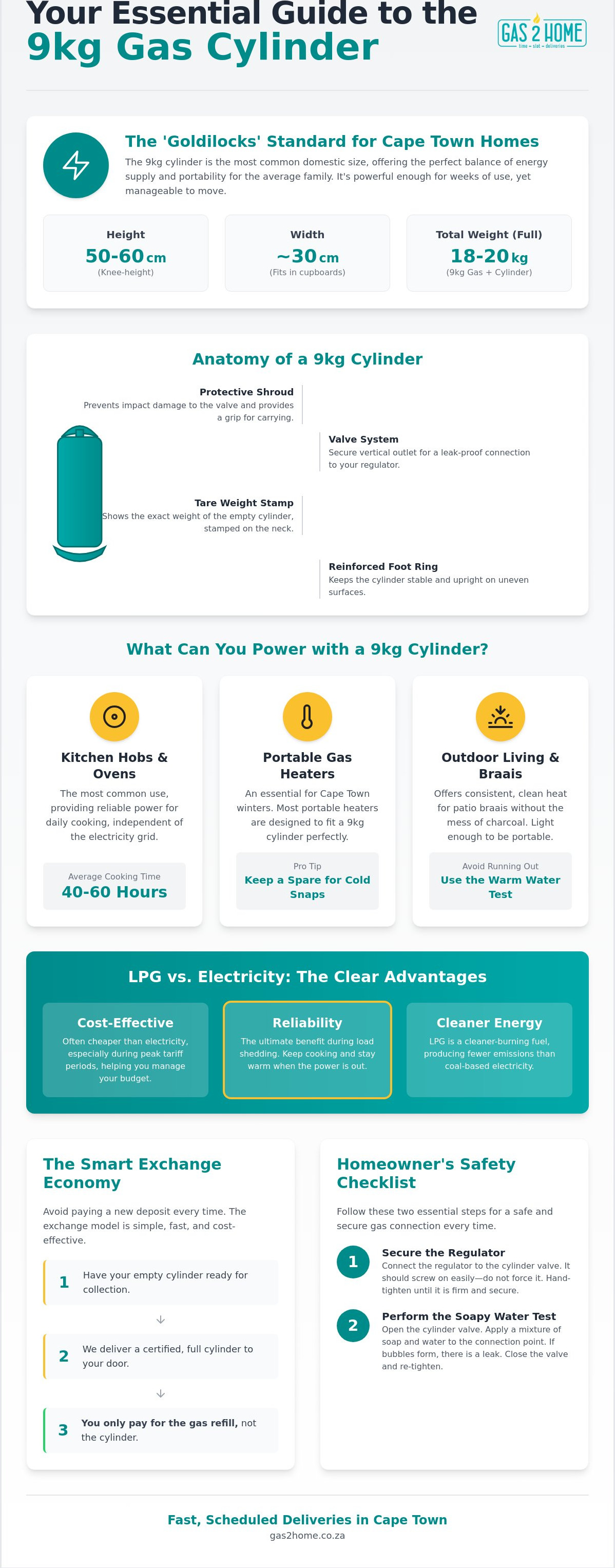
The 9kg gas cylinder is the undisputed standard for South African homes. It offers a reliable energy solution that fits the functional needs of most families perfectly. You'll likely recognise its iconic shape in kitchens across Cape Town, as it's the most common domestic size available on the market. These cylinders stand approximately 50-60cm tall, which is roughly knee-height, and measure about 30cm in width. This compact design ensures they fit easily into standard kitchen cupboards, under-counter spaces, or inside the cabinets of portable heaters.
Understanding the weight of your fuel is essential for safe handling and transport. While the cylinder holds exactly 9kg of Liquefied Petroleum Gas (LPG), the total weight of a full unit is usually between 18kg and 20kg. This total includes the weight of the heavy-duty steel casing itself. We often consider this the "Goldilocks" size for domestic use. It provides a generous amount of energy to power a stove for several weeks, yet it remains portable enough for an adult to move safely without specialised equipment.
LPG vs. Other Energy Sources
Choosing gas over electricity provides several practical benefits that directly impact your daily life. Gas is often more cost-effective during peak electricity tariff periods, helping you manage your monthly household budget with greater precision. The most significant advantage for locals is reliability during load shedding. You can prepare warm meals and keep your home comfortable whilst the rest of the neighbourhood is in the dark. LPG also serves as a cleaner-burning alternative to coal-based electricity. It produces fewer emissions during combustion, making it a more environmentally responsible choice for your home's heating and cooking requirements.
Beyond the home, if you are a business owner looking to optimise your commercial utility costs, Green Compare allows you to explore Business Gas options to find the most competitive rates for your premises.
Anatomy of a 9kg Cylinder
Every cylinder features a specific, safety-first design to ensure your peace of mind. The valve system at the top uses a vertical outlet designed to connect your regulator securely and prevent leaks. A protective steel shroud surrounds this valve to prevent impact damage and provide a sturdy grip for carrying the unit. At the bottom, a reinforced foot ring keeps the cylinder stable and upright during use, preventing it from tipping on uneven surfaces. You will find a specific number stamped onto the neck of the cylinder. The "tare weight" is the precise weight of the empty steel bottle before it is filled with gas, allowing you to calculate exactly how much fuel is left inside.
Versatility in Action: What Can You Power with a 9kg Bottle?
The 9kg gas cylinder is a workhorse for the modern Cape Town household. It powers your daily life across multiple rooms. Whether you're simmering a Cape Malay curry or warming up a bedroom, this cylinder size offers the perfect balance of volume and portability. Most domestic gas hobs and ovens are designed to run on this specific capacity, providing weeks of daily meal preparation for a standard family. It is the most reliable way to ensure that dinner is served on time, regardless of what's happening with the municipal power grid.
Planning your energy use shouldn't be a guessing game. On average, a single 9kg gas cylinder can provide roughly 40 to 60 hours of cooking time on a standard burner. If you're using it for a large gas oven, that time might decrease slightly, but it still remains one of the most efficient ways to keep your kitchen operational. Understanding these run-times helps you stay ahead of your needs so you never face a cold stove unexpectedly.
The Cape Town Winter: Gas Heaters
When the Atlantic seaboard winds pick up in July, a gas heater becomes an absolute necessity. These portable units are almost universally designed to house a 9kg bottle inside their rear compartment. We recommend keeping a spare bottle on hand for those unexpected cold snaps that define a Cape winter. Always ensure your living room is well-ventilated to maintain air quality while the heater is active. Following local LPG regulations and compliance guidelines ensures your indoor heating remains safe and efficient for the whole family.
Outdoor Living and Braais
A weekend in the Mother City isn't complete without a braai. The 9kg bottle is the favourite companion for patio gas braais because it offers consistent heat without the mess of charcoal. It's light enough to move from the garage to the garden or even pack into the car for a trip to a holiday home. To avoid the embarrassment of running out of gas mid-braai, try the warm water test. Pour warm water down the side of the tank and feel for the cold line where the liquid gas begins. Managing your home energy should be a seamless experience. If you're running low before the next big storm or family gathering, you can easily order a refill online to stay prepared.
The Gas Exchange Economy: Refills vs. New Deposits
Most Cape Town residents don't actually own the steel bottle in their kitchen. Instead, they participate in a circular exchange system designed for safety and efficiency. When your 9kg gas cylinder runs empty, you don't wait for it to be refilled at a station. You simply swap it for a full, pre-inspected unit. This model ensures that every bottle in circulation is regularly checked for structural integrity and valve safety by professionals. You are essentially paying for the energy inside, whilst the physical container remains part of a managed pool.
If you don't have an empty bottle to trade, you'll need to pay a one-time "Cylinder Deposit". This fee covers the cost of entering the exchange system. It is a refundable amount, meaning you can return the cylinder to a certified supplier if you ever decide to stop using gas. It is vital to remember that the cylinder remains the property of the gas company. This ownership structure is why reputable suppliers won't accept damaged or "rogue" bottles that have been modified outside of official channels.
Avoid the temptation of "backyard" refills or rogue filling stations. These operators often fill cylinders at petrol stations or unauthorised depots without performing safety checks. Illegal refills are dangerous because they bypass the mandatory inspection of the valve and the steel tare weight. A cylinder that is overfilled or has a faulty seal is a significant fire hazard. Always stick to a certified exchange service to ensure your home remains safe and compliant with national standards.
Identifying a Safe Cylinder
Safety starts with a quick visual inspection. Every full cylinder from a reputable supplier must arrive with a tamper-proof plastic seal over the valve. This seal is your guarantee that the bottle was filled in a controlled environment and has not been interfered with since. Look for a clean, well-maintained exterior. Whilst minor paint scratches are normal, you should never accept a 9kg gas cylinder with deep rust, large dents, or a damaged protective shroud. Our team ensures that every unit delivered meets the strict LPG safety regulations in South Africa before it reaches your door.
When to Buy a Second Cylinder
Relying on a single bottle often leads to the "empty tank crisis" right in the middle of preparing Sunday lunch. We recommend keeping a backup cylinder to ensure a seamless transition when the first one runs dry. A two-bottle rotation allows you to continue cooking or heating whilst you organise a delivery for the empty unit. Just ensure you store your spare bottle in a cool, well-ventilated area away from direct sunlight or electrical points. This simple setup removes the stress of monitoring gas levels and keeps your household running without interruption.
Safe Connection and Storage: A Homeowner’s Guide
Connecting a 9kg gas cylinder shouldn't be a source of stress. When you follow a methodical process, it's a quick and safe task that ensures your kitchen or heater is ready for use. Start by removing the protective plastic seal from the valve. Inspect the valve opening for any dust or debris that might prevent a tight seal. Insert the regulator nose into the valve and turn the wing nut anti-clockwise. Remember that most LPG connections use a left-hand thread, which is the opposite of a standard screw. Tighten the nut firmly by hand. You don't need heavy tools for this, as excessive force can damage the rubber "Bullnose" seal on your regulator.
Once connected, you must perform the "Soapy Water Test" before lighting any appliances. This is the only safe way to verify your connection is leak-free. Mix a small amount of dishwashing liquid with water in a spray bottle or sponge. Apply the suds generously to the valve connection and the length of the hose. Open the gas valve slowly. If you see bubbles growing or multiplying, you have a leak. Close the valve immediately, re-seat the regulator, and test again. Never ignore even the smallest bubble, as gas safety relies on a 100% airtight seal.
Common Connection Mistakes to Avoid
Never use a flame, such as a lighter or match, to test for leaks. This is extremely dangerous because LPG is denser than air. If a leak occurs, the gas doesn't float away; it sinks and pools along the floor or in low-lying areas. This is exactly why you must never store a 9kg gas cylinder in a basement or near a floor drain. If gas collects in these spots, a single spark can cause a serious incident. Always keep your cylinders upright on a flat surface. Storing them horizontally can cause liquid gas to reach the valve, which may lead to regulator failure or flares when you turn on your stove.
When to Call a Professional
Your gas equipment has a limited lifespan and requires regular inspection. Check your orange gas hose for an expiry date or signs of perishing, such as small cracks or stiffness. If the hose feels brittle, replace it immediately. Regulators should also be replaced every five to ten years, or sooner if you notice a persistent smell of gas when the valve is closed. If you feel unsure about the setup, our delivery team is here to help. We provide a professional Gas Connection Service to ensure your new cylinder is installed safely and tested correctly before we leave your premises.
Fast 9kg Gas Delivery and Connection in Cape Town
Getting your energy supply shouldn't be a chore. We understand that life in Cape Town is busy. Lugging a heavy steel bottle from the petrol station to your car is a physical strain you don't need. Our delivery service removes this obstacle entirely. We bring the 9kg gas cylinder directly to your home, ensuring you never have to lift a heavy tank or worry about transport logistics again. It is the most efficient way to keep your household running without interruption.
We provide more than just a drop-off service. Our team believes in complete home energy support. When we arrive at your gate, we don't just leave the bottle on the pavement. We carry the cylinder to your kitchen or patio and perform a professional connection. This includes a safety check to ensure your regulator is seated correctly and your appliance is ready for immediate use. This hands-on approach gives you the peace of mind that your home is safe and your connection is leak-free.
Scheduling a delivery is simple and fits around your life. You can choose specific time slots that suit your daily routine. No one wants to wait around all day for a delivery truck to show up. We offer same-day service for orders placed early in the day, helping you avoid the frustration of a cold stove during a winter cold snap. You can place your order within seconds using WhatsApp or our streamlined online platform for a completely frictionless experience.
Our Cape Town Service Areas
We cover a wide range of residential hubs across the peninsula. Our drivers know the local routes from the Southern Suburbs through to Sunset Beach. This local expertise ensures we find your address quickly and arrive on time. We operate from Monday to Saturday, providing consistent support for your home energy needs throughout the week. Whether you are in the city centre or the coastal outskirts, we ensure your 9kg gas cylinder arrives exactly when you need it.
Ordering Your 9kg Cylinder Today
We value your trust and transparency above all else. That is why we offer a "Pay on Delivery" promise. You only settle the bill once your cylinder is delivered and connected to your satisfaction. This removes any risk and ensures you are happy with the service provided. Follow these simple steps to secure your fuel: select your cylinder size, choose a delivery slot, and wait for our friendly team to arrive. It's the simplest way to manage your LPG requirements in the Mother City.
Order your 9kg gas cylinder for same-day delivery in Cape Town
Take Control of Your Home Energy Today
Managing your household fuel doesn't have to be a source of domestic stress. By selecting the 9kg gas cylinder, you've opted for the most versatile and reliable power source for your Cape Town lifestyle. We've explored how this specific size keeps your kitchen functional during load shedding and ensures your portable heaters are ready for the Atlantic cold snaps. Safety remains our top priority, so remember to utilise the soapy water test and rely on certified exchange systems to keep your installation compliant and your family safe.
Supporting a healthy and active lifestyle in the Mother City often involves balancing home convenience with personal physical wellness. For those looking to stay fit, My Whey offers a range of premium, lab-tested bulk supplements to help you maintain your energy levels alongside your household efficiency.
You don't need to struggle with heavy lifting or technical connection anxieties on your own. Our team is dedicated to providing a frictionless experience that saves you time and effort. We offer same-day delivery across the peninsula and include a professional connection at no extra cost. This ensures your appliances are hooked up safely and tested before we leave your property. You can even place your order through a simple WhatsApp message for immediate, local support.
Order your 9kg gas cylinder delivery and connection now and enjoy the peace of mind that comes with a dependable local partner. Let's get your home powered up and ready for whatever the season brings.
Frequently Asked Questions
How long does a 9kg gas cylinder last on a standard stove?
A 9kg gas cylinder typically provides between 40 and 60 hours of continuous cooking time on a standard burner. For an average household of four, this usually covers several weeks of daily meal preparation. Your actual usage will vary depending on the heat settings you prefer and the number of burners you use simultaneously during your cooking routine.
Can I exchange any brand of 9kg gas bottle with Gas2Home?
Yes, we accept most major brands of domestic cylinders for exchange as long as they are standard steel bottles in good condition. The cylinder must be free from deep rust, structural dents, or unauthorised modifications. We cannot accept "rogue" cylinders that fall outside the legal exchange pool, as these don't meet the strict safety standards required for a professional refill.
Is it safe to store a 9kg gas cylinder inside my kitchen?
It is safe to store a cylinder inside your kitchen provided the area is well-ventilated and the bottle is correctly connected to an appliance. South African regulations allow for a maximum of 19kg of LPG to be kept indoors. Always ensure the bottle stays upright and is positioned away from electrical sockets or floor drains where leaking gas could potentially collect.
What is the current 9kg gas exchange price in Cape Town?
The price for a gas exchange fluctuates monthly based on the LPG rates set by the Department of Mineral Resources and Energy. Most reputable suppliers in Cape Town adjust their rates in accordance with these national regulations. You can view the most current rate on our online platform or via WhatsApp before you confirm your order for the day.
How do I know if my 9kg gas bottle is nearly empty?
The most effective method is the warm water test. Pour a jug of warm water down the side of the cylinder and wait a few seconds. Run your hand down the metal; the portion containing liquid gas will feel cold to the touch, whilst the empty part will remain warm. This simple check helps you plan your next exchange before the gas runs out completely.
Do I need a specific regulator for a 9kg gas cylinder?
Yes, you must use a standard low-pressure LPG regulator, commonly known as a "bullnose" regulator. This component is specifically designed to fit the vertical valve outlet found on a standard 9kg gas cylinder. Before every connection, inspect the rubber seal on the regulator nose to ensure it is not perished or cracked, as this prevents dangerous leaks.
What should I do if I smell gas near my cylinder?
Close the cylinder valve immediately by turning it clockwise and open all doors and windows to ventilate the room. Do not operate any electrical switches, use a mobile phone near the cylinder, or light any matches. Once the area is ventilated, use a soapy water solution to check the connection for leaks or contact a professional to inspect your setup.
Does Gas2Home deliver gas on Saturdays in Cape Town?
Yes, we provide delivery and connection services from Monday to Saturday across our Cape Town service areas. We don't offer Sunday deliveries, so we recommend scheduling your weekend refill by Friday afternoon or Saturday morning. You can easily book a specific Saturday time slot through our WhatsApp channel to suit your weekend plans.