
48kg Gas for Restaurants in Cape Town: The Complete Commercial LPG Guide (2026)

Imagine it's 7:30 PM on a Friday night in a packed Bree Street bistro when the burners suddenly flicker and die. Every chef knows the cold dread of running out of fuel right in the middle of the dinner rush. Securing a reliable supply of 48kg gas for restaurants Cape Town isn't just about keeping the stoves hot; it's about protecting your reputation and your bottom line. You need a system that works as hard as your kitchen staff does without the constant worry of empty cylinders or delivery delays.
We know that managing a commercial kitchen is stressful enough without having to track gas levels or decode complex safety regulations. You want a fuel solution that's efficient, cost-effective, and fully compliant with the latest Western Cape fire safety bylaws. This guide shows you how to optimise your restaurant's energy usage and ensures you never miss a seat during peak service. We'll break down the SANS 10087-1:2024 standards, explain how to lower your cost-per-hour, and help you set up a seamless supply chain that lets you focus on the food instead of the fuel.
Key Takeaways
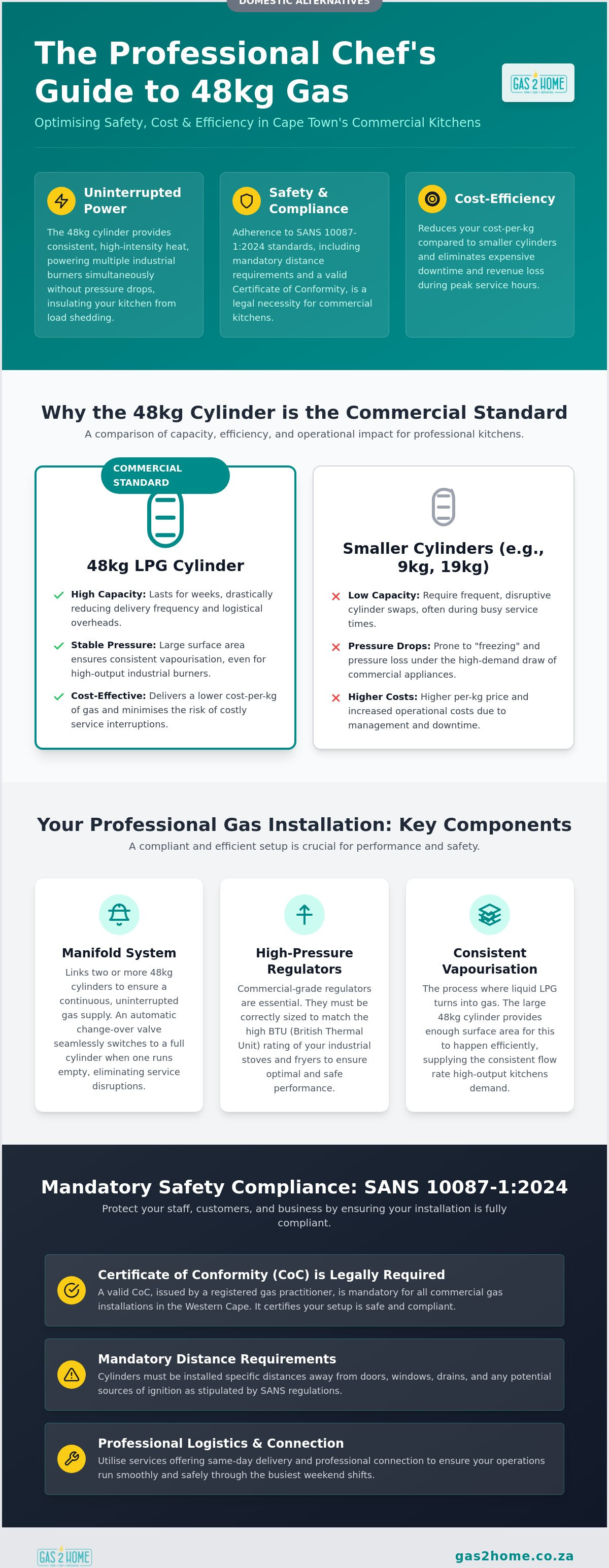
- Learn why the 48kg cylinder is the industrial standard for Cape Town's commercial kitchens, offering superior pressure and longevity compared to smaller alternatives.
- Discover how switching to a managed supply of 48kg gas for restaurants Cape Town reduces your cost-per-kg and eliminates expensive downtime during service.
- Understand the technical requirements for manifold setups and LPG vaporisation to ensure consistent heat for high-output industrial fryers and burners.
- Master the latest SANS 10087-1:2024 safety regulations, including mandatory distance requirements and the legal necessity of a valid Certificate of Conformity.
- Streamline your kitchen logistics with same-day delivery and professional connection services that keep your operations running through the busiest weekend shifts.
Powering Cape Town’s Hospitality: Why 48kg Gas is Essential for Restaurants
In the fast-paced kitchens of the Mother City, a reliable energy source is the difference between a successful service and a total disaster. The 48kg gas for restaurants Cape Town has become the definitive industrial standard because it offers the stability that smaller cylinders simply cannot match. Unlike domestic setups, commercial kitchens require high-intensity heat for hours on end. This specific cylinder size provides the consistent pressure needed to power multiple industrial burners, ovens, and fryers simultaneously without the risk of the gas pressure dropping mid-shift.
Choosing Liquefied Petroleum Gas (LPG) as your primary energy source is a strategic move to insulate your business from grid instability. Whilst much of Cape Town navigates the unpredictability of load shedding, gas-powered kitchens remain fully operational. You don't have to worry about your ovens cutting out or your deep fryers losing temperature when the power goes off. It is an operational insurance policy that keeps your chefs cooking and your customers satisfied, regardless of the state of the local electrical grid. A supplier who understands the urgency of the hospitality industry will ensure you have a "set and forget" system that prioritises your uptime.
LPG vs. Electricity: The Reliability Factor
Consistency is everything in professional cooking. Gas heat provides immediate control that electrical appliances struggle to replicate. When a chef needs to sear a steak or sauté delicate seafood, they require an instant flame and precise temperature adjustments. Electricity often suffers from grid fluctuations that can affect cooking times and food quality. Beyond performance, gas remains a cost-effective choice for high-use appliances. Using LPG for your industrial ovens and stovetops often results in a lower cost-per-hour compared to the rising tariffs of commercial electricity in the Western Cape.
The 48kg Advantage for High-Volume Service
The sheer volume of a 48kg cylinder is its greatest asset. In a busy Cape Town bistro, a single 48kg bottle can last for several weeks; whereas a large hotel kitchen might utilise a manifold system of four or more cylinders to handle the load. This high capacity significantly reduces the frequency of delivery interruptions. You won't need to manage daily swaps or worry about the logistics of moving smaller bottles in and out of your storage area. If you are curious about how these compare to smaller units, you can read more in our pillar article: The 9kg Gas Cylinder: Cape Town’s Ultimate Guide to LPG. Ultimately, the 48kg size is about efficiency and peace of mind for high-volume environments.
Understanding the 48kg LPG Setup: Manifolds, Pressure, and Flow Rates
Inside every 48kg cylinder, LPG exists as a liquid under high pressure. For your kitchen to function, this liquid must boil and transform into gas through a process called vaporisation. This reaction draws heat from the cylinder walls and the surrounding air. In high-demand environments, the speed at which this happens is vital. If your appliances draw gas faster than the cylinder can vaporise it, your flame will weaken and your cooking times will suffer. Securing the right 48kg gas for restaurants Cape Town ensures your high-output burners and industrial fryers receive the consistent flow they require.
Commercial equipment is designed for specific pressure levels. You must use professional-grade regulators that match the BTU (British Thermal Unit) rating of your stoves. Domestic regulators simply don't provide the volume of gas needed for a busy service. Ensuring your setup meets the required Safety Standards and Compliance is the first step toward a reliable kitchen. If you're unsure if your current regulators are up to the task, you can check your connection setup with our professional delivery team.
The Role of the Manifold System
A single bottle is rarely enough for a professional kitchen. Most establishments use a manifold system to link two or four 48kg cylinders together. This setup ensures that you always have a backup supply ready to go. An automatic change-over valve acts as the brain of this system. When the primary cylinder empties, the valve instantly draws from the reserve bottle without any drop in pressure. A manifold is a central distribution pipe that connects multiple gas cylinders to a single supply line, ensuring a continuous and high-volume fuel flow for maximum kitchen efficiency. Most valves feature a visual indicator that turns red when a swap is necessary. This allows your team to reorder 48kg gas for restaurants Cape Town before the backup runs dry.
Vaporisation Rates and Kitchen Temperature
Cape Town's winter weather can directly impact your gas supply. Cold temperatures slow down the vaporisation process. If your kitchen demand is too high during a chilly July evening, you might notice frost forming on the base of your cylinders. This "freezing" effect happens when the liquid cannot draw enough heat to turn into gas, causing the pressure to fail. Always keep cylinders in a well-ventilated, outdoor space. Avoid placing them in standing water or damp corners. These conditions lead to rust and further temperature drops that hinder gas flow. A stable, dry environment is essential for maintaining the flow rate your chefs depend on during a rush.
Cost-Efficiency Analysis: Why 48kg Cylinders Outperform Smaller LPG Sizes
Managing a restaurant's budget requires a sharp eye on recurring costs. When you opt for 48kg gas for restaurants Cape Town, you're choosing a solution that offers a significantly better price-per-kilogram compared to domestic sizes. Swapping multiple 9kg bottles is not just tedious; it's an expensive way to buy fuel. The economies of scale with a larger cylinder mean your cost-per-hour of cooking drops, allowing for better margins on every plate served. It's a simple shift in logistics that yields immediate financial results for high-volume kitchens.
There are hidden operational costs to consider as well. Every time a bottle runs out during a dinner rush, your kitchen grinds to a halt. The loss of revenue from a single missed table often exceeds the cost of the gas itself. By using larger cylinders, you minimise these interruptions. You also reduce administrative friction. Fewer deliveries mean fewer invoices to process and fewer times your staff have to leave the kitchen to meet a delivery vehicle at the gate. This allows for more predictable monthly forecasting, turning your energy bill into a stable, manageable expense instead of a fluctuating headache.
9kg vs. 19kg vs. 48kg: The Commercial Verdict
A 9kg cylinder is perfect for a home braai, but it might only provide a few hours of full-flame cooking on a commercial range. A 19kg bottle is a middle-ground option for small coffee shops with limited equipment. However, the tipping point for a full-service restaurant usually occurs when you have more than two high-output burners or an industrial fryer. At this stage, the 48kg unit is the only logical choice for maintaining pressure and longevity. For a deeper look at domestic versus commercial needs, see our guide: What Size Gas Bottle Do I Need? The Complete Guide for South African Homes. Ultimately, the larger volume ensures your kitchen stays hot through the longest shifts.
Reducing Waste Amongst Your Kitchen Staff
Efficiency isn't just about the size of the bottle; it's about how you use the gas. Encourage your chefs to monitor flame colours. A blue flame indicates efficient combustion, whilst a yellow flame suggests a waste of fuel or a dirty burner. Because 48kg setups use more robust regulators, they maintain a precise pressure that prevents "over-firing," which can waste significant amounts of LPG over a month. Adhering to LPG safety standards and compliance also helps in identifying leaks early through regular inspections. Additionally, moving to larger cylinders is better for the environment. Fewer delivery trips to your restaurant mean a smaller carbon footprint for your supply chain, which is a value you can pass on to your eco-conscious diners.
Safety Standards and Compliance for Commercial Gas Installations
Compliance is the backbone of any professional kitchen operation. In South Africa, the SANS 10087-1:2024 standard dictates exactly how LPG must be stored and handled on commercial premises. When you arrange for 48kg gas for restaurants Cape Town, your installation must meet specific distance requirements to remain legal. For instance, cylinders must be placed at least 2 metres away from drains or pits. This is because LPG is heavier than air and can pool in low areas, creating a significant fire hazard. You also need a minimum 5-metre clearance from any electrical points, including switches, motors, or distribution boards.
Physical security is just as critical as placement. Your 48kg cylinders must be housed in a lockable, well-ventilated steel cage to prevent tampering and accidental damage. Correct signage is mandatory for every business. You must display "No Smoking" and "No Naked Flames" signs clearly on the exterior of the cage. If your total gas capacity exceeds 100kg, which equates to roughly three 48kg bottles, you are legally required to obtain fire department approval for your site. These regulations aren't just red tape; they are essential for the safety of your staff and patrons.
The Certificate of Conformity (CoC)
A valid Certificate of Conformity is your most important piece of paperwork. If a fire occurs and you cannot produce this certificate, your insurance provider in the Western Cape will likely reject your claim. During a commercial kitchen audit, an inspector verifies that your piping materials are correct, your regulators are at the right pressure, and every joint is leak-free. All LPG installations must undergo a mandatory inspection every five years to ensure they remain compliant with the latest SANS 10087-1:2024 standards. Only a registered SAQCC Gas practitioner can issue this document.
Daily Safety Checks for Kitchen Managers
Safety should be part of your daily opening routine. Spend 30 seconds every morning performing a "smell test" around the manifold and cylinder cage. If you suspect a leak, apply a soapy water solution to the joints; bubbles will form immediately if gas is escaping. If you detect a leak, shut off the main cylinder valve, open all windows for ventilation, and do not touch any electrical switches. Our professional gas connection service acts as a vital safety barrier, ensuring every bottle is correctly fitted and tested by an expert upon delivery.
Seamless Gas Logistics: How Gas2Home Supports Cape Town’s Busiest Kitchens
Running a successful kitchen requires precision timing. You can't afford to wait days for a fuel refill when your reservations are full. Gas2Home provides a streamlined solution for 48kg gas for restaurants Cape Town that respects the pace of the hospitality industry. We offer a same-day delivery promise for all orders placed before our daily cut-off time. This ensures you have the fuel you need before the first order hits the pass. Our team operates from Monday to Saturday, specifically covering the high-pressure weekend shifts when your gas consumption is at its peak.
We don't just drop a heavy cylinder at your back door and leave. Every delivery includes our professional connection service. Our trained drivers ensure your 48kg bottle is correctly fitted to your manifold and perform a quick check for leaks. This removes the physical burden from your kitchen staff and provides immediate peace of mind that your equipment is ready for service. For busy chefs, our WhatsApp ordering system is a game changer. There are no complex forms to fill out; just send a quick message and your delivery is scheduled. It's the simplest way to manage your 48kg gas for restaurants Cape Town supply chain.
Reliable Delivery Across Cape Town
Our fleet covers the most active culinary hubs in the Mother City. We provide Reliable Gas Delivery Seapoint, Camps Bay, CBD, Southern suburbs, Milnerton on a consistent basis. To help kitchen managers plan their prep work, we offer scheduled time slots. Knowing exactly when your gas will arrive allows you to organise your staff and deliveries without clashing with the lunch or dinner rush. This level of logistical clarity is why local restaurateurs trust us as their dependable neighbourhood partner.
The Gas2Home Exchange Process
We make the transition to our service effortless. We accept a wide range of major cylinder brands for exchange, including Totalgaz and BP. You won't be stuck with useless empties just because you've switched suppliers. For added convenience, we offer a "pay on delivery" option for local business owners. This allows you to verify the service and the connection before finalising the transaction. We aim to make your gas supply completely frictionless so you can focus on what matters most: the food. Organise your 48kg gas delivery today via WhatsApp and experience a service designed for the Cape Town hospitality sector.
Future-Proof Your Restaurant's Gas Supply
Managing a high-volume kitchen requires a fuel system that is both cost-effective and legally compliant. By transitioning to a professional 48kg setup, you gain the pressure stability needed for industrial equipment whilst significantly reducing your monthly energy costs. You've seen how a manifold system ensures you never run out of fuel mid-service and how staying up to date with SANS 10087 safety standards protects your business from insurance risks. Securing a reliable supply of 48kg gas for restaurants Cape Town is the final step in creating a frictionless, "set and forget" kitchen operation.
We are here to support your team with a service that understands the urgency of the hospitality industry. We operate from Monday to Saturday to cover your busiest weekend shifts and provide a professional connection with every delivery to ensure your staff's safety. Don't let a fuel shortage disrupt your next dinner rush. Order your 48kg gas exchange now on WhatsApp for same-day delivery and experience the peace of mind that comes with a truly dependable local partner. Keep your stoves hot and your customers coming back.
Frequently Asked Questions
How long does a 48kg gas cylinder last in a restaurant?
The lifespan of a cylinder depends entirely on your kitchen’s output and the BTU ratings of your appliances. A medium-sized bistro typically uses one 48kg bottle every two to three weeks. In contrast, a high-volume hotel kitchen running multiple industrial fryers and ovens might require a new supply of 48kg gas for restaurants Cape Town every few days. Monitoring your flame colour and usage patterns helps you forecast your needs more accurately.
Do I need a special cage for 48kg gas bottles in Cape Town?
Yes, lockable steel cages are a legal requirement for commercial properties under Western Cape fire safety bylaws. These cages must be well-ventilated and secured to prevent unauthorised tampering or accidental damage. Cages also ensure that cylinders remain upright at all times, which is essential for safe vaporisation. Proper signage, including "No Smoking" and "No Naked Flames" warnings, must be clearly visible on the exterior of the housing.
What is the distance required between a 48kg gas bottle and an electrical point?
SANS 10087-1:2024 regulations require a minimum distance of 5 metres between your gas cylinders and any electrical points. This includes items like distribution boards, electric motors, or light switches. Additionally, cylinders must be kept at least 2 metres away from drains and pits. Because LPG is heavier than air, it can pool in low-lying areas and create a fire hazard if a leak occurs near an ignition source.
Can I exchange a different brand of 48kg gas bottle with Gas2Home?
We accept most major LPG brands for exchange to make your transition to our service as simple as possible. This includes popular brands like Totalgaz, BP, and Easigas. As long as your empty cylinder is in a safe, usable condition and belongs to a recognised supplier, we can swap it for a full unit. This flexibility allows you to switch your supply of 48kg gas for restaurants Cape Town without being stuck with unusable empty bottles.
How much does a 48kg gas refill cost in Cape Town for 2026?
LPG prices in South Africa are regulated by NERSA and undergo adjustments on the first Wednesday of every month. These changes are based on international oil prices and the Rand-Dollar exchange rate. For example, in July 2026, the maximum retail price in the Western Cape increased by 19 cents per kilogram. You should check the current monthly gazetted price to keep your kitchen budget accurate and up to date.
Is it safer to keep 48kg gas cylinders inside or outside the kitchen?
You must always store 48kg cylinders outside in a well-ventilated area. It is illegal and highly dangerous to keep large commercial cylinders inside a building or kitchen. Outdoor storage allows any potential leaks to dissipate safely into the atmosphere rather than accumulating in an enclosed space. This placement also ensures that the cylinders remain at a stable temperature, which is vital for maintaining a consistent gas flow rate during busy shifts.
What happens if my restaurant runs out of gas on a Saturday?
We operate from Monday to Saturday to ensure that Cape Town’s hospitality industry is never left without fuel during its busiest periods. If you realise you are running low during the Saturday morning prep, you can place an order via WhatsApp for prompt assistance. We prioritise restaurant deliveries to ensure your burners stay lit throughout the weekend rush. Our goal is to provide a reliable backup that prevents any loss of service or revenue.
Does Gas2Home provide a Certificate of Conformity (CoC) for my installation?
We provide a professional gas connection service to ensure your cylinders are safely fitted and tested upon delivery. However, a full Certificate of Conformity (CoC) for a permanent installation must be issued by a registered SAQCC Gas practitioner. This document certifies that your entire manifold system and internal piping meet national safety standards. You should have your installation inspected every five years to ensure it remains compliant with the latest SANS 10087-1:2024 regulations.