
How to Safely Check for a Gas Cylinder Leak: 2026 Guide

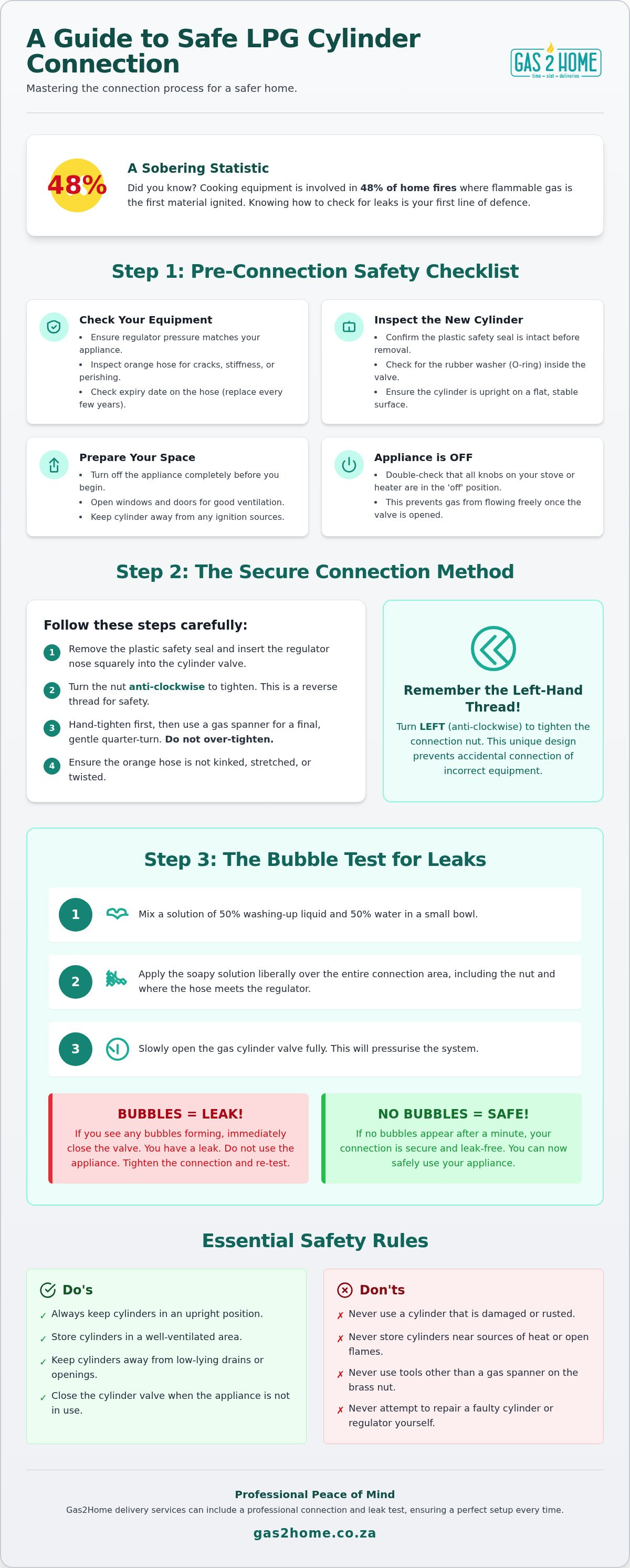
Did you know that cooking equipment is involved in 48% of home fires where flammable gas is the first material ignited? This is a sobering statistic that makes it natural to feel a bit of tension when you're connecting a new LPG bottle. Between the confusion of reverse threads and the underlying fear of a potential explosion, many South Africans feel uncertain about their home setup. You want to keep your family safe, but the technical details of regulators can feel overwhelming. Knowing how to check for gas leak from cylinder connections is the first step to a safer home.
This 2026 guide will show you how to identify LPG leaks using the reliable bubble test and ensure your connection is secure every time. We'll provide the expert advice you need to master the connection process and use your appliance with total confidence. We'll cover the essential safety steps, explain the logic behind reverse threads, and clarify when you should call for professional help. By the end, you'll have a leak-free connection and the peace of mind that comes with a job well done.
Key Takeaways
- Prepare your space correctly by ensuring proper ventilation and verifying that your regulator matches your specific cylinder and appliance requirements.
- Learn the step-by-step bubble test method to master how to check for gas leak from cylinder connections safely using simple household items.
- Protect your home by following essential storage rules, such as always keeping cylinders upright and away from low-lying drains.
- Identify the specific signs of a faulty connection and understand exactly when it is time to seek professional assistance for your LPG setup.
- Explore how professional connection services during delivery provide immediate peace of mind and ensure a leak-free start for your appliance.
Preparation and Safety: What You Need Before Connecting LPG
Safety begins long before you strike a match. Before you even think about connecting your Liquefied Petroleum Gas (LPG) cylinder, you must prepare your environment. Start by ensuring your appliance, whether it's a stove or a gas heater, is turned off. Open your windows and doors to ensure the area is well-ventilated. This is a critical step because gas needs space to disperse if a small amount escapes during the connection process. If you aren't sure how to check for gas leak from cylinder setups, starting with a clear, airy space is your best first defence.
Next, verify your equipment matches. Whether you're using a 9kg, 14kg, 19kg, or 48kg cylinder, it requires a specific regulator. Check that the regulator's pressure rating is correct for your specific appliance. Using a mismatched regulator can cause irregular flames or damage your equipment. Inspect the orange rubber hose. It should be flexible and free from any visible cracks, perishing, or stiffness. If the hose feels hard or brittle, replace it immediately to prevent high-pressure leaks.
Identifying the Right Regulator and Hose
In South Africa, you'll generally encounter two types of regulators: clip-on and screw-on. Clip-on regulators are frequently used for indoor heaters, whilst screw-on versions are the standard for most cooking appliances. Always check the expiry date printed on your orange gas hose. These hoses have a limited lifespan and should be replaced every few years regardless of their appearance. The SANS 1156-2 standard specifies the requirements for flexible rubber hoses used in LPG installations to ensure they can safely handle the pressure and chemical properties of the gas. Don't take risks with unbranded or generic hardware.
Inspecting Your New Cylinder
When your supplier delivers a new bottle, check that the plastic safety seal is completely intact. A broken seal might indicate the bottle has been tampered with or isn't full. Once the seal is removed, look inside the valve. There should be a small rubber washer, often called an O-ring, sitting snugly inside. If this washer is missing, cracked, or looks flattened, it won't create a proper seal. This is a primary reason why people search for how to check for gas leak from cylinder valves after a delivery. Finally, ensure the cylinder stands upright on a flat, stable surface. Never use a gas bottle on its side, as this can cause liquid gas to enter the regulator and cause a dangerous flare-up.
Step-by-Step: How to Connect Your Gas Bottle Safely
Begin by placing your cylinder in its designated spot. It must be well away from any potential ignition sources, such as electrical outlets, pilot lights, or open flames. Remove the plastic safety cap or seal from the valve of your full bottle. This seal ensures the gas hasn't been used or tampered with since leaving the filling plant. Once the valve is clear, you can begin the physical connection. Insert the regulator nose into the valve opening carefully. Learning how to check for gas leak from cylinder connections is much easier when this initial attachment is handled with precision.
Mastering the Left-Hand Thread
Most LPG connections in South Africa use a reverse, or left-hand, thread for safety reasons. This design prevents people from accidentally connecting oxygen or other gas regulators to an LPG bottle. To tighten the nut into the valve, you must turn it anti-clockwise. This often feels counterintuitive if you're used to the standard "righty-tighty" rule. Start by turning the nut with your fingers to ensure it moves smoothly. If hand-tightening feels insufficient to create a firm seal, use a dedicated gas spanner to give it a final, gentle turn. Don't use pliers or adjustable wrenches that might strip the brass nut.
Securing the Connection
Ensure the regulator is seated squarely within the valve. If it feels stuck or requires force to turn, stop immediately. You may be cross-threading the connection, which can lead to permanent damage and dangerous leaks. Do not over-tighten the nut. Excessive force can crush the internal rubber washer or damage the threads, making it harder to get a seal next time. Confirm that the orange hose is not kinked, twisted, or stretched tightly behind your appliance. A stressed hose is more likely to develop microscopic tears over time. If you prefer to have an expert handle this, you can choose a professional gas delivery service that includes connection and testing as part of the delivery fee.
Once you're satisfied the connection is firm, open the valve very slowly. This allows the gas to enter the regulator and hose gradually. If you open it too quickly, the sudden surge of pressure can sometimes trigger safety shut-off valves in modern regulators. At this stage, you are ready to perform the soapy water test to verify your work. Mastering how to check for gas leak from cylinder joints is the final step to ensuring your kitchen or living room remains a safe environment for your family.
The Bubble Test: How to Ensure There Are No Leaks
Once you've connected your regulator, you need visual proof that the seal is airtight. The bubble test is the most effective home method for this. Use a small container to mix common dishwashing liquid with water. You want a soapy solution that produces suds easily. Apply this mixture generously to the connection point where the regulator meets the cylinder valve. Don't forget to wipe it along the length of the orange hose and around the hose clamps. This simple process is the most reliable way to learn how to check for gas leak from cylinder joints without specialised equipment.
Open the cylinder valve slowly and watch the soapy areas. If you see bubbles forming and growing, gas is escaping. Small, static suds from the application are fine, but expanding bubbles indicate a problem. After you've finished the test and confirmed the connection is secure, wipe away the soap with a clean, damp cloth. Leaving detergent on brass fittings or rubber hoses can cause long-term metal corrosion or perish the rubber prematurely. It's a quick step that preserves the life of your equipment.
Recognising the Signs of an LPG Leak
Your nose is often your first line of defence. LPG suppliers add a powerful odorant to the gas, giving it a distinctive "rotten egg" or "sulphur" smell. If you notice this scent in your kitchen or near your heater, investigate immediately. In cases of a significant leak, you might also hear a faint hissing sound coming from the regulator or valve area. Understanding the signs of a bad gas connection is essential for every homeowner. These warnings are your cue to stop using the appliance and secure the cylinder.
What to Do if You Detect a Leak
If bubbles appear during your test, stay calm and follow these steps. Close the cylinder valve immediately by turning it clockwise until it stops. Extinguish all open flames in the vicinity. Do not operate any electrical switches, as even the small spark inside a light switch can be dangerous. Disconnect the regulator and move the cylinder to a well-ventilated outdoor space away from drains or pits. If the leak persists even with the valve closed, contact your supplier. Never try to force a faulty valve or use a cylinder that you suspect is damaged. Safety always comes first.
Essential Safety Rules for Home Gas Usage
Always keep your cylinder upright. This prevents liquid gas from escaping through the valve. Since LPG is heavier than air, it settles in low-lying areas. Keep your bottles away from drains, pits, or basements. If a leak occurs, the gas will pool there instead of dispersing. Never use a match or lighter to search for a leak. This remains a common cause of domestic accidents. Stick to the bubble test mentioned earlier when you need to know how to check for gas leak from cylinder connections safely.
Outdoor Storage and the Cape Town Climate
Living in Cape Town presents unique challenges for gas equipment. The salty coastal air is highly corrosive and can eat through metal components faster than in inland areas. If you use larger 19kg or 48kg bottles stored outside, check the valves and regulators regularly for signs of rust or pitting. Never store your cylinder in an unventilated cupboard or a basement where gas can accumulate. For those using a 9kg gas cylinder for a portable heater, ensure it stays upright and stable during our famous windy spells. A fallen cylinder can damage the regulator and create an immediate hazard.
Maintenance and Replacement Schedules
Your hardware has a shelf life. Most manufacturers recommend replacing your gas regulator every 5 to 10 years. Even if it looks fine, internal diaphragms can perish over time. The orange hose is even more sensitive. Replace it every 2 to 3 years regardless of how it looks on the outside. Small, microscopic cracks can develop that aren't visible to the naked eye. Always ensure your equipment carries the SABS approval mark. This is your guarantee that the gear is built for South African conditions and pressures. Using unapproved equipment puts your home at unnecessary risk. If you're unsure about your current setup, you can order a fresh refill and professional connection to ensure everything is up to standard.
Position your gas heater at least one metre away from curtains, furniture, or other flammable materials. Never leave a gas heater running while you sleep or when you leave the house. Ensure the room has some ventilation to prevent the build-up of carbon monoxide. These simple habits, combined with knowing how to check for gas leak from cylinder joints, keep your household running smoothly and safely. Regular checks only take a few minutes but provide a lifetime of protection.
Professional Peace of Mind: The Gas2Home Connection Service
While the bubble test is a valuable DIY skill, many Cape Town residents prefer the absolute certainty of a professional connection. It removes the stress of wondering if you've tightened the reverse thread correctly or if the regulator is seated perfectly. Gas2Home provides a seamless transition from delivery to safe usage. Our drivers are trained to handle the physical connection of your 9kg, 14kg, 19kg, or 48kg cylinder whilst you watch. This service is included at no extra cost, ensuring your appliance is ready to use safely the moment we leave your property.
Our team acts as your reliable local safety guide. During the installation, they don't just swap the bottles. They actively inspect your setup for signs of wear that you might easily miss. They'll point out perishing orange hoses or regulators that have reached the end of their functional lifespan. If you've been searching for how to check for gas leak from cylinder joints, watching a professional perform the task is the best education. They'll show you exactly what a secure seal looks like and how to use the bubble test for your own routine checks in the future.
We understand that trust is built on consistent performance. That's why we offer same-day delivery across Cape Town and its surrounding suburbs. You only pay on delivery once the gas is safely connected and you're satisfied with the setup. This frictionless experience eliminates the domestic stress often associated with gas refills. It's a no-nonsense solution for busy households that value both safety and convenience.
How to Order Your Next Safe Refill
Ordering your next bottle is designed to be effortless and fast. You can follow our guide on ordering gas online in Cape Town to see how simple the process has become. For even quicker service, many local households prefer our WhatsApp ordering feature. Simply send us a message with your requirements and address. We deliver Monday to Saturday across the CBD and all major suburbs, fitting into your schedule with ease and reliability.
The Gas2Home Guarantee of Safety
We believe that safety shouldn't be a premium add-on or a complicated extra. Every delivery includes a professional connection at no additional charge to you. We encourage you to watch our drivers as they work. It's a great opportunity to learn how to check for gas leak from cylinder connections so you can feel more confident between your regular refills. Our goal is to provide quiet expertise and a dependable local presence you can count on for every meal and winter evening. Don't risk an insecure connection or a faulty setup. Book your safe gas delivery and professional connection today for total peace of mind.
Secure Your Home with Confidence
Mastering the basics of LPG safety doesn't have to be a source of stress. By performing regular equipment checks and using the bubble test, you protect your household from preventable accidents. Understanding how to check for gas leak from cylinder connections is a vital skill that ensures your appliances run smoothly and safely. Whether you're checking the orange hose for cracks or verifying the reverse thread on a regulator, these small habits build a culture of safety in your home.
If you prefer the absolute certainty of an expert setup, our team is ready to assist. Order your gas refill now and let our experts connect it for you safely. We are trusted by thousands of local households and provide a professional connection included with every delivery. With our same-day delivery service in Cape Town, you won't have to wait long for a secure, leak-free connection. Enjoy the warmth and efficiency of your gas stove or heater with the peace of mind you deserve.
Frequently Asked Questions
Which way do I turn the gas bottle valve to open it?
Turn the handwheel anti-clockwise to open the gas flow and clockwise to close it. Most valves have arrows or the letters "O" and "C" marked on the top to guide you. If the valve feels stuck, don't use excessive force or a hammer. Instead, try a gentle tap or call for professional assistance. Ensuring the valve is fully closed before you disconnect is the first step in maintaining a safe Cape Town home.
Is it normal to smell a little bit of gas when I connect the bottle?
A very brief scent of gas is common when you first depress the regulator pin or seat the nut. However, this smell must disappear immediately once the connection is tight. If the "rotten egg" odour lingers, you must investigate. This is the perfect time to learn how to check for gas leak from cylinder valves using soapy water. If bubbles grow, close the valve and restart the process from the beginning.
Do I need a wrench or spanner to connect my gas cylinder?
Many modern regulators feature a large plastic nut designed for hand-tightening. If your regulator has a brass nut, a dedicated gas spanner is the best tool for the job. Avoid using standard pliers or adjustable wrenches, as these can easily strip the soft brass threads. A firm, snug fit is all you need. Over-tightening can damage the internal rubber washer and lead to persistent leaks that are difficult to fix.
Can I connect a gas bottle myself or do I need a certificate?
You are allowed to connect portable gas heaters or freestanding stoves yourself. However, any permanent gas installation in South Africa, such as a built-in hob or an outdoor geyser, must be completed by a registered practitioner. They will issue a Certificate of Conformity (CoC) which is essential for your home insurance. For simple bottle exchanges, our delivery team handles the physical connection for you at no extra cost for total peace of mind.
What happens if the regulator does not fit the gas bottle?
Stop immediately and check the valve type if the regulator doesn't fit. South African cylinders typically use either a screw-on or a clip-on connection. You cannot force a screw-on regulator onto a clip-on valve. Ensure your hardware matches the 9kg, 14kg, 19kg, or 48kg cylinder you have ordered. Using the wrong equipment is dangerous and will prevent a proper seal, making a hazardous gas leak almost certain in your kitchen.
How often should I perform the bubble test on my connections?
You should perform the bubble test every single time you connect a new cylinder. It only takes a minute but provides total certainty. Regular testing is the most reliable method for how to check for gas leak from cylinder seals before you start cooking or heating. We also recommend a quick check if you have moved the appliance or if the cylinder has been standing unused for several months during the summer.
Can I keep my gas bottle inside the kitchen cupboard?
You can keep a 9kg cylinder inside a kitchen cupboard if it's properly ventilated and away from electrical ignition sources. However, larger 19kg and 48kg bottles must be stored outdoors in a secure, well-ventilated cage. LPG is heavier than air and will pool in the bottom of a cupboard if a leak occurs. Always ensure your storage area allows any escaping gas to disperse safely into the atmosphere rather than accumulating.
What should I do if the gas hose looks cracked or perished?
Do not use the appliance if the orange hose shows any signs of perishing, stiffness, or cracking. These hoses are subject to high pressure and can fail suddenly if the rubber is compromised. Replace the hose with a SANS 1156-2 approved version every two to three years regardless of its appearance. Our delivery drivers can help you inspect your hose during your next refill to ensure your Cape Town home remains safe and secure.