
Signs of a Bad Gas Connection: How to Spot and Fix LPG Safety Risks

Is that faint, cabbage-like scent in your kitchen just a normal part of using LPG, or is it a warning that your home is at risk? With the Western Cape retail price of LPG reaching R40.84 per kilogram as of July 2026, a faulty setup isn't just a safety hazard; it's a drain on your wallet. Most Cape Town residents have switched to gas to stay powered during outages, but many feel uneasy about whether their cylinders are actually secure. You shouldn't have to guess if your family is safe or if you're wasting fuel because of the subtle signs of a bad gas connection.
We understand that the fear of leaks or fires can make using gas feel stressful rather than convenient. This guide will help you recognise the critical warning signs of a faulty connection so you can keep your Cape Town home safe and efficient. We will walk you through the visual and audible cues to look out for, explain how to perform a simple safety check, and outline the exact steps to take if you suspect a leak. You'll gain the confidence to manage your gas supply like a pro.
Key Takeaways
- Identify the five most common signs of a bad gas connection, from distinct odours to subtle sounds, to keep your household safe.
- Learn how to perform a simple soapy water test to check your regulator's seal every time you connect a new cylinder.
- Discover the immediate emergency steps to take if you suspect a leak, ensuring you can act quickly and calmly to protect your home.
- Understand how professional connection services can spot faulty equipment before it becomes a hazard in your Cape Town kitchen.
Understanding the Importance of a Secure LPG Gas Connection
A "bad gas connection" refers to any breach in the airtight seal between your cylinder, the regulator, and your appliance. This could be a perished rubber hose, a worn-out O-ring, or a regulator that isn't seated correctly on the valve. When this seal fails, you'll start noticing the signs of a bad gas connection. Understanding the physical properties of Liquefied Petroleum Gas is vital for your safety. Unlike some gases that rise and dissipate, LPG is heavier than air. In a typical South African kitchen, a leak means the gas will sink and pool along the floor or gather inside cupboards. This makes it particularly dangerous because it stays concentrated near potential ignition sources like oven pilots or electrical sockets.
The regulator plays a critical role in this system. It manages the high pressure from the cylinder, ensuring your appliance receives a consistent, low-pressure flow. If the connection at the regulator is compromised, the pressure can become erratic, leading to flare-ups or persistent leaks. While safety is a serious matter, most of these risks are entirely avoidable. Choosing a professional service to handle your connections ensures that every component is checked before you even turn on the stove.
Why a 'Good' Connection Matters for Efficiency
A secure connection ensures that every gram of gas you pay for actually reaches your burner. Even a tiny, undetectable leak can waste a significant amount of fuel over a month, leading to more frequent refills and higher costs. Proper pressure management also protects your appliances. When the gas flow is steady and correct, your stove or geyser operates at peak performance. This prevents soot buildup and extends the lifespan of the unit. Professional installation is your first line of defence against these hidden costs.
The Dangers of Neglecting Connection Maintenance
Ignoring the signs of a bad gas connection can lead to severe consequences. Beyond the immediate risk of fire, a faulty setup in a poorly ventilated area can cause carbon monoxide to build up over time. In South Africa, fixed gas installations must comply with SANS 10087-1 standards. If your connection is non-compliant, you face more than just safety risks; you may find that your household insurance refuses to cover damages in the event of an accident. A "slow leak" might seem minor, but the cumulative cost and the legal implications make regular maintenance essential for every homeowner.
The 5 Critical Signs of a Bad Gas Connection
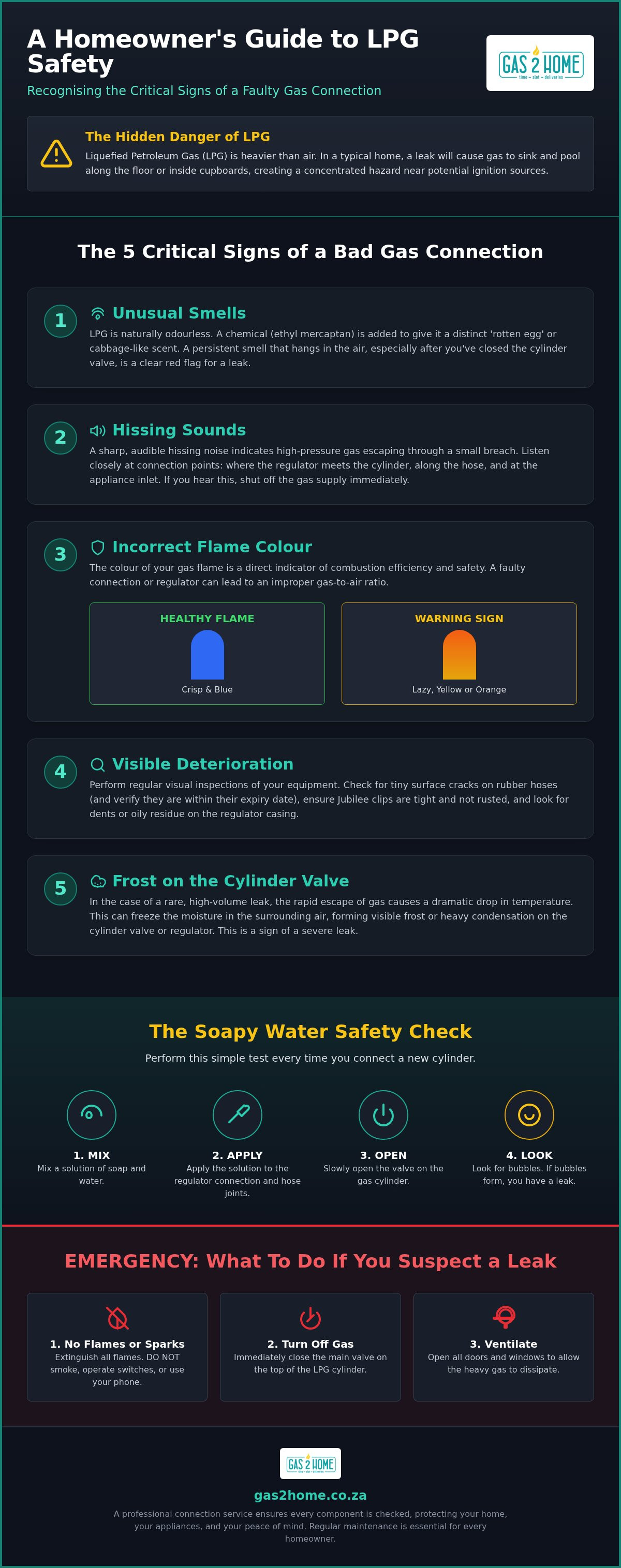
LPG is naturally odourless, so manufacturers add a chemical called ethyl mercaptan to give it a distinctive, pungent scent. This "rotten egg" smell is one of the most reliable signs of a bad gas connection. If you catch a whiff of this odour, it's a clear signal that gas is escaping somewhere in your system. Beyond the smell, you should also listen for a hissing sound. High-pressure gas forced through a small breach in a hose or a loose regulator creates a sharp, audible noise. If you hear this, act immediately to shut off the supply.
Visual cues are just as important. A healthy LPG flame should be crisp and blue. If your stove produces a lazy yellow or orange flame, it indicates an incorrect gas-to-air ratio. This usually stems from a faulty regulator or a blocked burner, both of which suggest a connection issue. Furthermore, keep an eye out for physical deterioration. Rubber hoses perish over time, and rusted Jubilee clips can lose their grip. In rare, high-volume leaks, you might even see frost or heavy condensation forming on the cylinder valve. This occurs because the rapid escape of gas causes a dramatic drop in temperature, freezing the moisture in the air around the valve.
Identifying Abnormal Smells and Sounds
It is common to smell a tiny bit of gas when you first turn on a burner, but this should vanish almost instantly. A persistent smell that hangs in the air is a red flag. To find the source, listen closely at three main points: the O-ring where the regulator meets the cylinder, the hose itself, and the appliance inlet. If the smell remains even after you've closed the main cylinder valve, the leak could be in the valve assembly. You can find Important Propane Safety Information from industry experts to help you understand the risks associated with these sensory warnings.
Visual Cues on Hoses and Regulators
Regularly inspect your "orange stripe" LPG hoses for an expiry date. If the hose is past its date or shows tiny surface cracks, it's no longer safe. Check that your Jubilee clips are tight and free from heavy rust that could weaken the metal. A faulty regulator often shows subtle signs of failure, such as an oily residue on the casing or visible dents from being dropped. If you're worried about the state of your setup, our gas connection service ensures your equipment is inspected and fitted correctly every time we deliver a new bottle. Replacing a worn hose or a cracked regulator is a small price to pay for total peace of mind in your kitchen.
Testing Your Connection: The Bubble Test vs. Professional Inspection
You shouldn't rely on luck when it comes to gas safety. While your senses are your first line of defence, physical testing is the only way to confirm you have a secure seal. This is where you identify the signs of a bad gas connection that might be too small to hear or smell immediately. The soapy water test is the gold standard for DIY safety. It is a simple, effective method that every homeowner can master. Make it a habit to perform this test every single time you connect a new LPG cylinder. It only takes a minute, but it can prevent a major accident.
A critical warning: never use a naked flame to search for a leak. Using a lighter or a match near a suspected gas leak is a common but deadly mistake. LPG is highly flammable, and even a tiny spark can cause an immediate fire or explosion. Stick to the bubble test or call in a professional if you're unsure. In South Africa, legal standards like SANS 10087-1:2024 require fixed installations to be inspected every five years. This ensures your system remains compliant and safe for long-term use.
How to Perform the Soapy Water Bubble Test
Follow these simple steps to verify your connection is airtight:
- Step 1: Mix a solution of water and a generous amount of dishwashing liquid in a spray bottle or a small bowl.
- Step 2: Apply the soapy solution to all joins. This includes the cylinder valve, the regulator connection point, and the hose clamps at both ends.
- Step 3: Open the gas valve on the cylinder. Watch the solution closely. If you see bubbles growing, expanding, or foaming, gas is escaping.
If bubbles appear, close the valve immediately. Try tightening the connection and repeat the test. If the bubbles persist, your equipment may be faulty and needs replacement.
When to Call a Professional Gas Connection Service
What to Do Immediately if You Suspect a Gas Leak
If you detect the signs of a bad gas connection, your priority is to stop the flow and clear the air. Acting quickly prevents a minor leak from becoming a major emergency. Stay calm and follow these immediate safety steps in order.
- Step 1: Extinguish all naked flames. This includes cigarettes, candles, and pilot lights. Do not use a lighter to check if the gas is still flowing.
- Step 2: Close the main valve on the gas cylinder. Turn the control knob clockwise until it is tight. This stops the gas at the source and prevents further buildup.
- Step 3: Open every window and door. LPG is heavier than air and collects near the floor or inside cupboards. Creating a cross-breeze is the only way to disperse the gas safely.
- Step 4: Leave your electrical switches alone. Do not turn lights on or off. Do not unplug appliances. Even the tiny spark inside a light switch can ignite a gas-heavy room.
- Step 5: Move the cylinder outdoors if it is safe to do so. This is manageable with 9kg or 14kg bottles. Get the leaking equipment into an open space away from drains or building entrances.
The 'Don'ts' of Gas Emergency Management
Never attempt to 'patch' a leaking hose. Duct tape, glue, or electrical tape will not hold back the pressure of LPG. It is a dangerous temporary fix that creates a false sense of security. Similarly, don't use your mobile phone or a landline in the immediate vicinity of the leak. Go outside before making any calls to avoid potential static sparks. If you find a valve is stuck, never force it with a hammer or wrench. Forcing metal components can cause a spark or break the valve entirely, making the leak worse. If it won't budge, leave it and evacuate.
Evacuation and Professional Help
If the smell of gas remains strong after you have closed the valve, or if you hear a loud, continuous hissing sound, evacuate the building immediately. Ensure everyone is out and call emergency services from a safe distance. For a detailed guide on handling these situations, read our safety checklist for gas smells at home. If the leak is caused by a faulty cylinder or a perished regulator, you need a professional replacement. You can order a safe LPG replacement from Gas2Home. Our drivers are trained to handle faulty equipment and will ensure your new connection is tested and secure before they leave your property.
Why Professional Gas Connection Services are Essential in Cape Town
Relying on a professional service is the simplest way to eliminate the worry of a faulty setup. In a city like Cape Town, where many households rely on LPG as their primary energy source during power cuts, the frequency of cylinder swaps is high. Each time you disconnect and reconnect a bottle, there is a chance for human error or equipment wear. Our no-nonsense approach to safety ensures that these risks are managed before you ever strike a match. Our team is trained to identify the signs of a bad gas connection during every visit, ensuring your kitchen remains a safe space for your family. We believe that domestic safety should be frictionless and reliable, which is why we prioritise a thorough inspection with every delivery.
Professional expertise provides a layer of security that a simple DIY check cannot match. By having an expert handle the installation, you avoid the common signs of a bad gas connection that often plague DIY attempts, such as loose Jubilee clips or improperly seated regulators. If we find that your equipment is no longer safe, we offer same-day delivery for replacements, ensuring you aren't left without power for your stove or geyser. This proactive service prevents small leaks from developing into expensive or dangerous problems over time.
The Gas2Home Advantage: Safety on Delivery
Our drivers are more than just delivery personnel; they are trained specialists who understand the mechanics of a secure LPG setup. When you order a 9kg gas cylinder, we don't just leave it at your gate. We carry the bottle to your connection point and perform a full check of the O-ring and the regulator seal. We serve a wide area across Cape Town, from Sunset Beach to the Southern Suburbs, bringing local expertise to your doorstep. With our 'Pay on Delivery' system, you only settle the bill once you are confident that your connection is safe and functioning perfectly.
Maintaining Your Gas Setup Between Deliveries
Whilst we handle the heavy lifting during delivery, your daily habits play a role in long-term safety. Always keep your gas bottle in an upright position in a well-ventilated area, away from direct sunlight or heat sources. If you notice soot building up on your pots, it is likely time to clean your appliance burners. Dust and grease can clog the ports, affecting the flame quality and efficiency. For those moments when you need to swap a bottle yourself, we encourage you to learn how to connect a bottle safely using our comprehensive guide. Keeping your equipment clean and properly stored ensures that you get the most value out of every refill whilst maintaining a secure home environment.
Secure Your Home with Expert Gas Services
Staying alert to sensory cues and performing regular bubble tests are your best defences against household hazards. Recognising the signs of a bad gas connection ensures you can act quickly to keep your family and property safe. A secure setup doesn't just protect your home; it also improves fuel efficiency and extends the life of your appliances. You shouldn't have to worry about the technical details of a safe installation every time your bottle runs low.
We provide expert safety checks on every cylinder exchange to give you total peace of mind. Our team includes a professional connection service with every delivery, ensuring your regulator and hoses are in top condition. With fast, same-day delivery available across Cape Town, you can stay powered up without the stress of managing connections yourself. Order your gas refill now and let our experts handle the connection for you. Enjoy the convenience of reliable LPG with the confidence that your home is in professional hands.
Frequently Asked Questions
How can I tell if my gas regulator is faulty?
You can identify a faulty regulator by looking for physical damage like dents or an oily residue on the casing. If your appliance flames are erratic or you hear a continuous hiss that doesn't stop when you tighten the connection, the regulator likely needs replacement. A persistent smell at the join is also a clear indicator that the internal seal has failed.
What should a healthy gas flame look like?
A healthy LPG flame is crisp, steady, and primarily blue in colour. If you see a lazy yellow or orange flame, it indicates incomplete combustion caused by a poor gas-to-air ratio. This soot-producing flame is a warning that your burners are blocked or your regulator is failing to manage pressure correctly.
Is it normal to smell a little bit of gas when I turn my stove on?
A faint, momentary whiff of gas is normal during the first few seconds of ignition. However, a persistent "rotten egg" odour that lingers in the kitchen is one of the most common signs of a bad gas connection. If the smell remains whilst the stove is off, you must shut the main cylinder valve immediately and ventilate the room.
How often should I replace my gas hose and regulator?
You must replace your orange LPG hose every five years or sooner if you notice surface cracks or perishing. Regulators typically last between five and ten years, but they should be inspected for wear during every cylinder exchange. Always check the expiry date printed on the side of the hose to ensure your setup remains safe and compliant.
Can a bad gas connection cause high gas consumption?
Yes, even a tiny leak at the regulator or hose join wastes fuel 24 hours a day. This leads to significantly higher costs and more frequent refills because gas is constantly escaping into the atmosphere. Ensuring a professional, airtight seal means every kilogram of gas you pay for is used efficiently for cooking or heating.
What does a gas leak actually sound like?
A gas leak usually creates a sharp, high-pitched hissing or whistling noise. This sound occurs when high-pressure gas is forced through a small breach in a hose or a loose connection point. The louder the hiss, the more gas is escaping, so you should act quickly to close the cylinder valve if you hear this sound.
Is it safe to use a gas bottle that has a bit of rust on the bottom?
Light surface rust on the base of a cylinder is generally acceptable, but deep pitting or flaking rust is a safety hazard. If the rust has compromised the thickness of the metal, the cylinder could potentially fail under pressure. We inspect all our cylinders to ensure only structurally sound bottles are delivered to your home.
Can I use thread tape (PTFE) to fix a leaking gas join?
No, you should never use standard thread tape to fix a leaking LPG join. Most residential connections rely on rubber O-rings or bullnose seals that are designed to work without tape. If a connection is leaking, the seal is likely damaged or the fitting is loose. Adding tape can prevent the seal from seating properly and make the leak worse.