
How to Exchange an Easigas Bottle for a Standard Cylinder in South Africa (2026)

Many homeowners assume an empty gas bottle locks them to a single brand forever. That assumption is both costly and incorrect. If you need to exchange Easigas bottle for standard cylinder South Africa networks, national safety regulations work in your favour, not against you. Running out of cooking gas is frustrating enough without worrying about complex supplier policies or paying another expensive cylinder deposit just to switch brands.
We know how stressful domestic interruptions can be, especially when you are unsure whether your local distributor will accept your empty tank. In this guide, you will discover how South African cylinder exchange rules operate, how to swap your Easigas bottle easily without paying double fees, and how to identify certified valve seals to avoid dangerous refills. We will also preview how Cape Town residents can organise fast door-to-door cylinder exchanges with professional connection, keeping your home powered safely and effortlessly.
Key Takeaways
- South African cylinder exchange rules permit swaps across major brands, protecting you from paying duplicate deposit fees.
- Discover how to exchange Easigas bottle for standard cylinder South Africa distributors accept, ensuring full compatibility with standard household regulators.
- Learn the essential safety checks, including SANS 10019 compliance and brand-matching valve seals, to protect your home from illegal refills.
- Find out how scheduled doorstep delivery across Cape Town takes the physical strain out of cylinder swaps with professional connection and leak testing.
Understanding Cylinder Exchanges in South Africa: Can You Swap Easigas for Standard Bottles?
Can you swap that empty grey-and-red Easigas bottle for another brand? The short answer is yes. You aren't permanently locked to the brand stamped on your metal cylinder. When you first buy bottled gas, you don't actually purchase the steel container. You pay a deposit for the right to use it. That cylinder remains the property of the parent gas company, but South African trade agreements protect your mobility as a consumer. Under legitimate supply channels, you can seamlessly exchange Easigas bottle for standard cylinder South Africa networks supply without forfeiting your deposit.
How the South African LPG Cylinder Exchange System Works
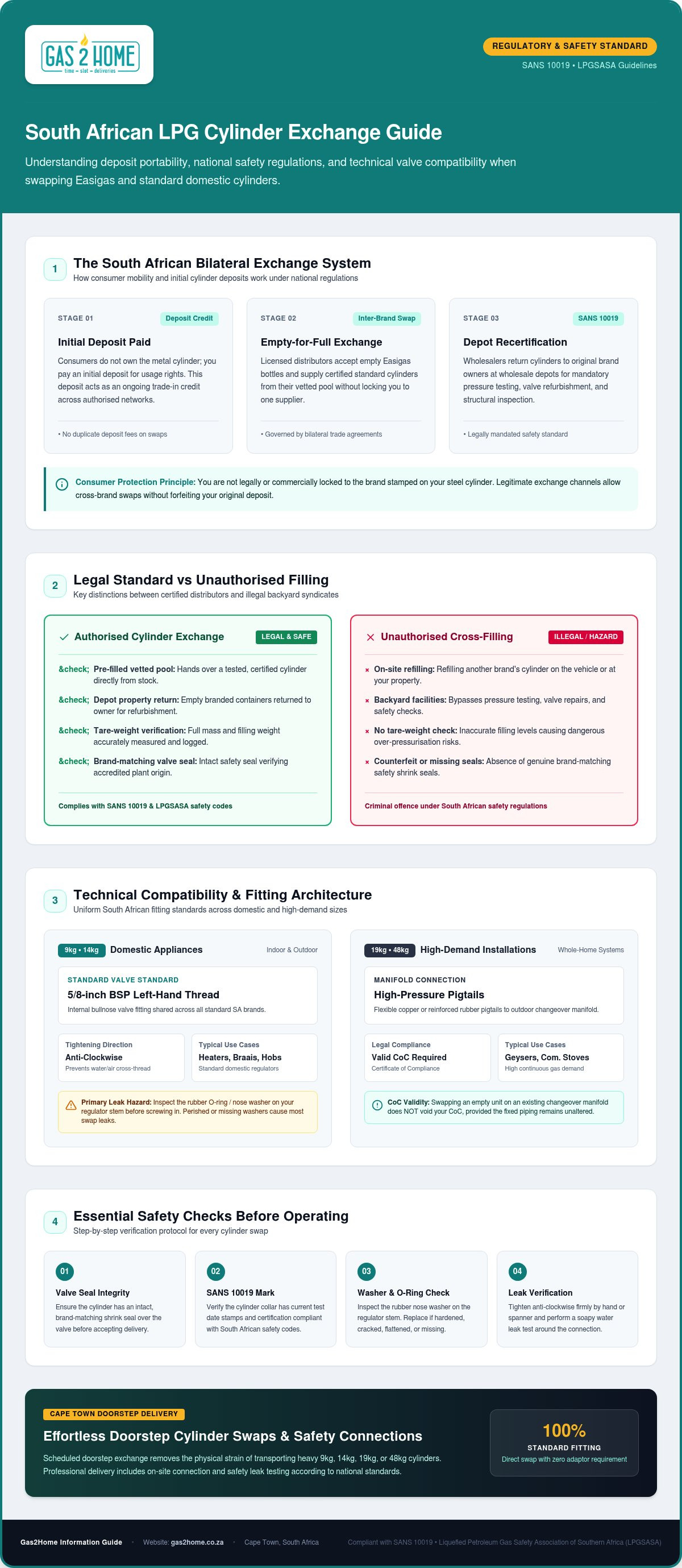
South Africa manages Liquefied petroleum gas (LPG) distribution through a bilateral exchange system governed by South African National Standard (SANS) 10019. This framework enforces strict rules for pressure testing, valve refurbishment, and cylinder recertification.
Major gas wholesalers operate inter-brand exchange agreements. When a reputable distributor takes your empty Easigas bottle and supplies a certified replacement, that empty unit isn't discarded. Licensed suppliers return collected cylinders to wholesale depots, where brand owners reclaim their property and test it for structural safety. Your initial deposit essentially acts as a trade-in credit, entitling you to an ongoing, empty-for-full swap across certified distributors without paying duplicate container fees.
Branded Bottles vs Generic Standard Cylinders: The Legal Landscape
Safety enforcement relies on guidelines from the Liquefied Petroleum Gas Safety Association of Southern Africa (LPGSASA). While exchanging an empty container across established networks is completely legal, unauthorised cross-filling is a serious criminal offence. Only the registered brand owner or their accredited filling plant has the legal right to refill a branded cylinder.
Illegal refilling syndicates routinely ignore these safety boundaries. They fill empty branded containers in backyard facilities, skipping tare-weight verification and valve safety checks. Reputable suppliers will never refill another brand's cylinder at your property. Instead, when you exchange Easigas bottle for standard cylinder South Africa stocks, certified providers hand over a fully tested, compliant cylinder from their own vetted pool. This simple standard keeps dangerous, poorly maintained bottles out of your home.
Technical Compatibility: Ensuring Your Appliances Match the Replacement Cylinder
Switching cylinder brands often sparks a practical concern: will your heater, braai, or hob still connect properly? The reassuring answer is yes. South African domestic gas infrastructure relies on uniform fitting standards. When you exchange Easigas bottle for standard cylinder South Africa distributors provide, the replacement tank connects directly to your existing regulator without extra adaptors or modified pipework.
Valve Types and Regulator Compatibility Across 9kg and 14kg Bottles
Domestic 9kg and 14kg cylinders, commonly used for indoor roll-about heaters, braais, and kitchen cookers, share the exact same valve architecture. They utilise an internal 5/8-inch BSP left-hand thread bullnose valve. You turn the brass nut anti-clockwise to tighten it, a deliberate design that prevents accidental cross-threading with water or air fittings.
Always inspect the rubber O-ring or nose washer on your regulator stem before screwing it into the replacement cylinder valve. A perished, hardened, or missing washer is the single most common cause of domestic gas leaks during bottle swaps. Adhering to official LPGSA safety guidelines keeps your household protected. If you spot a worn seal or suspect a poor fit, review our guide on how to connect a gas bottle safely before turning the control spindle.
Large Cylinder Connections: 19kg and 48kg Installation Considerations
Larger 19kg and 48kg cylinders supply high-demand appliances, such as whole-home geysers and commercial stoves. These heavy cylinders connect via flexible high-pressure copper or reinforced rubber pigtails attached to an outdoor changeover manifold.
South African safety regulations mandate that permanent domestic gas installations hold a valid Certificate of Compliance (CoC). Swapping an empty cylinder for a fresh unit on an existing manifold doesn't void your certificate, provided the fixed piping remains unchanged. However, wrestling a heavy 48kg cylinder into position carries real risk of strain or dropped valves. If you prefer to avoid the physical hassle, you can book reliable delivery and installation with Gas2Home's gas cylinder delivery and connection service to keep your Cape Town home running smoothly.
How to Exchange Your Easigas Bottle for a Fresh Cylinder
Swapping an empty gas bottle should be straightforward. Whether you arrange a delivery collection or drop it off yourself, following a clear checklist protects your property and guarantees a smooth handover. Here is how to prepare your empty container and verify your replacement without unnecessary delays.
Preparing Your Empty Cylinder for Collection or Drop-Off
Start by isolating the gas supply. Turn the cylinder handwheel clockwise until it is completely closed. Unscrew your regulator brass nut by turning it clockwise, remembering that domestic left-hand bullnose fittings loosen in reverse. Fit the protective valve cap or plug if your cylinder has one.
Give the empty bottle a quick visual check before handing it over:
- Foot-ring stability: Ensure the base ring sits level and isn't buckled or rusted through.
- Legible markings: The welded collar must clearly show the original tare weight and manufacturer stamps.
- Surface condition: Surface paint scuffs are normal, but severe gouges or deep pitting corrosion can cause a distributor to reject the swap.
If you transport the empty bottle in a passenger vehicle, safety rules apply. South African regulations require gas containers to travel upright, secured firmly against movement, and kept in a well-ventilated boot rather than the passenger cabin. Never let a cylinder roll loosely in the back.
Verifying the Replacement Cylinder: Seals, Weight, and Condition
When you exchange Easigas bottle for standard cylinder South Africa providers deliver, you must check the full container before accepting it. Look closely at the valve neck. Reputable distributors fit a branded, heat-shrunk plastic sleeve over the valve outlet. That seal should display the gas company's logo clearly. If the shrink wrap is completely clear, handwritten, or missing, reject the cylinder immediately.
Check the test date stamped into the collar or foot-ring. SANS regulations require steel cylinders to undergo hydrostatic testing and structural recertification every ten years. Never accept an expired container. Following established LPGSA safety guidelines ensures every cylinder entering your home meets rigorous industrial standards.
Once connected, test the connection point. Brush a simple mix of dishwashing liquid and water over the regulator thread and valve spindle. Open the handwheel gently. If bubbles form and expand, you have a leak. Shut the valve instantly, disconnect the regulator, check the rubber nose washer, and reconnect firmly.
Common Pitfalls, Safety Risks, and How to Avoid Illegal Cylinder Swaps
Illegal gas refilling represents an escalating safety crisis across South Africa. Rogue traders decant LPG directly from large industrial containers into domestic bottles using crude gravity-fed rigs or modified compressors. They bypass calibrated mass scales, resulting in dangerously overfilled or underfilled cylinders. An overfilled bottle leaves zero vapor space for thermal expansion; placed in a warm kitchen or sunlit courtyard, rising internal pressure can force open the relief valve, venting raw gas into your living space.
Spotting Rogue Refillers and Unauthorised Bottle Decanting
How do you tell a legitimate cylinder exchange from a dangerous backyard refill? Rogue operators cut corners on packaging and presentation. When you exchange Easigas bottle for standard cylinder South Africa homes require, look out for these telltale warnings:
- Generic valve wraps: Unlicensed decanters use transparent cling film or unprinted heat shrink wrap. Certified suppliers apply thick, tamper-evident seals printed with the parent distributor's registered trademark.
- Concealed test dates: Dodgy vendors frequently spray cheap enamel paint over the bottle neck to hide expired hydrostatic test stamps or heavy structural corrosion.
- Car-side refilling: Never buy gas from roadside stalls refilling bottles while customers sit in their vehicles. Commercial filling requires licensed stationary depots fitted with safety shut-off valves, calibrated scales, and fire suppression systems.
Protecting Household Safety and Insurance Compliance
Using uncertified gas containers doesn't just put your family in danger; it jeopardises your financial safety net. South African short-term insurance policies routinely include strict compliance clauses regarding combustible substances. If an untracked, illegally refilled cylinder causes an explosion or house fire, loss adjusters inspect the wreckage for valid serial numbers and certified fittings. Operating uncertified equipment without a valid Certificate of Conformity for permanent installations provides immediate grounds for insurers to reject structural claims outright.
Safe storage limits are equally critical. Consult our comprehensive manual on The 9kg Gas Cylinder: Cape Town’s Ultimate Guide to LPG to review domestic volume caps and indoor positioning rules.
If a newly delivered cylinder gives off a strong, rotten-egg smell of ethyl mercaptan, act immediately. Isolate the valve handwheel clockwise, extinguish open flames, keep electrical switches untouched, and move the bottle outdoors into open air. You can eliminate these hazards entirely: book a fully certified cylinder exchange through Gas2Home to secure tested, legal LPG delivered directly to your door.
Effortless Gas Bottle Exchanges in Cape Town: Why Choose Doorstep Delivery
Hauling a heavy gas bottle across town is an unnecessary chore. Wrestling a bulky steel container into your boot risks scratching your car's interior, and driving with an unsecured cylinder in a passenger vehicle raises genuine safety concerns. When you need to exchange Easigas bottle for standard cylinder South Africa options without lifting a finger, doorstep delivery offers the smartest, safest solution for local households.
Skip the Heavy Lifting: Scheduled Delivery to Your Door
Say goodbye to long queues at industrial hardware depots or local service stations. Professional delivery eliminates the physical strain of loading and unloading heavy steel bottles. Operating Monday to Saturday, local couriers provide scheduled time slots that fit neatly into your daily routine.
Whether you live in an apartment along the Atlantic Seaboard, a Victorian terrace in the City Bowl, or a family home across the Southern Suburbs or Milnerton, dependable logistics keep your home fires burning. Check our comprehensive guide to reliable gas delivery in Cape Town to see how neighbourhood routes guarantee timely cylinder drops right to your property boundary.
Professional Connection and Pay-on-Delivery Convenience
Safety shouldn't end at your front gate. While traditional retailers simply hand over a cold cylinder and leave you to figure out the wrenches, trained delivery specialists handle the complete switchover. Each visit includes complimentary regulator attachment and a thorough bubble leak test on your valve connection before the technician leaves.
Frictionless service means never worrying about paying for gas you haven't yet received. When you exchange Easigas bottle for standard cylinder South Africa networks supply through local specialists, you settle the bill on your doorstep using a portable card machine or cash only after the new cylinder is safely installed and tested.
Ready to replenish your supply? You can book your swap in seconds via WhatsApp or easily order gas online in Cape Town through Gas2Home. We deliver 9kg, 14kg, 19kg, and 48kg cylinders straight to your doorstep, bringing dependable warmth and effortless energy directly to your kitchen.
Take the Hassle Out of Your Next Gas Exchange
Managing your household energy shouldn't involve brand lock-in, heavy lifting, or deposit confusion. You can legally and safely exchange Easigas bottle for standard cylinder South Africa distributors provide without forfeiting your initial investment. Standard 5/8-inch left-hand bullnose valves across major 9kg and 14kg cylinders ensure your cookers, braais, and heaters connect seamlessly every single time.
Skip the vehicle boot scuffs, roadside refilling hazards, and safety doubts. You deserve dependable heating and cooking without domestic stress. Gas2Home delivers directly to your door from Monday to Saturday with convenient scheduled time slots across Cape Town. Every drop-off includes complimentary regulator connection and thorough bubble leak testing by a trained technician, allowing you to settle up via card or cash only once your installation is verified. Exchange your empty gas cylinder with Gas2Home today and enjoy safe, effortless gas delivery delivered right when you need it.
Frequently Asked Questions
Can I exchange my Easigas cylinder for another brand in South Africa?
Yes, you can readily swap an empty Easigas container for another reputable brand. South African wholesale distributors participate in bilateral exchange pools governed by national safety standards. When you exchange Easigas bottle for standard cylinder South Africa networks supply, certified retailers accept your empty unit as a direct trade-in, provided the container is structurally sound and carries valid manufacturing stamps.
Will a standard 9kg gas cylinder fit my existing Easigas regulator?
Yes, replacement domestic cylinders connect seamlessly to your existing setup. All standard 9kg and 14kg domestic LPG bottles in South Africa use the identical 5/8-inch BSP left-hand thread bullnose fitting. You screw the brass regulator nut anti-clockwise directly into the new valve spindle. As long as your appliance regulator is designed for standard domestic bottles, you don't need adaptors.
Do I lose my original cylinder deposit when swapping brands?
No, you keep the financial value of your original deposit. You hand over your empty Easigas bottle and pay only for the gas refill inside the replacement cylinder. The physical cylinder functions as a reusable asset within the national exchange pool. You only pay a new deposit fee if you need an additional bottle without returning an empty container.
How can I tell if an exchanged gas cylinder has been legally filled?
Check the plastic shrink sleeve over the valve outlet before accepting the bottle. Legitimate cylinders feature an unbroken, heat-shrunk seal displaying the gas company's official brand logo. Reject bottles wrapped in clear cling wrap, unmarked plastic, or missing seals entirely, as these indicate unauthorized backyard filling syndicates operating without calibrated scales or mandatory pressure testing.
What sizes of LPG cylinders are available for home exchange?
Residential and light commercial suppliers provide four standard exchange sizes: 9kg, 14kg, 19kg, and 48kg LPG gas cylinders. The compact 9kg and 14kg models suit indoor room heaters, outdoor braais, and domestic hobs. The larger 19kg and 48kg units supply continuous whole-home cooking, high-capacity water geysers, and multi-appliance changeover manifolds.
What should I do if my newly exchanged gas cylinder leaks around the valve?
Close the cylinder handwheel clockwise immediately to isolate the gas flow. Keep all naked flames, lighters, and electrical switches untouched to avoid ignition sparks. Disconnect the regulator and inspect the rubber nose washer for flat spots, cracks, or dirt. If applying fresh soapy water still reveals escaping bubbles after reconnection, move the cylinder to an open-air area outdoors and contact your supplier for an urgent replacement.
Can I get an empty gas cylinder exchanged and connected on the same day?
Yes, Cape Town residents can easily arrange same-day delivery across local suburbs from Monday to Saturday. When you exchange Easigas bottle for standard cylinder South Africa providers stock, local specialists like Gas2Home offer scheduled time slots, complimentary on-site regulator connection, and mandatory bubble leak testing, letting you settle payment via card or cash right at your door.