
Gas Cylinder Sizes in Cape Town: A Complete 2026 Guide

It is a freezing July evening in Newlands, the rain is lashing against the windows, and your gas heater suddenly sputters and dies because you miscalculated how long that bottle would last. Finding the right gas cylinder sizes Cape Town residents can legally use shouldn't feel like a guessing game when the temperature drops. You likely want the largest bottle possible to avoid mid-winter refills, yet you might worry if a 48kg cylinder is actually legal for your home or if it will even fit in your dedicated storage area.
We understand that navigating South African safety regulations and kg ratings can be stressful. This guide promises to help you master the dimensions, safety clearances, and appliance requirements for every standard LPG cylinder available in 2026. We will walk you through the physical specs of 9kg, 14kg, 19kg, and 48kg bottles. You will also discover the critical SANS 10087 distances required to keep your family safe and your installation compliant. By the end, you'll know exactly which size to order to keep your home warm and your stove running without any technical headaches.
Key Takeaways
- Identify the four standard gas cylinder sizes Cape Town households use and learn which one fits your specific storage space and energy needs.
- Master the legal safety clearances required for indoor and outdoor storage to ensure your home installation meets strict SANS 10087 regulations.
- Learn how to match your appliance's kW rating to the correct bottle size to prevent gas withdrawal issues and cylinder freezing.
- Estimate your monthly gas consumption for stoves and heaters to better organise your refills and avoid running out during a cold snap.
- Understand the safety benefits of professional connection services and why expert setup is essential for maintaining a safe domestic environment.
Standard Gas Cylinder Sizes in South Africa: An Overview
Liquefied Petroleum Gas (LPG) cylinders are classified by the weight of the gas they contain, not the physical dimensions of the steel bottle itself. When you purchase a 9kg bottle, you are buying 9 kilograms of LPG. The actual weight you lift will be much higher because of the "tare weight," which is the weight of the empty steel container. Understanding this distinction is the first step in mastering the various gas cylinder sizes Cape Town residents rely on for daily energy needs.
Most domestic cylinders in South Africa follow international gas cylinder standards regarding safety valves and pressure ratings. However, the local market focuses on four primary exchange-ready sizes: 9kg, 14kg, 19kg, and 48kg. These differ significantly from small camping refills, such as 3kg or 5kg canisters, which usually require a trip to a refilling station. Exchange cylinders allow you to swap an empty bottle for a full, safety-checked unit instantly.
Portability is a major factor when choosing your size. A full 19kg cylinder can weigh nearly 40kg in total, making it difficult to move without a trolley. If you live in a multi-storey apartment or have limited physical strength, selecting smaller bottles or arranging professional delivery is the most practical choice.
The Versatile 9kg and 14kg Domestic Bottles
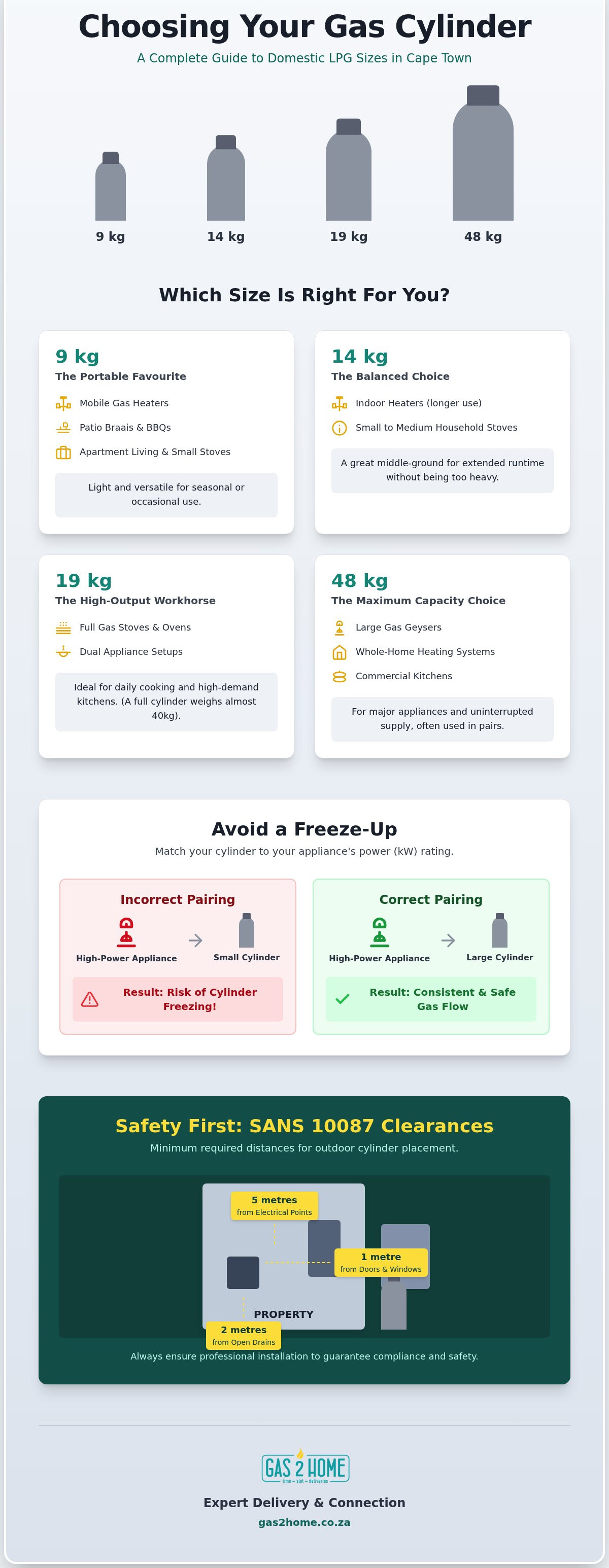
The 9kg cylinder is the undisputed favourite for domestic versatility. It's the industry standard for portable gas heaters and patio braais because it fits perfectly into the back of most heater cabinets and braai trolleys. It's light enough for most adults to handle and provides a decent run-time for seasonal use.
The 14kg cylinder serves as a middle-ground option. It's often used for specific indoor gas heaters that require a slightly longer burn time than a 9kg can provide. These sizes are ideal for apartments with limited storage space. They offer a compact footprint whilst providing enough energy to power a two-plate stove for weeks. For outdoor enthusiasts who need even more compact solutions, thehungerhub.com offers an all-in-one 17-litre bucket camping kitchen that pairs perfectly with smaller gas setups.
If you have a full gas stove and oven or a high-output water heater, you'll need the 19kg or 48kg options. The 19kg cylinder is the workhorse for high-output cooking. It's designed to provide a consistent gas flow for households that cook daily or use dual-appliance setups.
The 48kg cylinder is the heavy-duty choice. These are primarily used for whole-home heating systems, large gas geysers, or commercial kitchens. Because of their size, they are almost always stored outdoors. For very high demand, we often install a manifold system. This connects two or more 48kg bottles together, ensuring that when one runs dry, you can switch to the reserve without any interruption to your hot water or heating.
Matching Your Appliance to the Correct Cylinder Size
Every gas appliance has a kilowatt (kW) rating. This number dictates the gas withdrawal rate, which is the speed at which LPG must turn from liquid to gas to power the burner. If you use a bottle that is too small for a high-demand appliance, the cylinder can actually freeze. You'll notice frost forming on the outside of the steel as the internal temperature plummets. This stops the gas flow and leaves you with a cold stove or a lukewarm shower.
Choosing between the various gas cylinder sizes Cape Town offers requires looking at your peak usage. In winter, your demand for hot water and heating spikes. Planning your supply around these seasonal changes prevents the frustration of running out of gas on a rainy Tuesday night. Always ensure your regulator matches the flow requirements of your specific setup. Following South African LPG legislation is the best way to ensure your appliance and cylinder pairing is safe and compliant.
Best Sizes for Cooking and Summer Braais
The 9kg gas cylinder is the top choice for outdoor cooking and summer braais. It is light enough to carry to the patio but holds enough fuel for multiple long weekends of entertaining. If you are powering a four-plate indoor gas stove, consider upgrading to a 19kg bottle. It offers a more stable flow and requires fewer exchanges during the busy festive season. If you store your cylinder inside a kitchen cupboard, the compartment must be ventilated and strictly follow clearance rules to prevent any dangerous gas accumulation.
Heating and Hot Water Requirements
Mobile gas heaters are essential for Cape Town's damp winters. A 9kg or 14kg bottle is perfect for these units, providing a full evening of warmth without being too heavy to move between rooms. Gas geysers are different. They have a very high energy demand. We recommend a 19kg cylinder as the absolute minimum starting point for a single-point geyser. For larger properties with central heating or multiple bathrooms, 48kg cylinders are the only practical choice. These large bottles provide the consistent pressure needed to keep a whole household comfortable. If you aren't sure about gas cylinder sizes Cape Town regulations, you can chat with our team for expert advice on your connection.
Physical Specifications: Dimensions and Safety Clearances
Understanding the physical footprint of your gas bottle is essential for planning a safe installation. You must consider both the space the cylinder occupies and the "empty" safety zones required by law. The tare weight is the weight of the empty steel cylinder. When you add the weight of the gas, a full 48kg bottle can weigh approximately 80kg to 90kg. This total weight is a critical factor if you are placing cylinders on balconies or older wooden flooring structures that may have load-bearing limits.
Choosing between different gas cylinder sizes Cape Town retailers provide requires more than just checking the price. You need to ensure the bottle fits your dedicated storage area whilst maintaining proper ventilation. LPG is heavier than air. If a leak occurs, the gas will sink to the lowest point. This is why you must never store bottles near drains, pits, or manholes where gas could pool and create an explosion risk.
Typical Cylinder Dimensions Table
While minor variations exist between manufacturers, most domestic bottles in South Africa follow these approximate dimensions to ensure they fit standard heater cabinets and cages:
- 9kg Cylinder: Approximately 480mm height x 310mm diameter.
- 14kg Cylinder: Approximately 580mm height x 310mm diameter.
- 19kg Cylinder: Approximately 800mm height x 310mm diameter.
- 48kg Cylinder: Approximately 1300mm height x 370mm diameter.
SANS 10087 Safety Regulations and Clearances
Adhering to LPG installation and compliance standards is not just about safety; it's a legal requirement in South Africa. The SANS 10087 regulations dictate exactly where you can and cannot place your gas supply. For outdoor installations, your cylinders must be at least 1 metre sideways from any door, window, or air vent that is below the level of the cylinder valve. This prevents escaping gas from drifting into your living spaces.
Electrical safety is equally important. You must maintain a 5-metre clearance from any electrical source of ignition, such as DB boards, air conditioning units, or pool pumps. Indoor regulations are even stricter. In a flat or apartment, the maximum legal gas container size is 9kg. For a standalone house, you are permitted up to 19kg indoors. If your total gas storage exceeds 100kg, you must submit a formal planning application and obtain a Flammable Substance Certificate from the City of Cape Town. Always measure your gas cylinder sizes Cape Town clearances before booking a delivery to ensure your home remains compliant.
Calculating Gas Consumption: How Long Will Your Supply Last?
Estimating your fuel usage is the best way to prevent an unexpected outage during a cold snap. 1kg of LPG provides roughly 13.6kWh of energy. For a standard four-person household using a gas stove for daily cooking, the average consumption is approximately 2kg of gas per month. This means a single 9kg bottle can comfortably support your kitchen for over four months if used only for meals.
Gas heaters are far more demanding than cooking appliances. A single heater panel consumes about 100g of gas per hour. If you run a three-panel heater on its highest setting, you will use roughly 300g per hour. Cape Town's winter weather also affects performance. Cold temperatures naturally lower the pressure inside the steel, which can make the gas flow feel sluggish even if the bottle isn't empty. Choosing the correct gas cylinder sizes Cape Town residents need often depends on whether you are simply boiling water or trying to heat a large lounge.
Estimated Usage by Bottle Size
Your choice of cylinder size should match your appliance's appetite. A 9kg bottle is perfect for 4 to 5 months of light cooking or roughly 30 hours of continuous heating. If you have a gas geyser, a 19kg cylinder is the standard starting point. For a family of four taking daily showers, a 19kg bottle typically lasts between 3 and 4 weeks. Households with large-scale central heating systems or multiple geysers should plan for 48kg cylinders. These heavy-duty bottles allow for seasonal planning, often lasting a full month even during peak winter demand. If you're nearing the end of your supply, order your gas exchange online for rapid delivery and professional connection.
Signs Your Cylinder is Running Low
Don't wait for the flame to flicker out in the middle of preparing dinner. You can check the liquid level inside the steel using the hot water test. Pour a jug of warm (not boiling) water down the side of the bottle. Run your hand down the metal; the portion of the cylinder containing gas will feel cold to the touch, whilst the empty portion will feel warm.
You should also monitor the behaviour of your appliances. A healthy LPG flame is a crisp, bright blue colour. If the flame begins to look yellow or orange and the pressure seems lower than usual, your bottle is nearly empty. Never shake a cylinder to try and extract the remaining gas. This is a dangerous practice that can stir up heavy sediments at the bottom of the tank, which may then clog your regulator or damage your appliance's internal jets. If you notice a drop in pressure, it's time to arrange a swap for one of the standard gas cylinder sizes Cape Town suppliers provide.
Expert Delivery and Connection: The Gas2Home Advantage
Choosing from the various gas cylinder sizes Cape Town offers is only half the task. The physical connection to your appliance is where safety becomes the priority. DIY connections are risky. A single loose fitting or a worn-out seal can lead to dangerous leaks that put your property at risk. We provide professional setup with every delivery to remove this domestic stress. Our team handles the heavy lifting and ensures your system is airtight before we leave.
We understand that your time is valuable. You shouldn't have to wait all day for a refill whilst your home stays cold. Our gas delivery Cape Town service operates six days a week, from Monday to Saturday. We offer scheduled time slots so you can plan your day with confidence. Whether you need a 9kg exchange for your heater or a 48kg replacement for your geyser, we provide same-day delivery to keep your household running without complication.
Why Professional Connection Matters
Professional connection is about more than just tightening a nut. We check for leaks at the regulator and hose points during every visit using specialised testing methods. We also verify that you have the correct O-ring or nose type for your specific cylinder valve. Small components like these are often overlooked but are essential for maintaining a safe seal. If you want to stay proactive, learn to recognise the signs of a bad gas connection to protect your family from LPG safety risks. Our experts ensure every installation is compliant and secure.
Ordering Your Gas in Seconds
You can order gas online Cape Town in seconds through our streamlined platform. For locals who prefer even faster communication, our WhatsApp ordering service is the most efficient way to arrange an exchange. Simply send us your location and the required size. We offer the convenience of paying on delivery, ensuring you only pay once the bottle is connected and tested. This transparent process removes the friction from domestic utility management and provides total peace of mind for every customer.
Secure Your Home With the Right Gas Supply
Selecting the correct gas cylinder sizes Cape Town residents require is a matter of balancing energy demand with legal safety standards. You now understand how to match your appliance's kW rating to the right bottle and why maintaining SANS 10087 clearances is vital for a compliant installation. Whether you are powering a simple patio braai or a complex whole-home heating system, the right choice ensures efficiency and prevents technical issues like cylinder freezing.
Don't risk the stress of a DIY setup or the frustration of running out of fuel during a cold snap. You can order your gas cylinder for same-day delivery in Cape Town and benefit from our expert assistance. We include a professional connection service with every delivery to verify that your regulator and hoses are secure. Our team operates from Monday to Saturday with scheduled time slots that work around your busy day. You can pay on delivery for 9kg, 14kg, 19kg, and 48kg exchanges for total convenience. Stay warm and keep your household running smoothly with a reliable local partner you can trust.
Frequently Asked Questions
What are the most common gas cylinder sizes used in South African homes?
The most common gas cylinder sizes Cape Town households use are 9kg, 14kg, 19kg, and 48kg bottles. The 9kg is the industry standard for portable heaters and braais. The 14kg and 19kg sizes are often used for indoor cooking and small water heaters. For high-demand whole-home systems, the 48kg cylinder is the preferred choice. These sizes are standardised across South Africa to ensure compatibility with local appliances and exchange networks.
Can I use a 19kg gas bottle for a standard mobile gas heater?
You cannot typically use a 19kg bottle for a standard mobile gas heater. These heaters are specifically designed with a cabinet that fits either a 9kg or 14kg cylinder. A 19kg bottle is significantly taller and will not fit inside the protective rear compartment. Using a bottle outside the heater with a longer hose is dangerous and not recommended. Always stick to the size specified in your appliance's manual for safe operation.
How much does a full 9kg gas cylinder weigh including the bottle?
A full 9kg cylinder typically weighs between 18kg and 20kg in total. This figure includes the 9kg of LPG gas plus the tare weight of the steel bottle itself, which usually ranges from 9kg to 11kg. You can find the exact empty weight stamped on the neck or foot ring of the cylinder. Understanding the total weight is important if you need to carry the bottle up stairs or place it on a balcony.
Is it legal to store a 48kg gas cylinder inside my house?
It is not legal to store a 48kg gas cylinder inside any residential dwelling in South Africa. National safety regulations (SANS 10087) restrict indoor storage to a maximum of 9kg for flats and 19kg for houses. Because of their high capacity and pressure, 48kg bottles must be installed outdoors on a solid, level base. They also require specific safety clearances from windows, doors, and electrical ignition sources to maintain a compliant environment.
What is the difference between a 9kg and a 14kg gas bottle connection?
There is no functional difference between the valve connections on a 9kg and a 14kg gas bottle. Both use the standard 5/8" BSP Left Hand Thread valve found on almost all domestic LPG cylinders in South Africa. The primary differences are the physical height of the steel container and the total gas capacity. You can use the same regulator for both sizes, provided the regulator's flow rate matches the requirements of your specific gas appliance.
How do I know if my gas cylinder is empty without a gauge?
You can check the liquid level inside your bottle by using the simple hot water test. Pour a jug of warm water down the side of the cylinder and wait a few seconds. Run your hand down the metal; the part of the tank containing liquid gas will feel cold, whilst the empty top section will feel warm. The point where the temperature changes indicates your current gas level. Never shake the bottle to check the contents.
Are all gas cylinder sizes compatible with the same regulator?
Yes, the standard gas cylinder sizes Cape Town residents use (9kg to 48kg) are all compatible with the same horizontal or vertical LPG regulators. These bottles share a universal valve thread. However, you must ensure your regulator's capacity (measured in kg/h) is sufficient for your appliance. For example, a large gas geyser requires a high-flow regulator that a small 9kg bottle might struggle to support during peak demand or in very cold weather.
Does Gas2Home deliver gas cylinders on Saturdays?
Yes, Gas2Home provides reliable delivery and connection services on Saturdays. We operate six days a week, from Monday to Saturday, to ensure you never run out of fuel when you need it most. Please note that we do not offer Sunday delivery. You can book a same-day exchange with a convenient time slot through our online platform or WhatsApp. This ensures your home stays running smoothly throughout the weekend without any interruption to your supply.