
Gas Bottle Safety Checks at Home: The Complete 2026 Guide

What if the most important safety feature in your kitchen isn't the fire extinguisher, but the five-minute ritual you perform every time a new cylinder arrives? It's natural to feel a flicker of anxiety when you hear that first hiss of gas or struggle with a stubborn regulator. You want the convenience of LPG, but the fear of an undetected leak can easily weigh on your mind.
We believe that every homeowner deserves total confidence in their energy supply. This guide simplifies your gas bottle safety checks home routine, providing you with a clear path to absolute peace of mind. You don't need to be a technical expert to protect your family; you simply need a reliable process that removes the stress from every delivery.
We'll walk you through the latest 2026 tightness testing standards, demonstrate how to check your seals properly, and clarify exactly where your bottles should live. You will learn how to identify wear and tear before it becomes a problem and gain the knowledge to know when a professional's hand is required. Let's make your home gas system as safe as it is efficient.
Key Takeaways
- Learn how LPG behaves amongst household draughts and why this makes certain storage spots in your home hazardous.
- Discover the exact ratio for the soapy water test to conduct reliable gas bottle safety checks home every time a new cylinder arrives.
- Understand why the "upright rule" is non-negotiable and how to properly organise your gas setup for maximum ventilation.
- Recognise the specific visual red flags on a cylinder's seal and valve that suggest it isn't fit for use.
- See how professional connection services eliminate the common mistakes found in DIY setups to protect your family and property.
Why Home Gas Bottle Safety Checks are Essential in 2026
As persistent load shedding continues to affect Cape Town in 2026, more households have switched to gas for cooking and heating. This shift brings comfort during blackouts, but it also introduces new responsibilities. Performing regular gas bottle safety checks home isn't just a chore; it's a vital habit for anyone using 9kg or 48kg cylinders. It transforms that underlying worry about leaks into a sense of proactive control. When you know exactly what to look for, you remove the stress that often comes with using a high-pressure energy source.
Understanding the Properties of LPG is the first step in staying safe. Unlike natural gas, LPG is significantly heavier than air. If a leak occurs, the gas doesn't simply float away; it sinks. It behaves like water, flowing along the floor and settling in low points. This makes the layout of your kitchen or patio a critical factor in your safety routine. Homeowners in Cape Town also carry a legal responsibility as the custodians of their gas installations. If a leak causes damage and you haven't followed basic safety protocols, you might face complications with both the law and your insurance provider.
LPG Behaviour and Household Risks
When gas escapes, it seeks out "dead zones" where air doesn't circulate. It can pool in drains, cupboards, or floor recesses. This creates a hidden hazard that might ignite if it reaches a spark. To prevent this, gas companies add mercaptan to the fuel. This gives it a distinctive "rotten egg" odour. If you catch even a faint whiff of this smell amongst your appliances, don't ignore it. Whilst major failures are rare, small leaks at the connection point are more common. These require immediate attention to prevent gas from accumulating over time in low-lying areas of your home.
Local Regulations: SANS 10087-1 for Homeowners
In South Africa, the SANS 10087-1 standard governs how gas must be stored and installed. As a homeowner, you have a legal duty to ensure your setup complies with these rules. This includes keeping cylinders a safe distance from electrical points, open flames, and drains. For fixed installations, such as those using 19kg or 48kg cylinders, you must have a valid Certificate of Conformity (CoC). This document proves the work was done by a registered practitioner and is essential for insurance claims. DIY modifications to gas lines are prohibited and dangerous. Always rely on professional connection services to ensure your equipment is fitted correctly and safely.
The 5-Step Leak Detection Programme: Master the Soapy Water Test
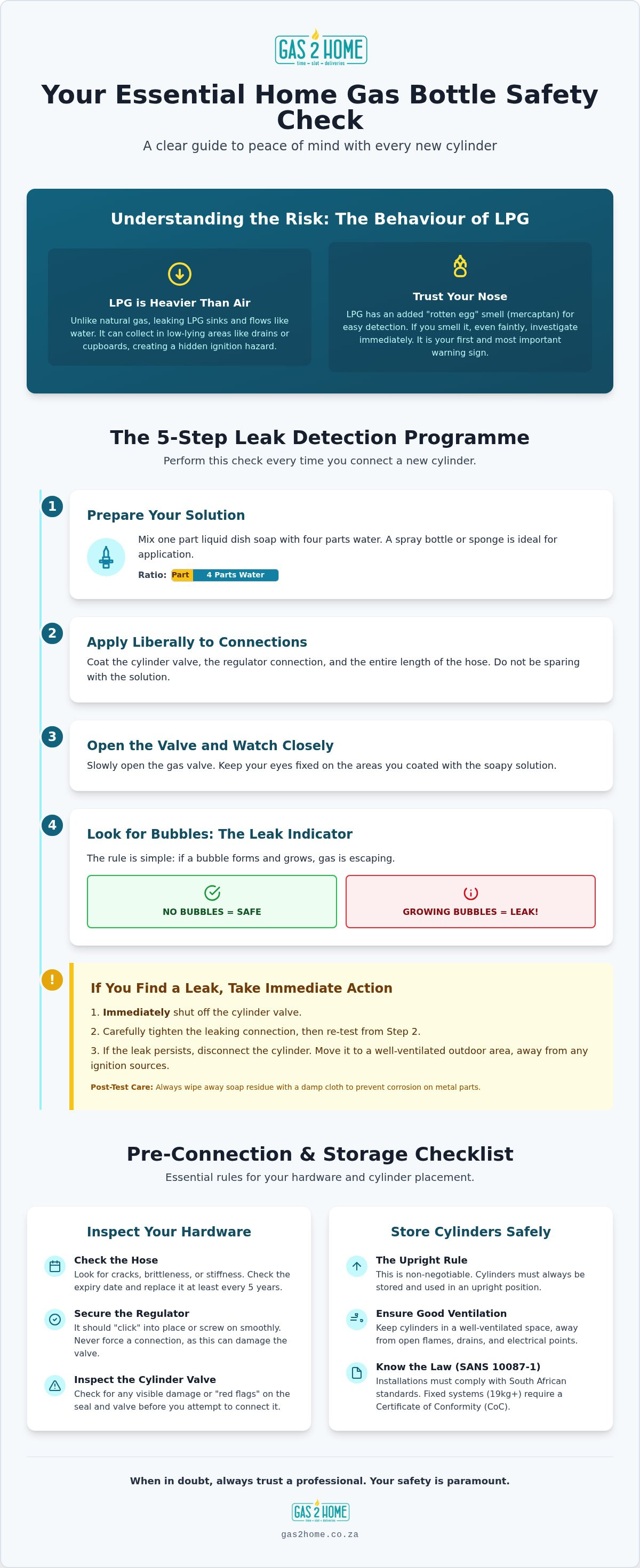
Never use a match or lighter to check for a leak. It sounds like common sense, but people still make this dangerous mistake. A naked flame near a high-pressure cylinder is a recipe for disaster. Instead, rely on the soapy water test. This method is the cornerstone of effective gas bottle safety checks home routines. Prepare a solution by mixing one part liquid dish soap with four parts water. You don't need expensive equipment; a simple spray bottle or a sponge will work perfectly. You must commit to this test every single time you swap a cylinder, regardless of whether you are using a small 9kg bottle or a large 48kg installation.
Step-by-Step: Conducting the Soapy Water Test
Apply the solution liberally to the cylinder valve, the regulator connection, and the full length of the hose. Open the cylinder valve slowly whilst watching the connections closely. If you see bubbles forming, growing, or multiplying, you have found a leak. The bubble rule is simple: if the bubble grows, gas is escaping. If bubbles appear, shut the valve immediately and tighten the connection. If the bubbles persist, disconnect the cylinder and move it to a well-ventilated outdoor area. Always wipe away the soap residue with a damp cloth once you are finished. Leaving soap on the metal can lead to corrosion, which may weaken the valve or regulator over time. For a deeper look at handling standards, these Compressed Gas Association cylinder safety tips offer excellent guidance.
Inspecting the Regulator and Hose
Your safety relies on the integrity of your hardware. Inspect the rubber hose for any signs of "perishing," which appears as small cracks or a hard, brittle texture. If the hose doesn't bend easily, it's time for a new one. Check the hose for an expiry date; most manufacturers recommend replacement every five years to ensure the rubber remains flexible and airtight. When attaching the regulator, ensure it "clicks" firmly into place or screws on smoothly. Never force a connection, as cross-threading can damage the valve and create a permanent leak path. If you feel any resistance or hear a faint hiss, stop immediately. You can always request a professional gas connection service to have an expert verify your setup during your next delivery.
Safe Storage and Ventilation: Organising Your Gas Setup
Cylinders must always be stored and used in an upright position. This is the non-negotiable golden rule of LPG safety. When a bottle is tilted or lying down, liquid gas can reach the valve instead of vapour. This leads to dangerous flare-ups and equipment failure. Proper ventilation is your best friend in any setup. Because LPG is heavier than air, it requires a clear path to disperse. Without constant airflow, gas can pool in low points or "dead zones," creating a significant fire hazard. Part of your regular gas bottle safety checks home routine should involve clearing away any debris, leaves, or clutter around your storage area. You must also ensure your bottles are shielded from the intense Cape Town sun. Extreme heat increases the internal pressure of the cylinder, which might trigger the pressure relief valve.
Indoor vs Outdoor Storage Rules
In South Africa, regulations permit a maximum of 9kg of LPG to be stored indoors. This limit exists to minimise risk within confined living spaces. If you use 14kg, 19kg, or 48kg cylinders, they must always live outside in a dedicated, lockable cage. Avoid "cupboard traps" at all costs. If your 9kg bottle is kept under a kitchen counter, the cupboard must have adequate vents at the bottom. These vents allow any escaping gas to drain away safely rather than accumulating in the dark corners of your cabinetry. Never store gas bottles in basements or near floor-level drains, as escaping gas will naturally flow into these areas and settle.
Securing Your Cylinder Amongst High Traffic Areas
Stability is essential in busy homes, especially those with active children or pets. A falling cylinder can easily damage the regulator or sever a high-pressure hose. Always place your bottle on a level, non-combustible base such as concrete or brick. Never leave a cylinder on a wooden deck, long grass, or uneven soil where it might wobble. For those managing a "braai centre" on the patio, maintain a safe distance between the grill and the bottle. Radiated heat from the coals can affect the integrity of the rubber hose and the valve seals. When performing your gas bottle safety checks home, ensure the cylinder is at least one metre away from any door or window and at least two metres away from any electrical point or drain.
- Keep cylinders at least five metres away from any open flame or heat source.
- Ensure the area is clear of combustible materials like dry wood or paper.
- Check that the storage cage is properly earthed if using large 48kg installations.
Inspecting Your Cylinder: Identifying Red Flags Before Connection
Your safety routine starts the moment the delivery vehicle pulls into your driveway. Don't wait until you're alone in the kitchen to begin your gas bottle safety checks home. A quick "First Look" inspection whilst the driver is still present can save you hours of frustration and potential risk. If you identify any signs of a bad gas connection or a faulty cylinder, you can address it immediately. This proactive approach ensures you only accept equipment that meets the highest safety standards. It's much easier to swap a bottle at the gate than it is to arrange a return later in the day.
Physical Defects to Watch For
Check the body of the cylinder for excessive rust or deep dents. Surface scratches and minor paint chips are normal in a busy exchange programme, but deep gouges can compromise the integrity of the steel. Pay close attention to the foot-ring at the base. If the bottle wobbles when placed on a flat surface, it's unstable and dangerous for use. Inspect the valve threads carefully. Any signs of flattening or cross-threading will prevent your regulator from forming a gas-tight seal. If the threads look damaged, do not attempt to force the connection. A damaged valve is a primary cause of leaks and should be flagged to the delivery team immediately for a replacement.
The Seal of Quality
Every legitimate cylinder should arrive with a tamper-evident plastic seal over the valve. This seal is your guarantee that the bottle was filled at an authorised facility and contains the correct weight of gas. An unsealed bottle is a major red flag for an unauthorised or "pirate" refill. These refills often bypass critical safety inspections and may use inferior gas mixtures. Look for the tare weight and the expiry stamp on the neck of the cylinder. If the stamp indicates the bottle is past its periodic inspection date, point it out to the driver. You have every right to refuse a delivery if the cylinder appears neglected or unsafe. Honest providers value your safety and will happily provide a better bottle.
Reliability is at the heart of our service. If you're looking for a provider that prioritises these standards, you can order your LPG cylinder online today and let our trained drivers handle the heavy lifting and safety verification for you. We ensure every bottle is in top condition before it reaches your home.
Professional Connection Services: The Gas2Home Safety Advantage
While many homeowners feel confident handling a spanner, DIY connection remains the leading cause of minor gas incidents in South African homes. It's remarkably easy to cross-thread a regulator or fail to seat a washer correctly when you're in a hurry. These small errors lead to slow, persistent leaks that might go unnoticed until they become a hazard. Choosing a professional connection service is a smart way to simplify your gas bottle safety checks home routine. It moves the technical responsibility from your shoulders to a trained expert who understands the nuances of different valve types and seals.
Our drivers aren't just delivery people; they are masters of local logistics and safety. They're trained to spot environmental hazards that you might miss, such as a nearby drain or a faulty electrical point that violates SANS 10087-1 regulations. This level of expertise is especially useful for those using our most popular sizes. You can learn more about managing these in our 9kg gas cylinder guide, which covers everything from usage tips to local storage rules. Our "Order, Deliver, Connect" model ensures that your gas is ready to use safely the moment we leave your property.
What Our Connection Service Includes
When you request a connection, our professional doesn't just drop the bottle and leave. They perform a physical connection of the regulator to your 9kg, 14kg, or 19kg cylinder. Once the hardware is in place, they conduct a rigorous on-site leak test using the soapy water method. This verification step is vital for your peace of mind. Finally, the driver provides a quick briefing on how to operate the valve safely and what to look for in the future. It's a comprehensive handover that ensures you feel confident using your appliances immediately.
Peace of Mind for Cape Town Residents
This managed service is a favourite amongst elderly residents and those who are new to using LPG in their homes. It removes the physical strain of moving heavy bottles and the technical stress of ensuring a gas-tight seal. We operate on a reliable Monday to Saturday delivery schedule across Cape Town, ensuring you never have to wait long for a refill. Please note that we don't offer Sunday deliveries, so it's always best to book your connection ahead of the weekend rush. You can order your gas delivery with professional connection today and experience a frictionless, safety-first service that puts your family's protection at the forefront of every transaction.
Take Control of Your Home Gas Safety
Establishing a consistent routine for gas bottle safety checks home is the most effective way to protect your property and family. By mastering the soapy water test and ensuring your cylinders are stored in well-ventilated, upright positions, you eliminate the guesswork from using LPG. Remember that safety starts at the gate; always inspect your cylinder for seals and physical defects before the delivery driver leaves. These simple habits turn a potentially stressful utility into a reliable, everyday convenience.
If you prefer to leave the technical details to the experts, we're here to help. We are trusted by local restaurants and homes across the city for our expertise in local Cape Town logistics. You can book your safe gas delivery and professional connection in Cape Town to enjoy the peace of mind that comes with a certified setup. Our team provides a professional connection service included with every order, along with same-day delivery to keep your home running smoothly. Don't let safety concerns hold you back from the benefits of gas. Stay proactive, stay informed, and enjoy the warmth and efficiency of a well-managed home gas system.
Frequently Asked Questions
How often should I perform gas bottle safety checks at home?
You should conduct a basic inspection every time you exchange a cylinder. Perform the soapy water test on the valve and regulator connection during every new installation to ensure a gas-tight seal. Check your rubber hoses for cracks or stiffness at least once a month. Establishing a consistent routine for gas bottle safety checks home ensures that small issues are caught before they become significant hazards for your household.
Can I store my 9kg gas bottle inside my kitchen cupboard?
Yes, you can store a 9kg cylinder indoors, but the cupboard must meet specific ventilation requirements. The storage area needs vents at the bottom to allow any escaping gas to drain away safely. Since LPG is heavier than air, it will pool in the base of a sealed cupboard, creating a fire risk. Larger cylinders, such as 19kg or 48kg bottles, must always be stored outside in a lockable cage.
What should I do if I smell gas but cannot see a leak?
Turn off the cylinder valve immediately and extinguish all open flames. Open every window and door to create a through-draught and disperse the gas. Don't use electrical switches, torches, or mobile phones in the affected area, as a tiny spark could ignite the vapour. If the smell persists after the valve is shut, move the bottle outdoors and contact a professional to inspect your appliances and connections for hidden faults.
Is it safe to transport a gas bottle in the boot of my car?
It's not ideal, but if you must transport a cylinder, keep it upright and secured so it cannot fall over. Ensure the vehicle is well-ventilated by keeping windows open. Never leave a gas bottle in a hot, parked car, as the rising temperature increases internal pressure. Our same-day delivery service in Cape Town removes this risk entirely by bringing your 9kg or 14kg refills directly to your door in specialised vehicles.
How do I know if my gas regulator is faulty and needs replacing?
A faulty regulator often shows signs like a persistent hissing sound or a faint smell of gas near the connection. You might also notice an inconsistent flame on your stove, such as a lazy orange flame instead of a crisp blue one. If the internal rubber seal looks perished or the regulator doesn't "click" firmly into place, replace it immediately. Most experts recommend replacing regulators every five to ten years for safety.
Does Gas2Home connect the gas bottle for me upon delivery?
Yes, we include a professional connection service with every delivery. Our trained drivers will physically connect your 9kg, 14kg, or 19kg cylinder to your appliance and perform a leak test before they leave. This ensures your setup is safe and compliant with local standards. This service is a core part of our commitment to providing a frictionless and reliable energy solution for homes and restaurants across Cape Town.
What is the maximum number of gas cylinders I can keep at home?
South African regulations typically limit indoor storage to a maximum of 9kg of LPG per household. If you require more gas for heating or large stoves, the additional cylinders must be stored outdoors. Installations that exceed a total of 100kg of gas require formal fire department approvals and a site plan. Always ensure your outdoor bottles are kept in a well-ventilated area away from drains and electrical points.
How can I tell if my gas hose has expired or is unsafe?
Check the date stamp printed on the side of the rubber hose. Most manufacturers recommend replacing the hose every five years to ensure the material remains flexible and airtight. If you see tiny cracks when you bend the hose, or if it feels brittle and hard, it is unsafe for use. Replacing a worn hose is a quick and essential part of your gas bottle safety checks home routine.