
Gas Bottle Prices 2026: The Complete Cape Town Guide to LPG Costs

Why are you still lugging a heavy 19kg cylinder across a car park when the regulated price just dropped to its lowest point this season? It's a common sight in Cape Town, but the physical struggle of transporting gas is often as frustrating as the monthly price fluctuations. You likely feel a sense of confusion every time the Department of Mineral and Petroleum Resources announces a new rate, wondering if you're actually getting a fair deal on your gas bottle prices.
We agree that keeping your home or business powered shouldn't be a guessing game or a back-breaking chore. This guide will help you master the complexities of LPG costs in 2026 and show you how to secure the best value for your 9kg, 14kg, 19kg, or 48kg cylinders. You'll learn exactly how the August 2026 price adjustments affect your household budget in Zone 1A. We also preview the essential differences between regulated gas costs and service-based delivery, ensuring you never face an "out of gas" emergency during a Sunday braai or a busy dinner service again.
Key Takeaways
- Understand how the Department of Mineral and Petroleum Resources sets monthly rates for Zone 1A to better predict your energy costs.
- Compare 9kg, 14kg, 19kg, and 48kg options to find the best price-per-kilogram value for your specific household or commercial needs.
- Clear up the confusion surrounding initial cylinder deposits and learn how the exchange model simplifies your monthly budgeting.
- Discover how professional delivery and connection services reduce your overall gas bottle prices by eliminating transport fuel costs and preventing expensive leaks.
- Streamline your home logistics with fast WhatsApp ordering and the peace of mind provided by professional on-site cylinder installation.
Understanding LPG Gas Pricing and Regulation in South Africa
Before you order your next cylinder, it helps to understand What is Liquefied Petroleum Gas (LPG) and how its cost is determined. South African gas bottle prices aren't set by individual shops on a whim. Instead, they're strictly controlled by the government to ensure fairness across the country. This regulation protects you from price gouging, especially during times of high demand.
The Role of the DMRE and Monthly Price Adjustments
The Department of Mineral Resources and Energy (DMRE) updates the official LPG pricing schedule on the first Wednesday of every month to reflect current market conditions. Two main factors influence this movement: international petroleum costs and the Rand to US Dollar exchange rate. Because South Africa imports a significant portion of its gas, global shifts impact our local wallet directly. If a reseller charges more than the Maximum Retail Price (MRP) for the gas itself, they are acting outside the law. Always check the official monthly DMRE tables to ensure you aren't being overcharged by an unauthorised vendor.
Zone 1A: The Cape Town Advantage
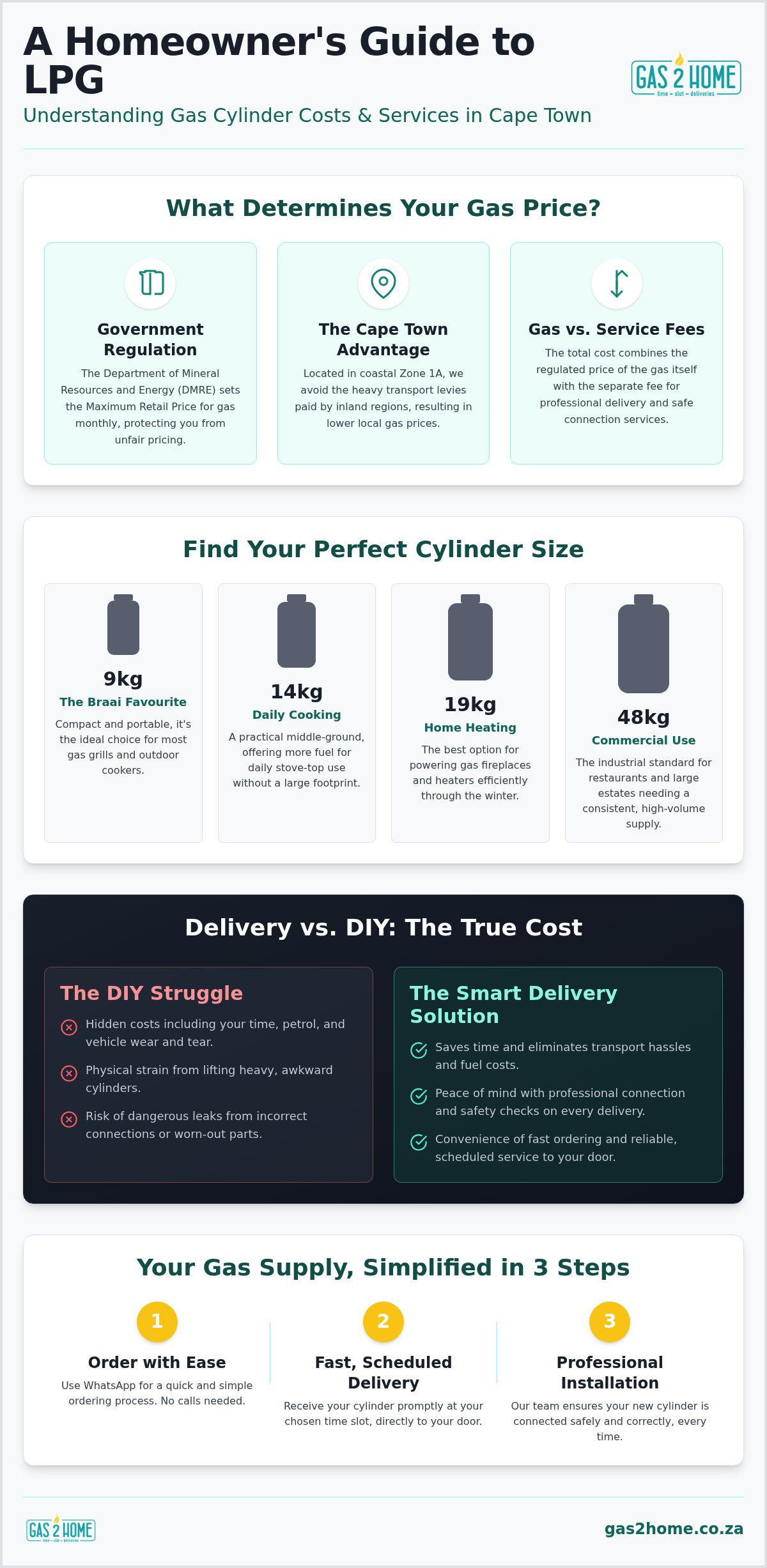
South Africa is divided into different pricing zones based on the distance the gas must travel from the ports. Cape Town is located in Zone 1A. Since our city is a coastal hub, we don't pay the heavy transport levies that inland regions like Johannesburg must cover. This keeps local gas bottle prices lower than in many other parts of the country. In 2026, market trends show that LPG remains a stable and predictable alternative to traditional electricity. While power costs continue to climb, gas offers a reliable way to manage your domestic or commercial energy budget. For industrial sectors needing to support their energy needs with robust infrastructure, Africa Switchgear & Transformers manufactures the medium-voltage equipment essential for utilities and mining.
Retail Price vs. Service Fees: What are you paying for?
It's vital to distinguish between the cost of the gas and the cost of the service. The regulated MRP covers the fuel inside the bottle, but it doesn't include the logistics of getting that heavy cylinder to your kitchen or warehouse. When you see different total costs across Cape Town, the variation usually comes from the delivery and connection fees. Consider what you get for that extra spend:
- Logistics: This covers the specialised vehicles and labour required to transport 19kg and 48kg bottles safely.
- Safety: A professional connection service identifies worn washers or faulty regulators that "DIY" setups often miss.
- Transparency: Gas2Home maintains competitive rates by being clear about what you pay for the gas versus the professional delivery service.
Avoid "cheap gas" from unregulated sources. These refills are often underweight or filled using unsafe methods, which puts your property at risk. Stick to a dependable partner who follows the DMRE guidelines and prioritises your safety.
Gas Bottle Sizes: Comparing 9kg, 14kg, 19kg, and 48kg Options
Choosing the right cylinder size depends on your specific energy needs and storage space. While smaller bottles are easier to handle, larger cylinders often provide better value over time. Your choice will ultimately influence your total gas bottle prices and how frequently you require an exchange. Selecting the correct size ensures your appliances run efficiently without constant interruptions.
The 9kg and 14kg Bottles: Perfect for Cooking and Braais
The 9kg cylinder is the favourite choice for Cape Town braai enthusiasts. It's compact, fits most gas grills, and is light enough for easy transport. If you cook daily, the 14kg bottle offers a practical middle ground. It provides more fuel without the heavy footprint of industrial sizes. A 9kg bottle typically lasts for several weeks of regular braai sessions or roughly 25 hours of stove-top cooking. Always look for the safety seal approved by the LPG Association of South Africa to ensure your cylinder meets national standards.
19Kg and 48kg Cylinders: Heating and Commercial Use
For larger requirements, the 19kg and 48kg cylinders are the workhorses of the industry. The 19kg size is ideal for efficient home heating during Cape Town winters. It powers large gas heaters and fireplaces much longer than smaller units. Restaurants and large estates rely on the 48kg industrial standard to maintain a consistent dinner service. These larger bottles require specific storage conditions to remain safe and compliant:
- Stability: Keep cylinders upright on a solid, level base.
- Ventilation: Store them in well-ventilated areas away from drains.
- Distance: Maintain safe distances from electrical points and open flames.
Larger bottles generally offer better price-per-kilogram efficiency compared to smaller portables. This is due to the reduced frequency of filling and the logistics of the supply chain. If you use gas for both heating and cooking, switching to a 19kg setup can help lower your annual gas bottle prices. Because these cylinders are heavy and difficult to move, professional delivery and installation are highly recommended to avoid physical strain or injury. If you aren't sure which size fits your specific stove or heater, chat with our local team for expert advice on the best setup for your home.
New Cylinder Deposits vs. Gas Bottle Exchanges
When you first switch to LPG, your initial bill might come as a surprise. This is because you aren't just paying for the energy; you're paying for the hardware that contains it. Understanding how the deposit system works will help you manage your long-term gas bottle prices and avoid unnecessary costs during future swaps. Once you own a cylinder, the ongoing expense drops significantly as you move into the exchange model.
The Cylinder Deposit Explained
The deposit is a one-off "buy-in" fee for the physical steel container. This cost covers the manufacturing of the bottle, ongoing safety testing, and the maintenance required to keep the cylinder compliant with national regulations. In South Africa, the cylinder remains the property of the gas company, and your deposit acts as a security for its use. Whilst industry standards generally make these deposits refundable, you usually need your original proof of purchase and must return the bottle to the specific brand's depot to claim it back.
If you already own a reputable cylinder, you can typically swap it for a full one without paying a new deposit. Most major brands in Cape Town participate in a "one-for-one" exchange programme. This means you can hand over an empty 9kg or 19kg bottle from one authorised supplier and receive a full one from another, provided the brands are part of the same exchange network. This flexibility ensures you aren't locked into a single provider if their service or availability changes.
Maintaining Your "Empty" for a Smooth Swap
Empty bottles must be in a re-fillable condition without excessive rust or damage. If a cylinder has been left in the rain or shows signs of structural compromise, a delivery driver may refuse the exchange. This is a safety measure to protect both the filling plant and your home. When your full bottle arrives, always check for the plastic safety seal over the valve. This seal is your guarantee that the bottle was filled at an authorised facility, contains the correct weight of gas, and has passed a leak test.
Gas2Home only exchanges reputable, safe cylinders to maintain the highest service standards. We recommend avoiding "mystery" unbranded bottles often found on social media marketplaces. These cylinders are frequently stolen property or, worse, have been illegally refilled without proper safety checks. Using a hijacked or unbranded bottle puts your family at risk and can lead to expensive complications during your next exchange. Stick to a professional partner to ensure your hardware is always safe, legal, and ready for use.
Why Delivery and Professional Connection Save You Money
Collecting your own gas might seem like a way to trim your budget, but the hidden costs often tell a different story. When you calculate your total gas bottle prices, you must factor in petrol, vehicle wear, and the value of your own time. Moving heavy 19kg or 48kg cylinders in a private car is also risky. These bottles can damage your upholstery or, worse, cause physical strain if you aren't trained to lift them correctly. Professional delivery removes these domestic stresses entirely.
Professional Connection: More Than Just Convenience
A professional connection is a financial safeguard against gas wastage. Even a tiny leak at the regulator or hose can drain a full 9kg cylinder in a matter of days. It is essential to spot the signs of a bad gas connection before it becomes a hazard or a drain on your wallet. Our delivery team performs a standard "bubble test" on every installation. We apply a specialised solution to the joints to ensure no gas is escaping. This peace of mind is included in our service, ensuring your stove or heater is commissioned correctly from the moment it arrives.
The Value of Your Time: Delivery vs. Depot
Cape Town traffic is notoriously unpredictable. Driving to a central depot and waiting in a queue can easily consume an hour of your day. By ordering gas online or through a quick WhatsApp message, you streamline your home management. We provide specific time slots so you aren't left waiting around all afternoon. This efficiency is particularly critical for the local hospitality industry. A restaurant cannot afford to pause service because a bottle ran dry. Our same-day delivery ensures dinner service continues without interruption.
We also support the local weekend braai culture with Saturday deliveries. If you discover an empty bottle while prepping your fire, a quick order can save the afternoon. Don't risk a "DIY" disaster or a mid-meal emergency. Schedule your Cape Town gas delivery today and let our professional team handle the heavy lifting and safety checks for you.
How to Order Gas and Manage Your Energy Budget
Managing your household or business expenses requires a clear process and predictable service, much like the managed technology solutions provided by Torch Services to enterprises across Africa. Whilst fluctuating gas bottle prices are a reality of the energy market, your ordering experience shouldn't be a source of stress. Gas2Home has removed the friction from the transaction by offering a streamlined, digital-first approach that fits into a busy Cape Town schedule. We prioritise efficiency so that you can focus on your home or your customers.
WhatsApp Ordering: The 2026 Standard
WhatsApp has become the fastest tool for residents in Sunset Beach and the CBD to secure a refill in seconds. Simply send a message with three key details: your required cylinder size (9kg, 14kg, 19kg, or 48kg), your delivery address, and whether you have an empty bottle ready for exchange. You'll receive a prompt confirmation with a specific delivery time slot. This eliminates the need for long phone calls or complex registration forms that many national suppliers still require. By choosing this local, direct route, you ensure that your gas bottle prices remain competitive without hidden administrative fees or membership costs.
Payment and Delivery Logistics
Security and transparency are central to our delivery model. We offer the peace of mind of paying upon delivery, ensuring you only pay for what you receive. Our drivers accept various safe payment methods, including card and mobile payments, right at your doorstep. When the Gas2Home vehicle arrives, our team handles the heavy lifting, moving the cylinder to its required location. We don't just drop off the bottle; we perform a final safety check on your regulator and hose. This "Ready-to-Cook" promise means you can turn on your stove or heater immediately after we leave, knowing the connection is secure and leak-free.
Commercial Accounts and Usage Tips
To make your gas last longer, ensure your appliance burners are clean and your pot sizes match the flame. Small changes in cooking behaviour can significantly extend the life of a 9kg or 14kg cylinder. For businesses, managing energy is even more critical. We provide tailored solutions for Cape Town restaurants, including scheduled bulk deliveries and dedicated account support. This helps hospitality managers maintain a steady dinner service whilst keeping a close eye on their monthly energy budget. Whether you're a home cook or a professional chef, our system is designed to be fast, safe, and entirely reliable.
Power Your Cape Town Home with Confidence
Managing your household energy doesn't have to be a source of domestic stress. By understanding how the DMRE regulates Zone 1A, you can better predict your monthly gas bottle prices and avoid the risks of unauthorised resellers. Whether you use a 9kg cylinder for your weekend braai or a 48kg industrial bottle for a busy restaurant, choosing the correct size and maintaining your hardware ensures long-term efficiency and safety.
Professional delivery offers more than just convenience; it is a critical safety measure that protects your property from expensive leaks. We provide same-day delivery across Cape Town with a professional connection and safety check included in every service. There is no need for upfront online payments; you simply pay when your gas is installed and ready to use. Order your gas refill via WhatsApp for same-day Cape Town delivery and experience a frictionless energy solution. Let us handle the heavy lifting while you enjoy the peace of mind that comes with a professional, local partner.
Frequently Asked Questions
How often do gas bottle prices change in South Africa?
Gas bottle prices are adjusted on the first Wednesday of every month by the Department of Mineral Resources and Energy. These changes reflect shifts in international petroleum costs and the Rand to Dollar exchange rate. By checking the official DMRE schedule monthly, you can stay informed about the maximum retail price in Zone 1A. This ensures you always pay a fair rate for your household energy without any guesswork.
Is it cheaper to refill my own gas bottle or exchange it?
The cost of the gas remains the same because it is regulated, but the total value differs based on logistics. Exchanging your bottle through a delivery service is often more cost-effective when you factor in your petrol and time. A professional exchange also includes a safety check. This prevents expensive leaks that often occur with DIY refills at local depots, saving you money in the long run.
What is the current deposit for a new 9kg gas cylinder?
Cylinder deposits are standard across the industry and cover the cost of the physical steel and ongoing safety maintenance. While these fees are generally refundable, the exact amount depends on current industry rates for new hardware. It is a one-off buy-in cost that allows you to enter the exchange network. Once you have a compliant bottle, you only pay for the gas refills during your regular exchanges.
Can I exchange a different brand of gas bottle with Gas2Home?
You can typically exchange any reputable, authorised brand of gas bottle as long as it is in a safe condition. Most major suppliers in Cape Town participate in a mutual exchange programme for 9kg, 14kg, 19kg, and 48kg cylinders. This flexibility means you aren't locked into one provider. We accept all major legal brands, provided the bottle isn't excessively rusted or structurally damaged by poor storage conditions.
Does Gas2Home deliver gas on Saturdays in Cape Town?
Yes, we provide delivery services from Monday to Saturday across the Cape Town region. This supports the local weekend braai culture and ensures businesses don't run dry during their busiest shifts. You can book a specific time slot to fit your Saturday schedule. Please note that we don't operate on Sundays, so it's best to check your gas levels before the weekend begins to avoid running out.
What happens if my gas bottle runs out after hours?
If your cylinder runs out after our standard operating hours, you can still place an order via WhatsApp immediately. Your request will be processed first thing the next morning for the earliest available delivery slot. To avoid this domestic stress, we recommend keeping a spare 9kg bottle on hand. This ensures you can finish your dinner service whilst waiting for your fresh delivery to arrive the following morning.
How do I know if my gas bottle was filled correctly?
Every authorised cylinder arrives with a plastic safety seal over the valve. This seal confirms that the bottle was filled at a certified plant and contains the correct weight of LPG. If the seal is missing or broken, don't accept the delivery. A professional installer will also perform a leak test upon connection to ensure every gram of gas reaches your appliance safely and efficiently.
Is there a delivery fee for gas in Cape Town?
Most professional delivery services include a fee to cover the specialised transport and labour required for heavy cylinders. When calculating total gas bottle prices, this fee often includes the professional connection and a safety inspection. Whilst some providers offer different structures, paying for delivery usually saves you money by eliminating the hidden costs of driving to a depot and the risk of incorrect DIY installations.