
Gas Bottle Installation Cape Town: Professional Setup & Safety Guide 2026

Did you know that a single loose connection during a gas bottle installation Cape Town residents attempt themselves could legally void their home insurance policy? It's a common worry for many homeowners who want the efficiency of gas but fear the risks of a DIY setup. You shouldn't have to choose between saving money and keeping your family safe. We understand that lugging a heavy 48kg cylinder or figuring out complex safety regulations feels like a massive chore.
This guide helps you master the essentials of a professional setup for total peace of mind. You'll learn how to ensure your connection remains fully compliant with the latest South African safety standards, including SANS 10087-1:2024. We'll walk you through the legal requirements for a Certificate of Compliance (CoC), the specific indoor storage limits for flats and houses, and how to get your gas delivered and connected safely in a single visit. It's time to take the stress out of your home energy and focus on the convenience of a reliable, tested connection.
Key Takeaways
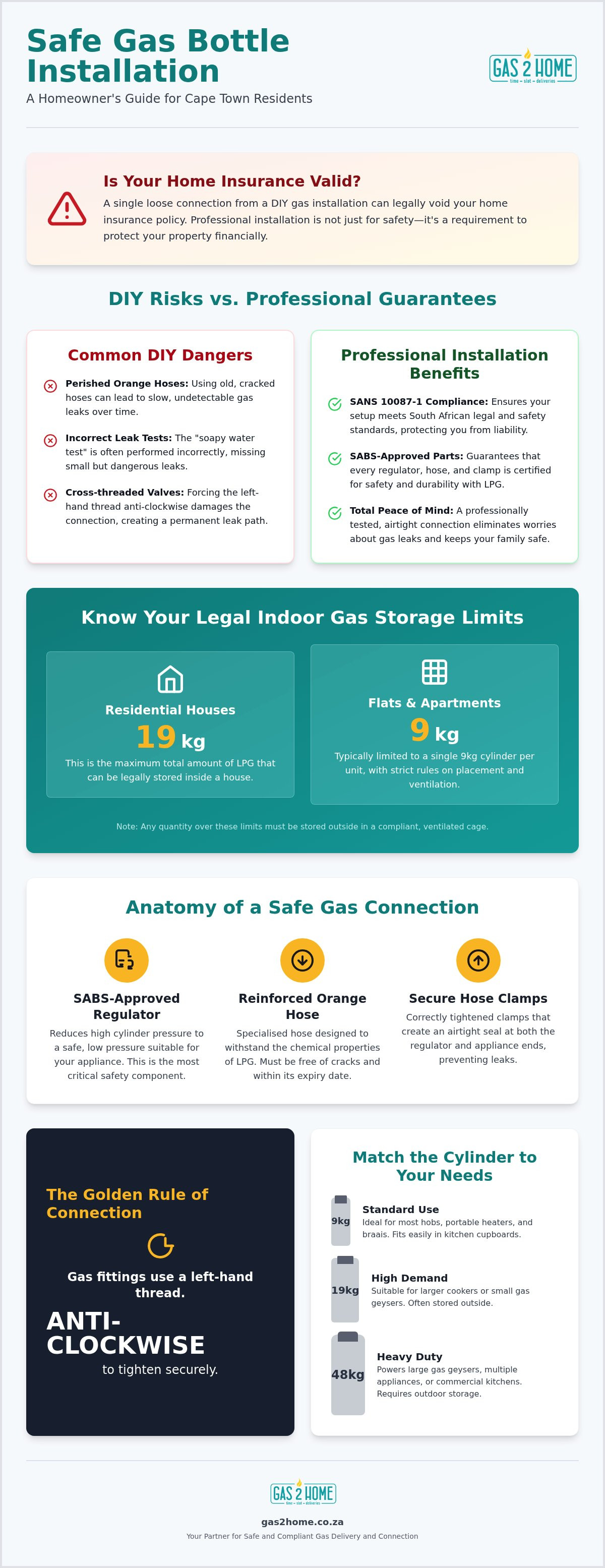
- Understand why professional gas bottle installation Cape Town services are essential for meeting SANS 10087-1:2024 standards and keeping your home insurance valid.
- Learn to identify SABS-approved components, such as regulators and hoses, that are critical for preventing leaks and maintaining safe appliance pressure.
- Master the "left-hand thread" rule and other essential safety steps to ensure every cylinder swap is secure and leak-free.
- Recognise the legal storage limits for gas cylinders in Cape Town houses versus flats to ensure your setup remains safe and compliant.
- Discover how to streamline your home energy needs by combining scheduled delivery with a professional connection service in one easy visit.
Why Professional Gas Bottle Installation is Essential for Cape Town Homes
A gas bottle installation Cape Town families can trust involves the secure connection of an LPG cylinder to a domestic appliance using approved regulators and hoses. It sounds simple, but the mechanics require precision. When you switch to gas for cooking or heating, you are introducing a pressurised fuel into your living space. Professional setup ensures that every joint is airtight and every component is rated for the specific pressure of your appliance.
Choosing an expert setup provides immediate peace of mind. You don't have to worry about the faint smell of gas in the kitchen or whether the connection is vibrating loose. More importantly, professional installation protects your home insurance coverage. In South Africa, insurance companies require gas systems to be compliant with national regulations. If an incident occurs and the investigation finds a faulty DIY connection, your provider may refuse to pay out for damages.
Avoiding Common DIY Hazards amongst Homeowners
Many residents unknowingly put their homes at risk by using old or perished orange hoses. These hoses have a limited lifespan and can develop microscopic cracks that leak gas over time. Homeowners often try to verify their work using the "soapy water test," but this is frequently done incorrectly. If the soap mixture is too thick or the lighting is poor, tiny bubbles indicating a leak are easily missed.
Another frequent mistake involves the bullnose nut. Because gas fittings use a left-hand thread, you must turn the nut anti-clockwise to tighten it. We often see valves that have been cross-threaded or over-tightened by people trying to force the connection. This damages the brass seating and creates a permanent leak path that no amount of tightening can fix.
Understanding South African Safety Standards (SANS)
Domestic gas use is governed by strict regulations to prevent accidents. SANS 10087-1 is the mandatory code of practice for handling and installing LPG cylinders in South Africa. These gas cylinder safety standards dictate everything from where a bottle can be stored to the type of piping allowed through walls.
Compliance is not just about avoiding a fine. It's about legal liability. If a leak from an uncertified installation affects a neighbouring property or causes injury, the homeowner is legally responsible. Ensuring your gas bottle installation Cape Town setup meets these standards is the only way to guarantee both your physical safety and your financial security.
Technical Requirements for Safe Gas Cylinder Setup
Professional gas bottle installation Cape Town standards require specific technical components to function safely. The most critical piece of hardware is the regulator. This device controls the high pressure coming out of the cylinder and reduces it to a consistent, low pressure that your stove or heater can handle. Without a functioning regulator, your appliance could flare up or experience a flame failure, leading to dangerous gas accumulation. All components, including the regulator, reinforced orange hoses, and hose clamps, must be SABS-approved to withstand the chemical properties of LPG.
Safety is a matter of strict compliance with South African gas installation regulations. These rules distinguish between internal and external setups based on the volume of gas stored. For residential houses in Cape Town, you are legally allowed to store up to 19kg of gas indoors. However, if you require a larger supply, the cylinders must be moved outside into a ventilated cage. Proper ventilation is non-negotiable. Gas is heavier than air and will pool on the floor in an unventilated room, creating a significant fire hazard. If you are unsure about your current setup, our team provides a professional gas connection service with every delivery to ensure your home remains safe.
Matching Bottle Sizes to Your Appliances
Choosing the right cylinder depends on your energy demand. A 9kg gas cylinder is the standard choice for most domestic hobs and portable heaters. It fits easily into most kitchen cupboards and provides several weeks of cooking time for an average family. High-demand appliances like gas geysers or large ovens usually require a 19kg or 48kg bottle to maintain consistent flow rates. Before buying, measure your designated storage space. A 48kg cylinder stands approximately 1.3 metres tall and requires a solid, level base for stability.
Ventilation and Placement Regulations in Cape Town
Placement is governed by the SANS 10087-1 distance rules. Your gas bottle must be at least 1 metre away from any door or window and at least 2 metres away from any drain or manhole. These gaps prevent leaking gas from entering your home or the sewage system. Electrical sources, such as outdoor plugs or air conditioning units, must be at least 5 metres away from the cylinders. In high-density areas like the Cape Town CBD, apartment dwellers must adhere to a strict 9kg limit for indoor storage. Gas bottles should never be installed in basements or any area without natural airflow at floor level.
Comparing Permanent Gas Installations and Delivery-Based Connections
Choosing the right setup depends on your property type and long-term energy needs. A permanent installation involves fixed piping that runs through walls or structures to connect an external gas cage to your indoor appliances. This is common for large homes with multiple gas points. In contrast, a "simple connection" is a direct link between a portable cylinder and a single appliance, such as a freestanding stove or a mobile heater. While permanent setups offer a high-capacity solution, they require structural changes and higher upfront costs for plumbing and materials.
For many residents, the flexibility of a delivery-based model is more practical. This is especially true for renters or small households who cannot modify their building's structure. A professional gas bottle installation Cape Town service during delivery allows you to enjoy the benefits of gas without the heavy investment in fixed infrastructure. You get a safe, tested connection that can move with you if you change homes. It bridges the gap between dangerous DIY attempts and the complexity of full-scale gas plumbing.
When Do You Need a Certificate of Compliance (CoC)?
Legislation requires a Certificate of Compliance (CoC) for all permanent gas installations in South Africa. If your gas line passes through a wall or if you have a fixed geyser, you must have this document. It proves the work meets SANS 10087-1 standards and is essential for insurance and property sales. For portable appliances like mobile heaters or stoves connected directly to a bottle in the same room, a CoC is generally not required. However, safety checks remain vital. Always ensure any permanent piping projects are handled by a registered LPGSA installer to remain legally compliant.
The Benefits of a 'Connect-on-Delivery' Service
The convenience of gas connected on delivery saves you time and physical effort. Instead of struggling with heavy 19kg or 48kg cylinders, you let experts handle the heavy lifting and the technical setup. Professional delivery teams spot potential issues that a homeowner might miss, such as a cracked seal or a regulator that has reached its five-year expiry date. They verify the flame quality and ensure the connection is airtight before they leave. This approach guarantees your gas bottle installation Cape Town setup is safe every time you swap a cylinder, providing a level of ongoing safety that a one-time permanent installation cannot match.
Step-by-Step Guide to a Safe Gas Connection
Connecting a cylinder requires a methodical approach to ensure your home remains hazard-free. Start by confirming that all appliance knobs are in the "off" position. This simple step prevents gas from flowing through the system the moment you open the cylinder valve. Before you attach the regulator, perform a visual inspection of the rubber "nose" or O-ring on the bullnose fitting. This seal must be supple and free from cracks or deformations. A perished O-ring is the most common cause of leaks in a gas bottle installation Cape Town setup.
You must remember the left-hand thread rule during the physical connection. Unlike standard plumbing, you turn the bullnose nut anti-clockwise to tighten it. This design is a critical safety feature. Hand-tighten the nut first to ensure the threads are properly aligned. Once it's seated, use a shifting spanner to secure it firmly. Do not over-tighten the nut, as this can crush the rubber seal and actually cause a leak. Once connected, follow this simple checklist: sniff for the distinct "rotten egg" odour of LPG, listen for any faint hissing sounds, and perform a bubble test.
Essential Safety Checks Before Igniting
Never use a lighter or match to check for leaks. Instead, create a solution of dishwashing liquid and water in a spray bottle or bowl. Apply the soapy water to the bullnose connection and the points where the hose meets the regulator and the appliance. Open the cylinder valve slowly. If you see "growing bubbles" that expand and pop, you have a high-pressure leak. Close the valve immediately and re-seat the connection. If you smell gas whilst connecting the cylinder, stop what you're doing. Close the valve, move the bottle to a well-ventilated outdoor area, and do not operate any electrical switches or light switches in the vicinity.
Maintaining Your Gas Hoses and Regulators
Your hardware doesn't last forever. Orange LPG hoses have a typical lifespan of 2 to 5 years. You can usually find the manufacture or expiry date printed directly on the hose. If the rubber feels stiff or shows signs of surface cracking, replace it immediately. Regulators should be replaced every 5 to 10 years to ensure the internal diaphragm continues to manage pressure accurately. Residents in coastal suburbs must be particularly vigilant. The corrosive Cape Town sea air can quickly degrade metal clamps and valves. Protect your external cylinders with a dedicated cover or a ventilated cage to shield them from salt spray and moisture. If you want the peace of mind that comes with an expert setup, you can book a professional gas connection service with your next delivery to ensure every component is in peak condition.
Seamless Gas Delivery and Installation with Gas2Home
Gas2Home was founded with a clear mission: to provide fast, safe, and affordable LPG to every corner of our city. We noticed that many suppliers simply drop a heavy cylinder at the front door, leaving the homeowner to handle the technical connection. Our unique model changes that. We don't just deliver; we ensure your gas is connected and ready to use. This holistic approach bridges the gap between buying fuel and actually using it safely in your home. Our service covers a wide area, stretching from Sunset Beach through the CBD and into the Southern Suburbs. We pride ourselves on transparent gas bottle prices, ensuring you always know exactly what you are paying with no hidden surcharges.
Providing a professional gas bottle installation Cape Town residents can rely on means we take responsibility for the final connection. Our team understands the local residential requirements and the specific challenges of Cape Town's coastal environment. We don't consider the job done until your stove is sparking or your heater is warming the room. This commitment to service removes the domestic stress of handling pressurised containers and gives you the peace of mind that your setup is compliant and secure from the moment we leave your property.
Same-Day Delivery and Professional Connection in Cape Town
Our same-day delivery service is designed around your schedule. We provide specific time slots so you can plan your day with precision. There is no need to wait for hours wondering when your gas will arrive. We operate from Monday to Saturday, making us the reliable choice for mid-week dinners or unexpected Saturday braai emergencies. To ensure your complete peace of mind, we maintain a strict "pay on delivery" policy. This means you only pay once our team has physically installed the bottle and confirmed the connection is airtight and functional.
Ordering via WhatsApp: The Modern Way to Refill
We believe that getting a gas refill should be as easy as sending a text. That's why we've pioneered a modern ordering system that puts the customer first. You can order your empty gas bottle exchange by sending a quick WhatsApp message. This direct line of communication allows us to confirm your order instantly and dispatch a driver to your location. For our regular customers, this platform makes re-ordering a five-second task. It removes the friction of traditional utility services and replaces it with a fast, friendly, and local experience. We invite you to experience the most efficient and helpful gas service in the Western Cape today.
Secure Your Home with Professional Gas Setup Today
Ensuring your home meets the latest SANS 10087-1 safety standards is the only way to enjoy the benefits of LPG without the stress of potential hazards. You now understand that a safe gas bottle installation Cape Town setup requires more than just a tight grip; it demands SABS-approved hardware, proper ventilation, and a methodical connection process. By choosing a professional service, you protect your home insurance coverage and guarantee that every meal is cooked on a system that has been tested for leaks and pressure stability.
Don't leave your family's safety to chance with risky DIY attempts or unreliable delivery services. We operate six days a week to provide a trusted local solution that prioritises your convenience and peace of mind. You can order your gas bottle for same-day delivery and professional connection in Cape Town and benefit from our precise, scheduled time slots. Our experts include a professional connection at no extra cost, so you can start using your appliances the moment we leave. Take the first step toward a safer, more efficient home today.
Frequently Asked Questions
Do I need a Certificate of Compliance for a gas stove in Cape Town?
Yes, you legally require a Certificate of Compliance (CoC) if your gas stove is part of a permanent installation involving fixed piping through walls. This is a mandatory requirement under the Occupational Health and Safety Act and SANS 10087-1:2024. If you have a freestanding stove connected directly to a bottle in the same room, a CoC is generally not required, but it's still vital to ensure the setup is safe and compliant.
How much does it cost to have a gas bottle installed?
The cost of a gas bottle installation Cape Town setup depends on whether you require permanent plumbing or a simple appliance connection. A full gas line installation by a registered practitioner involves labour and material costs for piping and valves. For standard cylinder swaps, choosing a delivery service that includes a professional connection helps you avoid the expense of a separate technician call-out fee while ensuring your home remains safe.
Can I install my own gas bottle for a heater or braai?
You can connect your own portable gas heater or braai, as these are considered simple connections rather than permanent installations. However, you must follow all safety protocols, including the left-hand thread rule and the soapy water leak test. If you feel unsure about the process, it's safer to have a professional handle the gas bottle installation Cape Town residents often prefer during their routine delivery visit.
What is the legal limit for gas storage inside a Cape Town house?
The legal limit for indoor LPG storage in a standard residential house is 19kg. If you live in a flat or a sectional title property, the limit is strictly 9kg per unit to prevent large volumes of gas from accumulating in confined spaces. Any storage exceeding these limits must be placed outdoors in a compliant, ventilated cage that meets specific distance requirements from doors, windows, and electrical points.
How often should I replace my gas regulator and hose?
You should replace your orange LPG hose every 2 to 5 years, depending on its condition and the manufacturer's expiry date printed on the rubber. Regulators are more durable but should still be replaced every 5 to 10 years to ensure consistent pressure. In Cape Town's coastal environment, salt air can accelerate corrosion, so you should check your hardware frequently for signs of stiffness, cracking, or rust.
What should I do if I smell gas after a new bottle is connected?
Turn off the cylinder valve immediately and move the bottle to a well-ventilated outdoor area if possible. Do not operate any electrical switches, light matches, or use your phone near the suspected leak, as these can create a spark. Open all windows and doors to disperse the gas. Once the area is ventilated, check the rubber O-ring for damage and ensure the connection is properly seated before testing again.
Does Gas2Home provide the regulator and hose, or just the bottle?
We specialise in the delivery of 9kg to 48kg LPG cylinders and provide a professional connection service to ensure your appliance is ready to use. While we verify that your existing SABS-approved hardware is connected safely, customers are responsible for ensuring their hoses and regulators are in good working order. If our team finds that your hardware is expired or damaged, it must be replaced to maintain a safe connection.
Is it safe to keep a gas bottle inside a kitchen cupboard?
It is safe to keep a gas bottle in a kitchen cupboard only if the cupboard has permanent ventilation at both the top and bottom. SANS regulations require these vents to prevent gas from pooling at floor level in the event of a small leak. The cupboard must also be free from any electrical points, manholes, or heat sources. If your cupboard isn't ventilated, the bottle should be stored in a safer, outdoor location.