
Empty Gas Bottle Exchange: The 2026 How-To Guide for Cape Town

You've just settled in for a cold winter night in Cape Town when your gas heater flickers and dies. Now you're facing the task of lugging a heavy 19kg or 48kg cylinder to the shop, hoping you don't strain your back or cause a leak. Most residents agree that a traditional empty gas bottle exchange is a physical chore that feels outdated. It's frustrating to wait all day for a delivery truck or struggle with brand compatibility when you just need a warm home or a hot meal.
We'll show you how to master the quickest, safest way to swap your cylinders with this 2026 guide. You will learn how to get a full bottle delivered to your door with a professional connection service included at no extra cost. We'll preview the latest SANS 10087-1:2024 safety standards and show you how to avoid hidden fees. From 9kg swaps to 48kg setups, this is your roadmap to an organised and reliable gas service in the Mother City.
Key Takeaways
- Learn how the empty gas bottle exchange system works to ensure you always receive a certified, safety-checked cylinder without losing your deposit value.
- Identify the correct cylinder for your needs, from 9kg braai bottles to 48kg heavy-duty units, while understanding local brand compatibility.
- Follow a simple five-step process to check your bottle's condition and organise a seamless swap across Cape Town.
- Discover why a professional leak test is non-negotiable and how the "soapy water test" protects your home from dangerous connections.
- Save time with same-day delivery and professional connection services that eliminate the physical strain of lifting heavy cylinders.
Understanding the Empty Gas Bottle Exchange Process
An empty gas bottle exchange is the most efficient way to keep your home running. Instead of waiting for a technician to refill your specific tank, you simply trade your empty cylinder for a certified, pre-filled one. This model is the industry standard for distributing Liquefied Petroleum Gas (LPG) across South Africa. It ensures that every bottle in circulation meets strict safety regulations. Major brands prefer this system because it allows them to pull old or damaged cylinders out of the market for regular maintenance amongst their fleet.
Choosing a doorstep exchange means you skip the logistics of a trip to the depot. You don't have to secure a heavy bottle in your boot or spend your Saturday morning in a queue. A professional service brings the fuel to you. Every legal cylinder arrives with a plastic safety seal over the valve. This seal is your guarantee that the bottle was filled at an authorised plant and contains the correct weight of gas. Never accept a cylinder if this seal is broken or missing.
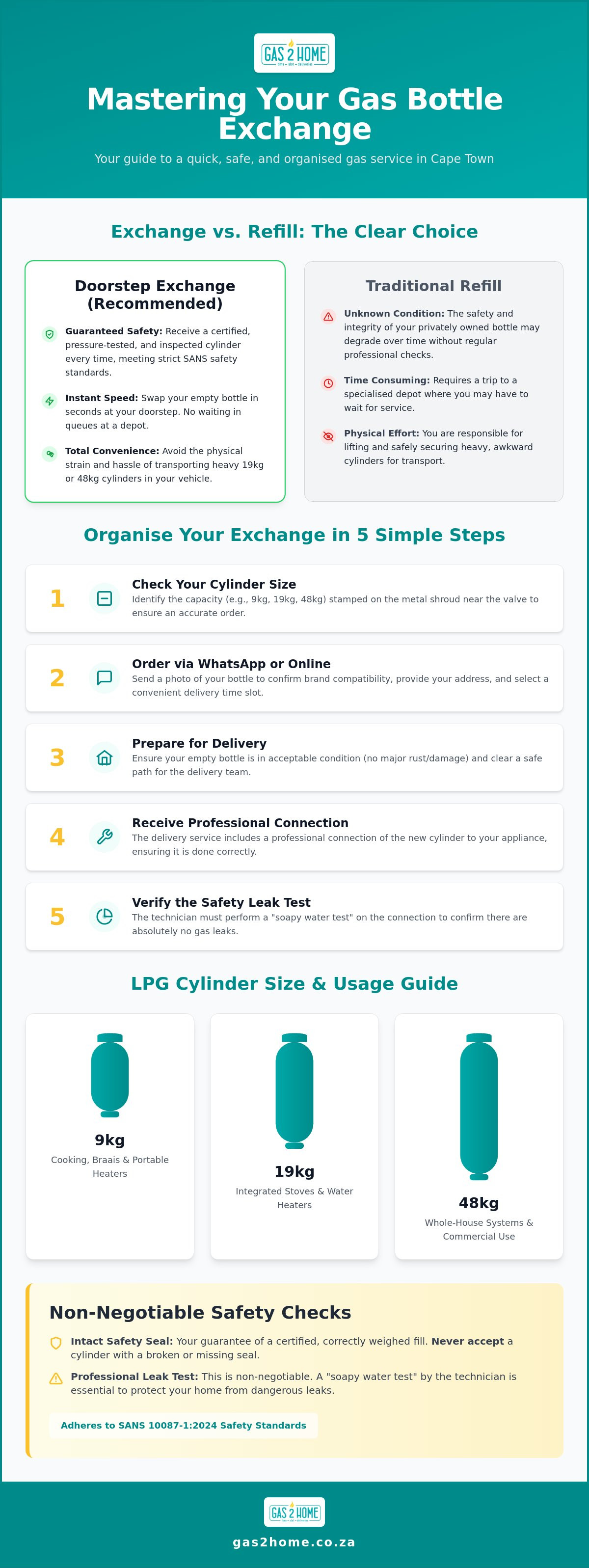
Doorstep exchange offers several advantages over traditional refills:
- Safety: Cylinders are pressure tested and inspected at every refill cycle.
- Speed: Swap your bottle in seconds rather than waiting at a station.
- Convenience: No need to lift heavy 19kg or 48kg cylinders into your vehicle.
Exchange vs Refill: Which is Better?
Refilling your own bottle usually involves a trip to a specialised depot. You might wait whilst a technician handles other customers. In contrast, an exchange is immediate. You hand over the empty; you receive the full. Because exchange cylinders are factory-tested and refurbished regularly, they are often in better condition than a bottle you've owned for years. When you factor in your time and fuel costs, a doorstep exchange is the most cost-effective choice for busy households.
The Role of the Cylinder Deposit
The exchange system relies on a bottle-for-a-bottle policy. You only pay for the gas itself if you have an acceptable empty to trade. If you're a new user or don't have a spare, you'll need to pay an initial deposit fee. This fee covers the cost of the steel cylinder. Most major South African brands are part of a common exchange pool. This makes it easy to complete an empty gas bottle exchange between suppliers as long as your bottle is in good condition. If you need a reliable partner, look for same day gas delivery Cape Town services that handle the heavy lifting for you.
How to Organise an Empty Gas Bottle Exchange in 5 Steps
Organising an empty gas bottle exchange shouldn't be a logistical headache. It's a straightforward process when you follow a few practical steps to ensure safety and speed. By being prepared, you ensure the delivery team can swap your cylinders quickly and get your appliances back online without delay.
Step 1: Check Your Cylinder Size
Most Cape Town households rely on a 9kg gas cylinder for cooking, braaiing, or portable heating. These are versatile and relatively easy to move. If you have a large integrated gas stove or a whole-house heating system, you're likely using 19kg or 48kg units. Look at the metal shroud near the valve. You'll find the gas capacity and the empty weight (tare) stamped directly into the metal. Knowing this size is the first step to an accurate order.
Step 2: Ordering via WhatsApp or Online
Speed is essential when you're out of fuel. Using WhatsApp is often the fastest way to arrange a swap. Send a quick photo of your current bottle to the provider. This helps them confirm the brand and ensures they bring the correct replacement from the exchange pool. Simply share your address and choose a delivery slot that fits your schedule. This removes the need to wait around all day for a truck to pass by.
Once your order is confirmed, take a moment to check the condition of your empty bottle. It must be free from excessive rust or structural damage to be eligible for a swap. If the cylinder is in good shape, prepare your property for the arrival. Clear a path to the installation point so the delivery team can move heavy 48kg cylinders without obstruction. Adhering to South African LPG regulations ensures that your gas setup remains compliant and safe for your family. Make sure the area is well-ventilated and accessible.
Confirm that a professional connection service is included in your empty gas bottle exchange. Don't risk doing it yourself if you aren't trained. A professional will secure the regulator, check the seals, and ensure there are no leaks before they leave. This gives you immediate peace of mind. For a stress-free experience, you can book your next exchange online with a local team that handles the heavy lifting and the technical connection for you.
LPG Cylinder Sizes and Compatibility Analysis
Selecting the right size for your empty gas bottle exchange depends on your specific appliance's consumption rate. In Cape Town, the market standardises around four main sizes: 9kg, 14kg, 19kg, and 48kg. Most residents start with a 9kg unit for its portability; it's the favourite for portable heaters and braais. However, if you're cooking daily on a four-plate hob, you'll find yourself ordering far too often. Upgrading to a 19kg cylinder reduces the frequency of deliveries and is much more efficient for consistent domestic use. For those with large-scale gas water heating or gas fireplaces, the 48kg cylinder is the only practical choice to ensure you don't run out during a cold snap.
Compatibility is a common concern for new residents. South Africa operates a "common pool" system for major brands like Easigas and BP Gas. This means you can usually swap one major brand for another during an empty gas bottle exchange without paying a new deposit fee. The provider simply takes your empty Easigas bottle and gives you a full BP Gas one, for example. Problems only arise if your bottle belongs to a niche or defunct brand that isn't part of this recognised pool. In those cases, you may need to pay a fresh deposit to get into the standard exchange system.
Standard Sizes Comparison
Choosing the right capacity involves balancing your available space with your energy needs. A 9kg bottle is compact and fits inside most cabinet-style heaters. The 14kg and 19kg sizes are taller and better suited for dedicated gas hobs or ovens. If you're managing whole-house heating, the 48kg industrial-sized cylinder provides the necessary pressure and volume. When making your choice, check the latest gas bottle prices to see how much you can save by buying in larger volumes. Generally, the larger the bottle, the lower the cost per kilogram of gas.
Acceptable Cylinder Conditions
Safety is the primary reason why exchange providers are picky about bottle condition. Your empty bottle must be in good enough shape to be refilled and put back into the pool. Excessive rust, deep dents, or a damaged base ring will lead to the bottle being rejected. The valve must be intact and free from grit or paint. Following LPG cylinder safety tips like keeping your bottle upright and under cover helps prevent the corrosion that leads to rejection. A legal cylinder is defined as one with a valid test date stamp clearly visible on the shroud or foot ring. If this date has expired, the bottle must be sent for professional revalidation before it can be filled again.
Safety First: What to Expect During a Professional Exchange
A professional empty gas bottle exchange is about more than just the delivery. It's a safety-critical procedure that protects your property and your family. When the delivery team arrives, they don't just drop the bottle and leave. They perform a series of checks to ensure the system is airtight. This level of care is what separates a dedicated gas partner from a general retail delivery service that leaves the technical work to the customer.
The most reliable method for verifying a seal is the soapy water test. By applying a mixture of dish soap and water to the valve and regulator connection, any escaping gas will create visible bubbles. This is a non-negotiable step in any professional swap. If you see bubbles forming, the connection is faulty and must be reset immediately. Technicians also inspect the O-ring or Bullnose seal on every swap. This small rubber ring is the primary barrier against leaks. If it's flattened, cracked, or missing, the connection will fail. It's a simple part that prevents a major hazard.
The Connection Checklist
A professional follows a methodical routine to connect the regulator to the new bottle. First, they remove the safety seal and inspect the valve threads for grit or paint. They check the O-ring and then connect the regulator. Hand-tightening is preferred for most domestic setups. Using heavy-duty wrenches often leads to over-tightening. This can strip the brass fittings and cause permanent damage to the regulator. Whilst the bottle is being swapped, the technician also checks the orange hose for "perishing" or fine cracks. If the hose feels brittle, it's a sign it needs replacement to maintain a safe installation.
Indoor vs Outdoor Storage Rules
South African regulations are very specific about cylinder placement to prevent domestic accidents. Bottles must always be stored upright on a firm, level surface. Never lay a cylinder on its side. This can cause liquid gas to enter the regulator, which is extremely dangerous. Proper ventilation is essential because LPG is heavier than air and will pool in low spots if a leak occurs. In Cape Town, domestic limits generally allow for 9kg or 19kg cylinders indoors depending on the specific appliance and room volume. However, larger 48kg bottles must be placed outdoors in a compliant, ventilated area. Always keep the exchange zone clear of flammable debris like dry grass, wood, or cardboard. If you want peace of mind, choose a service that includes a professional gas connection with every delivery.
Why Gas2Home is Cape Town’s Favourite Exchange Service
Gas2Home has become the go-to partner for Cape Town residents because we understand the local pace. We don't just deliver gas; we provide a complete same day gas delivery Cape Town service that fits your life. Whether you're in the busy CBD or out in Sunset Beach, you shouldn't have to wait all day for a truck. We offer specific time slots so you can plan your day with confidence. Reliability is our foundation. If we say we'll be there at a certain time, we aim for exactly that.
An empty gas bottle exchange with us includes a professional connection at no extra cost. This is where we differ from retail-only shops. Our team handles the heavy lifting of 19kg or 48kg cylinders and manages the technical setup. We ensure your home stays safe by checking every seal before we leave. You can pay easily at your door using card or cash once the job is done. It's a frictionless experience designed for your peace of mind.
Serving the Cape Town Community
Our delivery network spans from the Southern Suburbs right through to Milnerton. We operate from Monday to Saturday to ensure your weekend braais are never interrupted by an empty tank. We take a no-nonsense approach to local logistics. If you need fuel, we get it to you without the corporate run-around. Our customer support is local, proactive, and committed to keeping your appliances running throughout the year. We know the streets of Cape Town intimately, which allows us to navigate traffic and reach you within your chosen window.
Ready for Your Next Exchange?
An empty gas bottle exchange should be effortless. By choosing a professional service, you gain several key advantages:
- Maximum Speed: Same-day delivery options to get you back online fast.
- Safety Guaranteed: Professional connection and leak checks included.
- Zero Physical Strain: We handle the lifting and placement of all cylinder sizes.
- Transparent Pricing: No hidden deposit fees or complicated surcharges.
We've covered the sizes, the safety checks, and the regulations. Now, it's time to experience the convenience for yourself. Swap your empty bottle today and let us handle the technical work. Reach out via WhatsApp to book your delivery slot and get your full cylinder delivered and connected. You can book your next exchange online or message us directly for the fastest local service in the Mother City.
Secure Your Reliable Gas Supply Today
Managing your home energy needs shouldn't be a physical struggle or a safety risk. You now have the knowledge to choose the correct cylinder size and ensure every connection meets current safety standards. By moving away from the outdated model of hauling heavy bottles to depots, you save time and ensure your appliances are handled by experts. A professional empty gas bottle exchange is the most efficient way to keep your kitchen or heating system running without any interruption.
Gas2Home is ready to help you maintain a more organised and stress-free household. We provide same-day delivery across Cape Town and include a professional connection service at no extra cost. You won't have to worry about leaks or heavy lifting; our team handles the technical work for you. We also make it easy to pay on delivery via card or cash for total peace of mind. Order your empty gas bottle exchange on WhatsApp now and experience the most dependable service in the Mother City. Stay warm and keep cooking with the help of your local gas experts.
Frequently Asked Questions
Can I exchange a gas bottle from a different brand?
Yes, you can swap bottles amongst most major South African brands. The exchange pool includes recognised names like Easigas, Afrox, and BP Gas. If your bottle is from a niche supplier or a defunct brand, you might need to pay for a new deposit to enter the standard exchange system. Always check that the empty bottle is in a reusable condition before the driver arrives.
What is the price of an empty gas bottle exchange in Cape Town?
Costs for an empty gas bottle exchange are influenced by the monthly regulated gas price set by the government. Whilst prices vary between suppliers based on delivery and service fees, the core gas cost remains consistent across the region. It's best to check the current month's regulated rates or our updated pricing guide for the most accurate figures before you order.
Do I need to be home for the gas bottle exchange?
Yes, we require someone to be at home during the delivery window. This allows our team to access your installation safely and perform the mandatory professional connection and leak test. It's the best way to ensure your appliance is ready for immediate use without any safety hazards. We offer specific time slots to make this as convenient as possible for your schedule.
What happens if my empty gas bottle is rusted or damaged?
Damaged or excessively rusted cylinders are ineligible for a standard swap. If our team finds your empty bottle is structurally compromised or has an expired test date, it will be rejected from the exchange pool. In these cases, you'll need to pay a new deposit fee to receive a safety-certified replacement. Proper storage in a dry, ventilated area helps prevent this corrosion.
How do I know if my gas bottle is empty or just cold?
The most reliable way to check is the warm water test. Pour a jug of warm water down the side of the cylinder and run your hand down the metal. The portion with gas will feel cold to the touch, whilst the empty space will feel warm. If the entire bottle feels warm and your appliance won't light, your cylinder is likely empty and ready for a swap.
Is the connection service included in the exchange price?
Yes, a professional connection service is included with every empty gas bottle exchange at no extra cost. Our team manages the technical setup and performs a soapy water leak test to guarantee your peace of mind. This removes the physical stress of handling heavy cylinders and ensures that your regulator is fitted correctly every time.
Can I exchange my 9kg bottle for a 19kg bottle?
No, the exchange system requires a like-for-like swap of the same cylinder size. If you wish to upgrade from a 9kg to a 19kg unit, you'll need to pay the initial deposit for the larger bottle. You can then keep your 9kg as a spare or return it to the pool. Upgrading is a great choice if you find yourself ordering gas too frequently.
How long does a 9kg gas bottle last for cooking?
A 9kg cylinder usually lasts between four and six weeks for a typical household cooking daily on a gas hob. This duration depends on how many plates you use and the length of your cooking sessions. If you use your gas for both cooking and heating, the lifespan will be significantly shorter. Tracking your usage helps you plan your next delivery before the gas runs out.