
Can You Exchange an Expired Gas Cylinder? The 2026 LPG Safety Guide

You've just pulled your gas heater out for a cold Cape Town evening, only to notice the date stamped on the bottle's collar passed years ago. It's a stressful moment that leaves many homeowners asking: can you exchange an expired gas cylinder or are you stuck with a dangerous, useless hunk of metal? We understand the anxiety that comes with handling old equipment. You don't want to risk transporting a potentially leaky bottle in your car, and you certainly don't want to be turned away at a depot because your cylinder is technically out of date.
The good news is that an expired bottle isn't a liability. This 2026 safety guide will show you exactly how the exchange system is designed to take these older units out of circulation for expert re-testing. You'll learn how to identify re-test dates under South African SANS 10087-1 regulations and why using a professional delivery service is the simplest way to stay safe. We'll walk through the process of swapping your empty cylinder for a certified, full replacement delivered directly to your home, giving you total peace of mind regarding your family's safety.
Key Takeaways
- Understand the 10-year revalidation law for LPG cylinders in South Africa to ensure your home setup remains legal and safe.
- Discover the answer to can you exchange an expired gas cylinder and why major brands take responsibility for re-testing their own bottles.
- Master safe disconnection techniques, including closing valves clockwise and always working in well-ventilated outdoor spaces.
- Avoid the physical strain of moving heavy 19kg or 48kg cylinders by using a professional swap service that handles the lifting for you.
- Secure your gas supply with a convenient WhatsApp-based exchange service that delivers and connects certified bottles directly to your door in Cape Town.
Understanding Gas Cylinder Expiry Dates: The 10-Year Rule
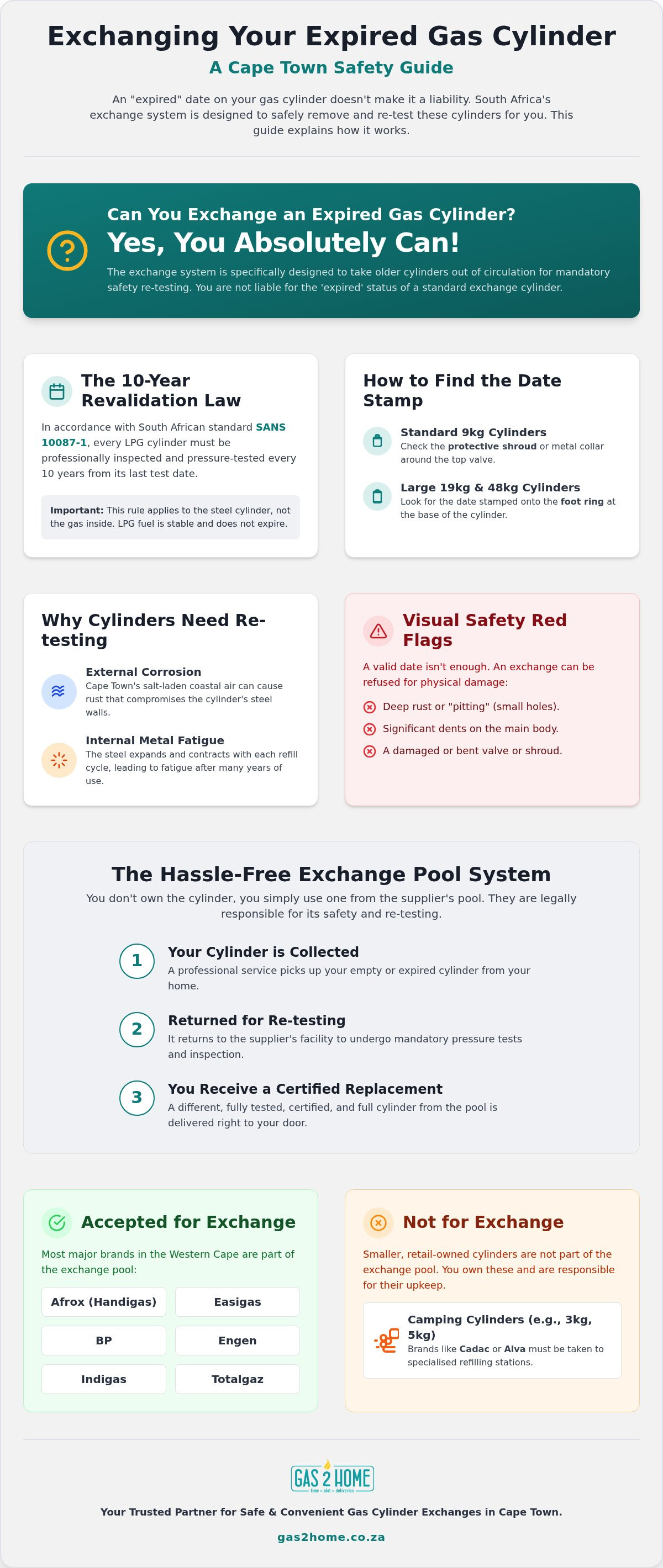
In South Africa, gas safety is governed by the Occupational Health and Safety Act and the SANS 10087-1 standard. These regulations mandate that every LPG cylinder must undergo a formal revalidation process every 10 years. It's a common misconception that the fuel inside has a shelf life. Liquefied Petroleum Gas (LPG) is a stable substance that doesn't "go off" over time. However, the steel vessel containing that pressure is subject to intense physical demands. If you're looking at an old bottle in your garage, you might wonder: can you exchange an expired gas cylinder? The answer is usually yes, but you first need to know how to identify its status.
Look at the metalwork of your bottle to find the date stamp. On larger 19kg or 48kg cylinders, this is often stamped onto the foot ring at the base. For a standard 9kg bottle, check the protective shroud near the valve. You'll typically see a year like "2014" or a month and year combination like "08/15". This date indicates when the cylinder was manufactured or last professionally tested. If that date is more than a decade in the past, the bottle is legally "expired" and cannot be refilled until it passes a new certification test.
Why Do Gas Bottles Expire?
Living in a coastal city like Cape Town accelerates wear on steel equipment. Salt-laden air causes external corrosion that can eventually compromise the cylinder's walls. Beyond the weather, internal pressure is a constant factor. Every time a bottle is refilled and used, the steel expands and contracts slightly. Over hundreds of cycles, this creates metal fatigue. Professional revalidation involves a hydrostatic test. The bottle is filled with water at high pressure to ensure it doesn't leak or deform beyond safe limits. This process ensures that every bottle in the exchange pool is fit for purpose.
The Difference Between Expiry and Damage
A valid date stamp isn't a total guarantee of safety. Even a relatively new bottle can become a hazard if it's been mishandled. Deep rust, specifically "pitting" where rust eats holes into the metal, is a major red flag. Dents on the body or a damaged valve shroud can also make a cylinder dangerous to use. When considering can you exchange an expired gas cylinder, remember that physical condition is just as important as the date. A Visual Inspection is a mandatory check performed by professionals to identify these physical hazards before an exchange is accepted.
Can You Exchange an Expired Gas Bottle in Cape Town?
Many residents worry they'll be stuck with a useless asset once the date on their bottle passes. Fortunately, for most standard home cylinders, the answer is a resounding yes. If you're wondering can you exchange an expired gas cylinder in Cape Town, the process is actually designed to help you. Major suppliers operate on an exchange-pool system. When you pay your initial deposit, you aren't buying the physical steel bottle. You're buying the right to use a cylinder from that company's fleet. This system ensures that old or "expired" bottles are constantly rotated out of kitchens and into testing facilities.
This ownership model is the foundation of gas safety in South Africa. Companies like Afrox and Easigas take full legal responsibility for the maintenance of their assets. This includes following the gas cylinder 10-year rule for pressure testing and valve replacement. You should never pay a separate fee to have a branded bottle revalidated. That maintenance cost is already factored into the standard exchange price you pay for the gas. It's a frictionless way to ensure your home equipment is always up to code.
Accepted Brands for Exchange
Cape Town suppliers generally accept a wide range of major "pool" brands. Swapping like-for-like is the standard procedure. If you have an empty Afrox bottle, you'll receive a full Afrox bottle in return. The most common exchangeable brands in the Western Cape include:
- Afrox (Handigas)
- Easigas
- BP
- Engen
- Indigas
- Totalgaz
Moving between major suppliers is usually possible, though some providers may charge a small brand-switch fee to manage the logistics. It's always a good idea to consult a local delivery expert if you're unsure whether your specific bottle qualifies for a swap.
When an Exchange Might Be Refused
Not every gas container is eligible for a swap. Small camping cylinders, typically the 3kg and 5kg sizes from brands like Cadac or Alva, are retail-owned. You own these bottles outright. This means you are responsible for their upkeep and must take them to a specialised refilling station rather than an exchange point. If these bottles are past their re-test date, a refiller will legally have to turn you away.
Safety technicians will also reject bottles that show signs of "illegal refills" or tampering. If the original paint has been stripped or the brand name on the shroud has been ground off, the cylinder is a high-risk item. These bottles have no traceable maintenance history. For your protection, exchange services will only accept cylinders that are clearly branded and structurally sound.
Safety Precautions When Handling an Old Cylinder
Dealing with an old cylinder requires a methodical approach to ensure your home remains safe. First, ensure your gas appliance is completely switched off. Turn the cylinder valve tightly in a clockwise direction to seal it. Even if you think the bottle is empty, there is often residual gas inside that remains under pressure. Always perform these disconnections in a well-ventilated outdoor area. This prevents any small release of gas from building up in a confined space, which could lead to an accidental ignition.
Trust your nose during this process. LPG is naturally odourless, so manufacturers add a chemical that smells like rotten eggs to help you detect leaks. If you catch this scent whilst handling the bottle, stop what you are doing and move away. Keep the bottle upright at all times. Tipping a cylinder on its side can allow heavy liquid residue to settle against the valve. This often clogs the mechanism, making it difficult to seal the bottle or re-open it later when you finally get a replacement.
The Soapy Water Test for Old Valves
You can use a simple mixture of dish soap and water to check the integrity of old valves before moving them. Apply the suds to the valve area and the connection point with a cloth or spray bottle. If you see growing bubbles, you have a leak. This is a common issue in expired bottles where rubber seals have perished over time. Understanding these risks is vital. For more details on identifying hazards, read our guide on Signs of a Bad Gas Connection. If you see bubbles, do not attempt to transport the bottle yourself.
Transporting Expired Bottles Safely
Moving an old cylinder yourself carries specific risks, especially in the Cape Town heat. Never leave an expired bottle in a hot car whilst you run errands. High temperatures increase the internal pressure significantly. If the pressure relief valve on an old, weakened bottle triggers, it will "vent" gas directly into your vehicle. This creates an immediate fire and inhalation hazard. While the answer to can you exchange an expired gas cylinder is usually yes, the physical act of getting it to a depot is where most accidents happen. For many local residents, the safest option is to have a professional delivery service collect the old unit from your doorstep. This removes the risk of "venting" in your car and ensures the bottle is handled by experts from the moment it leaves your property.
Why Professional Exchange Beats DIY Refilling
Many homeowners ask, "can you exchange an expired gas cylinder at a local petrol station?" While some retail outlets offer swaps, they rarely provide the technical support needed for a safe transition. Choosing a professional exchange service over a DIY refill is about more than just convenience. It's about ensuring your entire gas system is functional and safe. When a technician arrives at your door, they don't just drop off a bottle. They perform a vital safety check on your regulator and hose. This is especially important for cylinders that have been sitting idle for months, as rubber components can degrade in the Cape Town air.
Physical safety is another major factor. Lugging a 19kg or 48kg cylinder into a car and across a parking lot is back-breaking work. It also carries the risk of damaging your vehicle or injuring yourself. Professional delivery teams are trained in heavy lifting and secure transport. Beyond the muscle, there is the technical expertise of the connection itself. Gas fittings utilise a left-hand thread, which often confuses DIY users. Forcing the nut the wrong way can lead to cross-threading, which ruins the regulator and creates a significant leak risk. This is why professional connection on delivery is a core part of the Gas2Home service.
Ensuring a Leak-Free Setup
A technician's eye is trained to spot "perished" hoses. These are small cracks in the rubber that develop over time and can lead to dangerous gas leaks. During a professional swap, the technician ensures the "Bullnose" connection is seated perfectly. This specific connection requires a precise level of torque to create a gas-tight seal without damaging the brass fittings. Whether you are setting up a 9kg gas cylinder for your weekend braai or connecting a large heater, having a pro verify the seal gives you immediate peace of mind.
Convenience of Scheduled Time Slots
Hunting for a petrol station that actually has stock in your specific brand is a frustrating experience. You waste fuel and time only to find the cages are empty. A professional service operates on a scheduled system. You know exactly when your gas will arrive. If you realise your bottle is expired in the middle of preparing a meal, same-day delivery across Cape Town can save the day. You don't have to leave your home or struggle with heavy equipment. You simply wait for the expert to arrive and handle the entire process from start to finish.
Ready to upgrade your home safety? Order your gas exchange today and let our technicians handle the heavy lifting and safety checks for you.
Hassle-Free Gas Swaps in Cape Town with Gas2Home
Gas2Home is the local expert for gas delivery in Cape Town. We specialise in taking the stress out of home energy management. If you've been staring at an old bottle wondering, "can you exchange an expired gas cylinder without a penalty?", we're here to help. Our team manages the entire swap process for you. We handle everything from 9kg bottles for your braai to large 48kg units for domestic or commercial setups. Our service area is extensive. We cover the CBD, the Southern Suburbs, and all the way to Sunset Beach.
Safety is our non-negotiable priority. Every delivery includes a professional connection service. We don't just leave a bottle on your driveway. Our technicians unhook your old, expired unit and connect the new one. They check for leaks and ensure your regulator is seated correctly. This hands-on approach removes the anxiety of handling potentially faulty equipment yourself. It's a frictionless experience designed to keep your home running smoothly.
How to Order via WhatsApp
Our ordering process is designed for speed. We use WhatsApp to keep things simple and direct. One of our best tips is to "send a photo" of your current bottle. A quick picture helps our team identify the brand and size immediately. This ensures we bring the correct replacement from the exchange pool without any confusion. We offer a "pay on delivery" service for your convenience. This means you only pay once the gas is connected and verified. We operate from Monday to Saturday. This schedule provides reliable support for Cape Town households throughout the week.
Ready for Your Next Refill?
Whether your bottle is for a gas heater or a kitchen stove, the exchange process remains the same. Don't let an out-of-date stamp stop you from staying warm or cooking a meal. It's easy to feel stuck with a bottle that looks like a liability. But with a professional partner, that old cylinder is just a ticket to a fresh, safe supply. Stop worrying about can you exchange an expired gas cylinder and let us handle the logistics. Don't risk handling or transporting an expired bottle yourself. Let the experts manage the swap and connection so you can enjoy total peace of mind.
Stay Safe and Powered with Professional Gas Exchanges
You now know that the 10-year revalidation rule is about the structural integrity of the steel bottle, not the gas quality. If you've been asking can you exchange an expired gas cylinder, the answer is a clear yes for major brands. These companies manage the re-testing process so you don't have to. Swapping your old unit for a certified replacement is the most efficient way to maintain a safe home environment. It ensures that potentially weakened vessels are removed from circulation and replaced with tested, reliable equipment.
Handling out-of-date equipment shouldn't be your burden. Our team provides same-day delivery across Cape Town for 9kg, 14kg, 19kg, and 48kg cylinders. We include a professional connection service with every order to ensure your setup is leak-free and secure. We handle all major LPG brands with expert care; this saves you the heavy lifting and transport risks associated with old bottles. Rest easy knowing your home energy is in the hands of local specialists.
Order your gas cylinder exchange on WhatsApp now and let us restore your peace of mind. Your next warm meal or cosy evening is just a quick message away.
Frequently Asked Questions
Can I exchange a gas bottle from a different brand at Gas2Home?
Yes, we accept most major LPG brands found in the Western Cape exchange pool, including Afrox and Easigas. When you ask can you exchange an expired gas cylinder from a different brand, the answer depends on whether it belongs to a recognised supplier fleet. We swap like-for-like brands to maintain the pool's integrity. If you're switching between major suppliers, we can usually facilitate this with a small brand-switch fee.
How do I find the expiry date on my 9kg gas cylinder?
You can find the revalidation date stamped directly into the metal of your 9kg cylinder. Check the protective shroud surrounding the valve or the foot ring at the base of the bottle. It usually appears as a year or a month and year combination. If this date is more than 10 years old, the cylinder requires professional re-testing. Always keep the bottle upright whilst inspecting it to ensure your safety.
Is it illegal to use a gas bottle that has passed its revalidation date?
It's illegal for any gas supplier to refill a cylinder that has passed its 10-year revalidation date according to South African safety standards. Using an expired bottle at home isn't a crime, but it is a significant safety risk. Insurance companies may also reject claims if an uncertified bottle causes a fire. Swapping your old unit through a professional service ensures you stay on the right side of the law.
What happens to my old gas bottle after it is exchanged?
Your old cylinder is returned to the original brand owner for a rigorous safety inspection. If the bottle has reached its 10-year limit, it undergoes a hydrostatic pressure test. Technicians check for internal fatigue and external corrosion. Bottles that pass are repainted, fitted with new valves, and returned to the exchange pool. This system ensures that only safe, tested equipment remains in circulation across Cape Town homes.
Do I have to pay a new deposit if my bottle is expired?
You don't have to pay a new deposit if you're exchanging a branded bottle from the major exchange pool, even if it's expired. The standard exchange fee covers the gas and the ongoing maintenance of the cylinder fleet. However, if your bottle is unbranded, a private retail brand, or severely damaged by deep rust pitting, you may need to pay for a new cylinder deposit to receive a compliant unit.
What should I do if my gas bottle is rusted but not yet expired?
You should stop using any gas bottle that shows signs of deep rust or pitting, regardless of the date stamp. Surface rust is common in Cape Town's salty air, but deep holes compromise the steel's strength. If you're unsure, send a photo of the bottle to our WhatsApp line. Our technicians can assess the damage on-site and determine if it's safe to exchange or if it must be decommissioned.
Can I swap an empty 9kg bottle for a larger 19kg cylinder?
You cannot directly swap an empty 9kg bottle for a full 19kg cylinder without paying an additional deposit fee. The exchange system works on a size-for-size basis. To move up to a larger size, you'll pay the exchange price for the gas plus the difference in the cylinder deposit value. This ensures you officially own the rights to a larger vessel in the exchange pool for all your future refills.
Why does my gas regulator have a left-hand thread?
The left-hand thread on your gas regulator is a critical safety feature designed to prevent accidental connections. By requiring you to turn the nut anti-clockwise to tighten it, the industry ensures you cannot accidentally connect a gas regulator to oxygen or water fittings. This standardisation prevents dangerous cross-contamination of gases. Always ensure the connection is firm but avoid over-tightening, which can damage the brass fitting and cause leaks.