
19kg Gas Bottle: The Complete Guide to LPG for Cape Town Homes

Imagine it's 8 PM on a freezing July night in Cape Town, the rain is lashing against the windows, and your 19kg gas bottle suddenly runs dry. You know that sinking feeling of being left in the cold just when you need warmth the most. Managing your home's energy shouldn't feel like a constant battle against empty cylinders, heavy lifting, or the anxiety of connecting a new tank in the dark. We agree that your comfort should be effortless and your family's safety should always come first.
This guide demonstrates why the 19kg gas bottle is the "Goldilocks" solution for your household. It offers the ideal balance of high-capacity performance to last for weeks, yet remains manageable enough for domestic use. You'll discover how to maintain a reliable LPG supply through the harshest winter months without the logistical headache of industrial-sized bottles. We'll also explain why professional connection is a non-negotiable service for your peace of mind and how a simple WhatsApp message can solve your energy needs instantly. Read on to learn how to streamline your home heating and cooking with ease.
Key Takeaways
- Discover the exact energy capacity of a 19kg gas bottle and how many weeks of heating or cooking it provides for a typical Cape Town household.
- Learn why this specific size is the minimum requirement for gas geysers to ensure consistent water temperature and performance.
- Master essential safety protocols, including the "soapy water test," to verify your connection is secure and leak-free.
- Understand the trade-offs between 9kg, 19kg, and 48kg cylinders to choose the most cost-effective and manageable option for your home.
- Simplify your logistics with professional connection services and convenient WhatsApp ordering for reliable delivery across Cape Town.
What is a 19kg Gas Bottle and Why is it Popular in Cape Town?
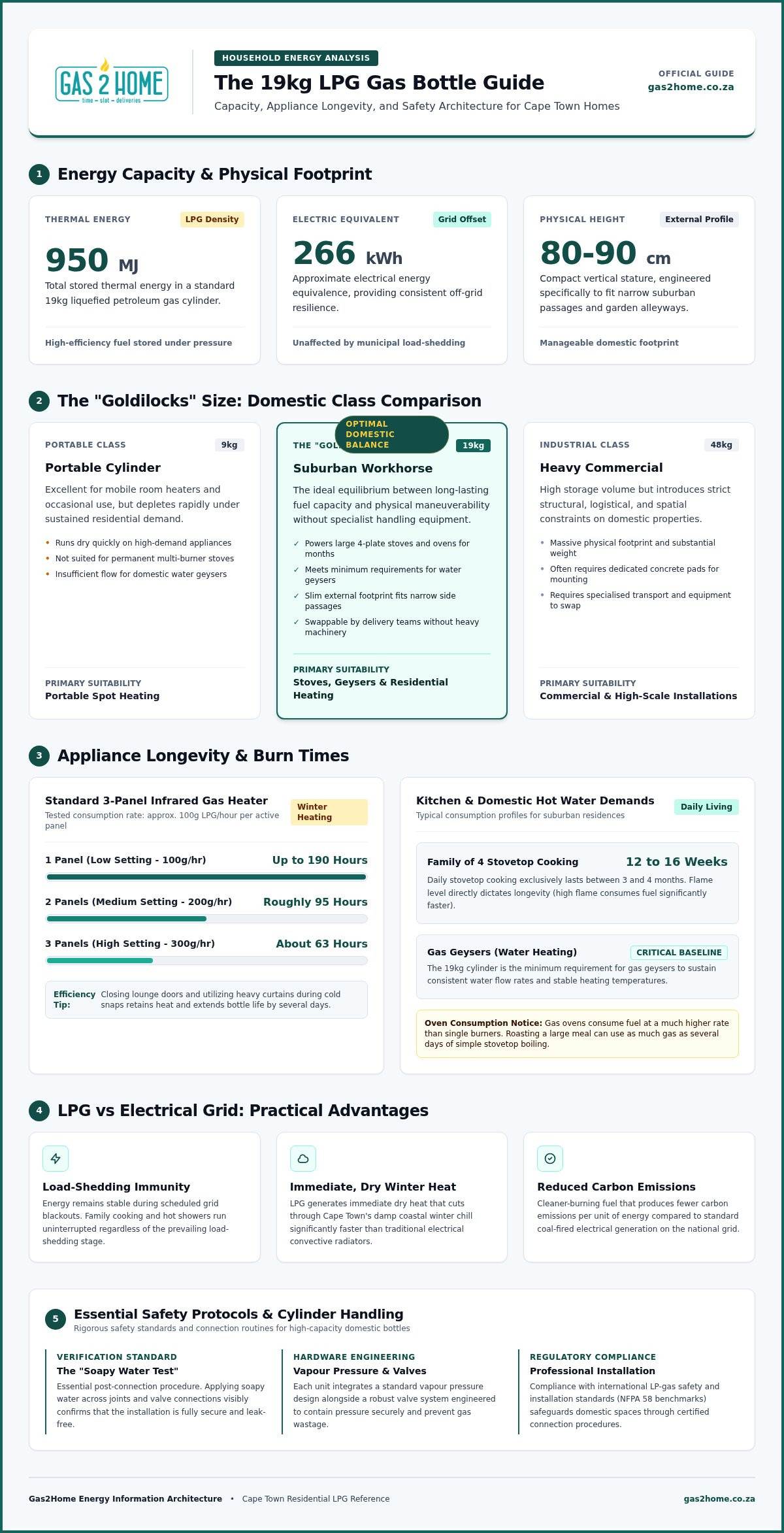
The 19kg gas bottle is the heavy-duty workhorse of Cape Town's residential energy market. It contains liquefied petroleum gas (LPG), a high-efficiency fuel that stays liquid under pressure and converts to a powerful gas for heating and cooking. Standing approximately 80cm to 90cm tall, it's the favourite choice for external installations. It offers a substantial energy reserve whilst maintaining a manageable physical footprint. Every cylinder is built with safety in mind, featuring a standard vapour pressure design and a robust valve system to prevent leaks. It's a no-nonsense choice for homeowners who want reliability without the bulk of industrial equipment.
The "Goldilocks" Size for Residential Energy
Choosing the right cylinder size is about finding the sweet spot between capacity and convenience. A 9kg bottle is excellent for portable heaters, but it runs dry too quickly for high-demand appliances. On the other end, 48kg cylinders are massive and often require specialised transport and large concrete pads for installation. The 19kg gas bottle fits perfectly into the typical Cape Town suburban setup. It's slim enough to tuck into a garden alleyway or a side passage. It provides enough fuel to power a large four-plate gas stove or a water heater for weeks, yet it remains light enough for professional delivery teams to swap out without heavy machinery. It's large enough to be efficient, but small enough to be practical.
LPG vs Electricity: The Cost and Reliability Factor
In Cape Town, energy reliability is a major concern. With the ongoing pressure of load-shedding and the consistent rise in electricity tariffs, switching to LPG is a strategic move for your household. Gas remains a stable energy source that doesn't vanish when the grid goes down. You can cook dinner and enjoy a hot shower regardless of the current load-shedding stage.
The benefits are particularly clear during the damp, cold Cape winter. Gas provides an immediate, dry heat that's more effective at cutting through the coastal chill than many electric alternatives. From an environmental perspective, LPG is a cleaner-burning fuel than the coal-fired electricity that dominates the national grid. It produces fewer carbon emissions per unit of energy, making it a more responsible choice for the eco-conscious homeowner. Whilst electricity prices continue to fluctuate, gas offers a predictable way to manage your monthly domestic budget.
Capacity and Usage: How Long Does a 19kg Gas Cylinder Last?
Understanding the energy density of your fuel helps you manage your household budget more effectively. A 19kg gas bottle contains approximately 950 megajoules (MJ) of energy, which is roughly equivalent to 266 kilowatt-hours (kWh). This substantial reserve is why many Cape Town residents prefer this size for high-demand appliances. However, the actual longevity of your cylinder depends heavily on your usage patterns. A high flame consumes gas significantly faster than a low or medium setting. For a typical Cape Town family of four using gas exclusively for daily stovetop cooking, a 19kg gas bottle will generally last between three and four months.
Safety remains a priority when handling these higher-capacity cylinders. Adhering to international LP-gas safety and installation standards ensures that your high-capacity bottle remains a safe asset in your home. Proper storage and regular connection checks are essential to prevent wastage and maintain a secure environment.
Estimated Burn Time for Gas Heaters
During the peak of the Cape winter, gas heaters like those from Alva or Totai are essential. A standard 3-panel infrared gas heater consumes about 100g of LPG per hour for each panel in use. If you run a single panel on the lowest setting, your 19kg gas bottle can provide up to 190 hours of warmth. Turning on two panels reduces this to roughly 95 hours, while running all three panels on high will deplete the bottle in about 63 hours. To maximise your gas, keep your lounge doors closed and use heavy curtains to retain heat. This simple habit can extend your bottle's life by several days during a cold snap.
Cooking for the Family: Stove and Oven Longevity
For most households, the primary use for a 19kg cylinder is the kitchen. Stovetop cooking is remarkably efficient; you can expect about 12 to 16 weeks of use if you aren't using a gas oven. If you do have a gas oven, be aware that it consumes fuel at a much higher rate than a single burner. Roasting a large meal can use as much gas as several days of simple stovetop boiling. If you are unsure if this capacity suits your kitchen habits, you can learn more about smaller alternatives in our guide on what size gas bottle do I need?. When your current cylinder starts to feel light, you can order your 19kg exchange via WhatsApp for a quick and professional swap.
19Kg vs 9kg vs 48kg: Choosing the Right Cylinder
Selecting the right cylinder size involves a trade-off between portability and capacity. While a 9kg bottle is easy to move, it often lacks the volume needed for high-performance home systems. The 19kg gas bottle serves as the ideal middle ground for residents who want a long-lasting supply without the extreme weight of industrial units. South African safety standards, specifically SANS 10087, require that cylinders larger than 9kg are stored outdoors in a well-ventilated area. This usually means placing them in a secure cage or a dedicated passage. The "empty bottle exchange" system makes the process simple; you swap your empty cylinder for a full one of the same size, ensuring you're only paying for the gas itself.
If you're installing a gas geyser, a 19kg gas bottle is the minimum recommended size. Smaller cylinders often suffer from "freezing" or pressure drops when forced to provide the high flow rates required for hot water. A larger volume of liquid gas allows for a more stable evaporation rate, ensuring your shower stays hot even on the coldest Cape mornings. Using a smaller bottle for a geyser often leads to inconsistent performance and frequent, frustrating trips for refills.
When to Stick with a 9kg Bottle
A 9kg cylinder is the best fit for mobile or occasional use. It's the standard choice for backyard braais and small portable heaters that you move between the bedroom and the lounge. Because it fits comfortably in a standard car boot, it's the only size you can easily transport yourself without a specialised delivery vehicle. If you only use gas for a single burner or a camping stove, this smaller capacity is perfectly adequate. You can find more details on this versatile size in The 9kg Gas Cylinder Guide.
When to Upgrade to a 19kg or 48kg Setup
Upgrading is necessary when you move from portable appliances to permanent home installations. A 19kg setup is the standard for full-size gas hobs and water heaters. Many Cape Town homeowners prefer a "changeover" system using two 19kg bottles connected in tandem. This setup allows you to use one bottle until it's empty, then simply flip a valve to start the second one. It gives you a built-in buffer so you can order a replacement without any downtime. For commercial kitchens or very large homes with multiple gas appliances, the 48kg cylinder offers the best value, though it requires a permanent, professional installation due to its size and weight.
Safety and Installation: Connecting Your 19kg Bottle
Anxiety over gas leaks is a common hurdle for many homeowners, but LPG is a safe and predictable fuel when you follow basic protocols. Before you connect a new 19kg gas bottle, perform a quick visual inspection. Check the cylinder for any deep dents, excessive rust, or damage to the valve shroud. Ensure the area is clear of ignition sources, such as cigarettes or open flames. By staying calm and methodical, you can manage your home's energy with total confidence. Most issues arise from simple errors that are easily avoided with a bit of knowledge.
One of the most critical components is the rubber "nose" or bullnose on the regulator. This small seal must be soft, pliable, and free from cracks to create a gas-tight fit. If it feels hard or brittle, replace it immediately. Similarly, check the orange gas hose for any signs of perishing or "crazing" on the surface. These hoses have a limited lifespan and should be replaced every few years, regardless of how they look. If you are ever in doubt, you can book a professional gas connection service to ensure your system is perfectly secure.
Step-by-Step Connection Guide
Connecting your cylinder is a straightforward process if you remember one specific rule: gas fittings use left-hand threads. This means you turn the nut to the left (anti-clockwise) to tighten it. Follow these steps for a secure fit:
- Remove the plastic safety seal from the cylinder valve.
- Insert the regulator nose into the valve opening, ensuring it's seated straight.
- Tighten the nut by hand first to avoid cross-threading, then use a spanner for a firm finish.
- Open the valve slowly and listen for any hissing sounds.
Once connected, always perform the "soapy water test." Mix a small amount of dishwashing liquid with water and apply it to the connection points. If you see growing bubbles, you have a leak. Close the valve immediately and re-seat the connection. For more detailed troubleshooting, read our guide on the signs of a bad gas connection.
Storage Regulations in South Africa
Because a 19kg gas bottle contains a significant amount of fuel, South African regulations are strict about storage. You must store these cylinders outdoors in a well-ventilated area where gas can dissipate safely if a leak occurs. Never keep them in a cellar, basement, or unventilated cupboard. Your storage site should be on a sturdy, level base to prevent the bottle from tipping. Ensure the cylinder is placed at least one metre away from doors, windows, and air vents, and at least five metres away from electrical points like DB boards or air conditioning units. These distances are essential for preventing gas from entering your home or finding an ignition source.
Reliable 19kg Gas Delivery and Exchange in Cape Town
Finding a dependable supplier shouldn't be a chore. We provide a streamlined exchange service designed for the busy Cape Town lifestyle. When your cylinder runs empty, you don't need to struggle with heavy lifting or worry about transport. Our exchange process is straightforward: we deliver a full cylinder and take your empty one away. This ensures you always have a high-capacity energy source ready for your home appliances. We handle the logistics so you can focus on your day without energy interruptions.
The Convenience of Same-Day Delivery
We know that running out of gas usually happens at the most inconvenient times. To solve this, we offer same-day delivery from Monday to Saturday. Our routes are organised to cover major residential hubs across the city. We provide reliable gas delivery in Seapoint, Camps Bay, CBD, and the Southern Suburbs. You can choose a specific time slot that fits your schedule, so you aren't stuck waiting around all day. For an even faster response, use our WhatsApp ordering service. It's the quickest way to confirm your delivery and get immediate peace of mind.
Professional Connection: Our Service Differentiator
Many suppliers simply drop the cylinder at your gate, leaving you to handle the physical weight and the technical setup. We do things differently. Every 19kg gas bottle delivery includes a professional connection service at no extra cost. Our driver will carry the bottle to your installation point and secure the regulator for you. They also perform a safety check on-site to ensure there are no leaks before they leave. This removes the stress of DIY setup and guarantees your family's safety.
We operate on a "pay on delivery" model. You only settle the bill once the job is done and you're satisfied with the service. It's a transparent way to do business that builds lasting trust with our local customers. Don't leave your home comfort to chance or risk an improper connection. Order your 19kg gas bottle today for fast delivery and expert connection.
Secure Your Home Energy Future Today
Choosing a 19kg gas bottle is a strategic move for any Cape Town household looking to balance high-capacity performance with domestic convenience. You now understand that this size is the essential minimum for gas geysers and provides a reliable, long-lasting fuel source for daily cooking. By prioritising outdoor storage and following simple leak tests, you can enjoy the benefits of LPG without any of the traditional safety anxieties. You shouldn't have to worry about running out of gas or struggling with technical connections in the middle of a winter storm.
Our service is designed to remove every point of friction from your energy supply. We include an expert connection service with every delivery and offer same-day time slots that respect your busy schedule. This commitment to reliability is why we are trusted by thousands of local households and restaurants across the city. Order your 19kg gas bottle exchange now for same-day delivery in Cape Town and experience a truly effortless energy solution. Stay warm, stay safe, and keep your kitchen running smoothly.
Frequently Asked Questions
How much does a 19kg gas bottle refill cost in Cape Town?
LPG prices in South Africa are regulated by the Department of Mineral Resources and Energy and change on the first Wednesday of every month. Cape Town falls under a specific pricing zone, which includes transport costs from the refinery. You should always check the current month's legal maximum retail price to ensure you are paying a fair market rate. We maintain competitive pricing that follows these official provincial guidelines for every exchange.
Can I use a 19kg gas cylinder for my indoor gas heater?
No, you should never use a 19kg cylinder inside your home for a portable heater. South African safety regulations (SANS 10087) mandate that any gas cylinder larger than 9kg must be stored outdoors in a well-ventilated area. These larger bottles contain a significant volume of fuel; if a leak occurred indoors, the gas could reach dangerous levels very quickly. Stick to 9kg bottles for indoor appliances and keep your larger cylinders outside.
How heavy is a full 19kg gas bottle?
A full 19kg gas bottle typically weighs between 37kg and 39kg in total. This figure includes the 19kg of liquid petroleum gas and the weight of the steel cylinder itself, known as the tare weight. Because of this significant weight, we don't recommend that homeowners attempt to lift or transport these bottles themselves. Our delivery teams are trained to handle this weight safely and will place the bottle exactly where you need it.
Do I need a special regulator for a 19kg gas cylinder?
You must use a high-pressure or low-pressure regulator that is specifically designed for a "bullnose" valve. Unlike smaller camping cylinders that use a finger-tighten connection, a 19kg gas bottle requires a regulator with a left-hand thread nut that is tightened with a spanner. Always ensure your regulator is SABS-approved and that the rubber nose seal is in perfect condition before every connection to prevent dangerous leaks and ensure efficient gas flow.
How long will a 19kg gas bottle last for a gas stove?
For an average family of four using a gas hob for daily meals, a 19kg gas bottle usually lasts between three and four months. This lifespan is highly efficient compared to smaller cylinders. However, if you frequently use a gas oven or a high-output wok burner, you might find the bottle empties closer to the two-month mark. Monitoring your flame height and using lids on pots can help you stretch this fuel even further.
Can I exchange any brand of empty gas bottle for a Gas2Home refill?
Yes, we accept all major, reputable brands of LPG cylinders for exchange during your delivery. The empty bottle must be in a safe, workable condition without excessive rust or structural damage to the valve and shroud. When our driver arrives, they will simply swap your empty 19kg gas bottle for a full, safety-checked cylinder from our stock. This flexible exchange system ensures you aren't restricted to a single brand for your home energy needs.
Is it safe to transport a 19kg gas cylinder in my own car?
Transporting a large gas cylinder in a passenger vehicle is generally discouraged and can be extremely dangerous. These bottles must always remain upright and be secured to prevent them from rolling or tipping. If a valve leaks in the confined space of a car, it creates an immediate fire and suffocation risk. It's much safer to use our professional delivery service, as our vehicles are specifically equipped to transport LPG cylinders according to local safety laws.
What should I do if I smell gas near my 19kg cylinder?
If you detect a "rotten egg" smell, close the cylinder valve immediately by turning it clockwise. Extinguish all open flames and do not flip any electrical switches, as even a small spark can ignite the gas. Move away from the area and leave the bottle outdoors where the gas can dissipate. You should then perform a soapy water test on the connection or contact us to send a professional to inspect your installation and ensure it's secure.