
Running Out of Gas in Cape Town? Your Emergency LPG Survival Guide

Imagine you are halfway through preparing a family Sunday roast when the blue flame suddenly flickers and vanishes. It is a classic local frustration that always seems to happen at the most inconvenient moment. When you are running out of gas Cape Town residents often find themselves stranded with a cold stove and a heavy, empty cylinder that is a genuine struggle to transport. You might even feel a bit anxious about disconnecting the old bottle or ensuring the new one is fitted safely according to SANS 10087 standards.
We believe that managing your home energy should be effortless, not an exhausting chore. This guide will show you exactly how to check your remaining gas levels, handle your empty cylinder with confidence, and get a fresh replacement delivered directly to your doorstep today. We will walk you through the essential safety steps, explain the latest Western Cape price regulations from August 2026, and show you how to skip the heavy lifting entirely. By the time you finish reading, you will know how to keep your kitchen running and your home warm without the domestic stress.
Key Takeaways
- Learn the immediate safety steps to take when you notice sputtering burners or weak flames to prevent domestic hazards.
- Discover the "Hot Water Trick" to accurately monitor your fuel levels and avoid the stress of running out of gas Cape Town residents often face mid-meal.
- Understand why your fuel might be depleting faster during cold winter nights and how to identify small leaks that waste your money.
- Choose the correct cylinder size for your home, ranging from versatile 9kg bottles for braais to larger 19kg units for daily cooking and water heating.
- Find out how to get a replacement cylinder delivered and professionally connected to your appliance for total peace of mind and safety.
What to Do When You Are Running Out of Gas in Cape Town
Finding yourself running out of gas Cape Town style usually means one of two things: your car is sputtering or your dinner is half-cooked. Whilst the phrase is often used by motorists, this guide focuses on the domestic emergency of an empty LPG cylinder. You will notice the signs of a depleting supply quickly. Your gas stove might produce a weak, flickering orange flame rather than a steady blue one. Burners might sputter or pop, and your gas heater will simply lose its warmth. These moments rarely happen at convenient times. They usually strike during a freezing July night or right in the middle of a Sunday braai when you need fuel the most.
Immediate Safety Steps for Empty Cylinders
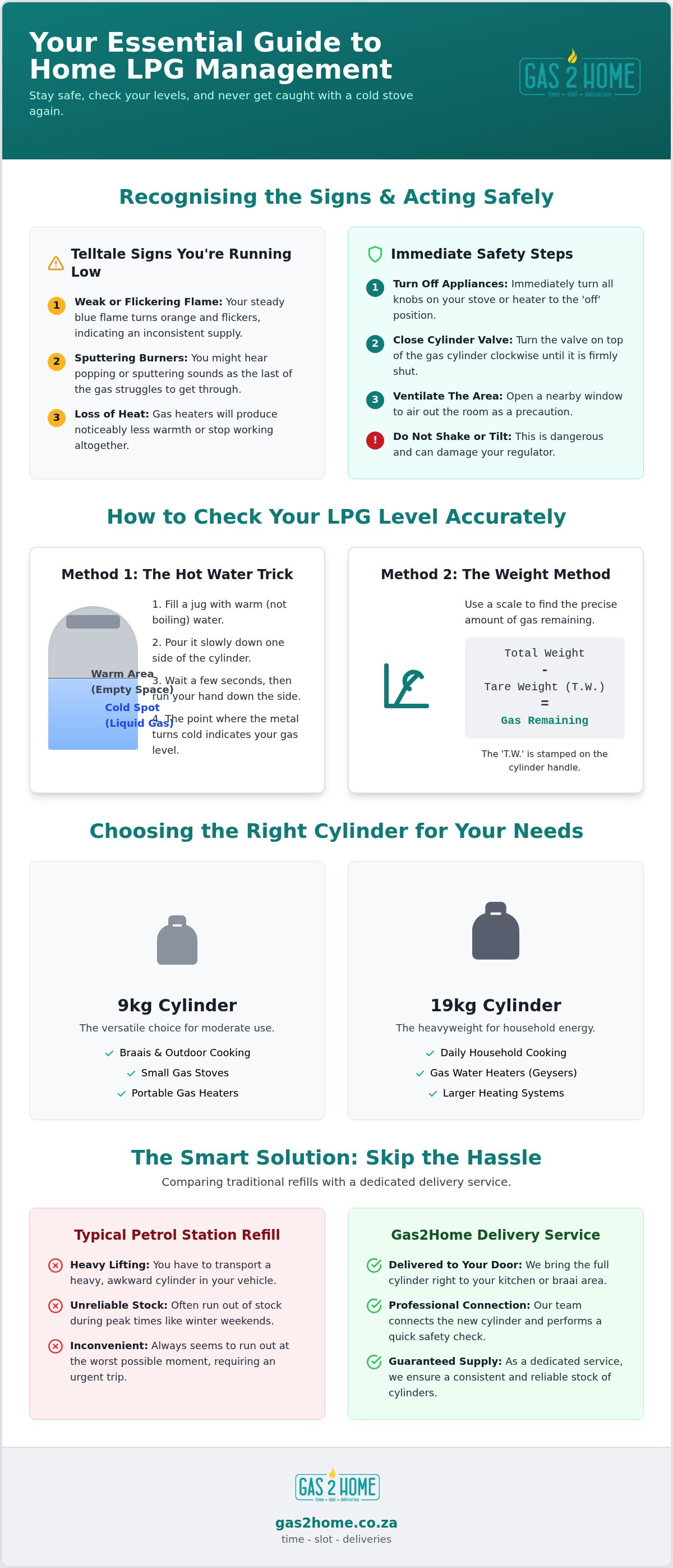
Safety is your first priority. If your appliance stops working, turn off the control knobs on the stove or heater immediately. Next, close the valve on the cylinder regulator by turning it clockwise. This prevents any residual gas from leaking into your home. It is helpful to understand what LPG is to appreciate that whilst it is a safe and efficient fuel, it must be handled with respect. Open a window to ensure the area is well-ventilated whilst you wait for a replacement. Never try to shake or tilt the bottle to squeeze out the last bit of fuel. This can disturb sediment or cause liquid gas to enter the regulator, which is dangerous and can damage your equipment.
Distinguishing Between Petrol and LPG Shortages
When you hear local news reports about "running out of gas", they often refer to motorists facing petrol shortages at the pumps. For Cape Town residents, these headlines can cause unnecessary panic about their cooking fuel. It is vital to distinguish between the fuel in your vehicle and the LPG in your kitchen. If you are a professional seeking expert help with your automotive needs, you can explore Fixed-fee vehicle concierge and advisory services with KeyLane to simplify your next car purchase. Local LPG supply chains in the Western Cape are generally resilient. They operate independently from the fuel reserves found at petrol stations.
Hunting for a 9kg or 19kg cylinder at a petrol station during a perceived shortage is often a wasted trip. These outlets frequently run out of stock during peak winter months because they have limited storage space. Choosing a dedicated residential delivery service such as Gas2Home is a far more reliable way to manage your supply. It removes the stress of lifting heavy bottles and ensures you are not left stranded when the local station's cages are empty. If you are running out of gas Cape Town specialists who focus on home delivery can provide a far more consistent and dependable service than a corner garage ever could.
How to Check Your LPG Levels Before the Flame Goes Out
Waiting for your stove to stop working is a risky strategy. Many people believe that a change in flame colour is the best way to tell if they are low on fuel. This is actually a common misconception. A yellow or flickering flame often indicates a dirty burner or a blocked jet rather than an empty bottle. If you rely solely on visual cues, you will likely find yourself running out of gas Cape Town on a cold evening without a backup plan. Knowing how to monitor your levels accurately ensures you stay ahead of the "empty" mark.
The Hot Water Method Step-by-Step
The most reliable DIY technique is the hot water trick. It works because liquid LPG absorbs heat very quickly from the cylinder's metal walls. Follow these steps to get an accurate reading:
- Fill a jug with warm water. Ensure it is not boiling, as extreme heat can be dangerous and is unnecessary for this test.
- Pour the water slowly down one side of the upright cylinder.
- Wait a few seconds, then run your hand down the wet path you just created.
- Identify the point where the metal feels cold to the touch. The warm metal at the top indicates empty space, while the cold spot marks the exact level of the liquid gas remaining.
Weight-Based Calculations
If you have a luggage scale or a sturdy bathroom scale, you can get a precise measurement. Every cylinder has a "Tare Weight" (marked as T.W.) stamped onto the metal collar or handle. This figure represents the weight of the empty bottle in kilograms. To find the remaining LPG, subtract the tare weight from the total weight of the cylinder. For example, if your 9kg cylinder has a T.W. of 10.5kg and the scale reads 14.5kg, you have exactly 4kg of gas left.
Using these methods helps you maintain South African safety standards by preventing the need to disconnect appliances unnecessarily to "guess" the weight. It is far safer to know your levels than to be surprised mid-cook. If your calculations show you have less than a kilogram remaining, it's a good idea to arrange a delivery to avoid the stress of running out of gas Cape Town families often experience during the winter peak. Staying proactive keeps your kitchen running smoothly and your family warm.
Common Reasons Your Gas is Depleting Faster Than Usual
It is frustrating when you find yourself running out of gas Cape Town sooner than your budget allowed. Many residents assume their cylinder wasn't filled correctly, but consumption rates vary wildly based on your appliances and habits. One major factor is the "Load Shedding Effect". As power outages remain a part of life, more households have switched to LPG for cooking and water heating. In fact, national LPG consumption rose to 500,000 metric tons in 2024 as people sought reliable energy alternatives. If you are cooking every meal on gas because the grid is down, your 9kg or 14kg bottle will naturally finish much faster than it did when it was only used for the occasional weekend braai.
Appliance age also plays a significant role in fuel efficiency. Older gas stoves and heaters often have partially blocked jets or worn burners that don't mix gas and air effectively. This results in an inefficient burn, meaning you use more fuel to reach the same temperature. If you notice your burners are producing a lazy orange flame rather than a crisp blue one, your appliance is likely wasting gas. Regular maintenance is essential; industry data shows that over 95% of gas-related incidents are preventable through basic care and following LPG safety regulations.
Heating vs Cooking Consumption
Winter is the primary culprit for rapid gas depletion. A standard 9kg cylinder used in a three-panel gas heater will typically last between 25 and 30 hours if kept on a medium setting. If you run your heater for five hours every evening, you will be running out of gas Cape Town in less than a week. For daily cooking, a 14kg or 19kg bottle is far more practical for a family of four, usually lasting several months. If you have a gas geyser or a large household with high demand, 48kg cylinders are the gold standard. They provide a much longer buffer and reduce the frequency of delivery orders.
Leaks and Inefficiencies
A small leak can drain your cylinder silently and dangerously. You should perform a "soapy water test" every time you connect a new bottle. Apply a mixture of dishwashing liquid and water to the regulator and hose connections; if bubbles form, you have a leak. Worn-out rubber hoses are another common issue. These hoses perish over time due to UV exposure and temperature changes, leading to significant gas loss. If you suspect your setup isn't airtight, check for these signs of a bad gas connection immediately. Replacing a R50 hose is a small price to pay compared to the cost of wasted fuel and the risk to your home safety.
Comparing LPG Cylinder Sizes: Which One Should You Order?
Selecting the right cylinder size is the most effective way to prevent the recurring headache of running out of gas Cape Town households often face. While many people stick to the standard 9kg bottle out of habit, your specific energy needs might dictate a larger size. The exchange process is straightforward: you provide an empty cylinder of a compatible brand and receive a full, sealed unit in return. This system ensures you only pay for the gas and the delivery service, rather than purchasing a new metal container every time you need a refill.
Choosing the Right Size for Your Appliance
The 9kg cylinder is the most versatile option and remains a firm favourite for Cape Town apartments. It's light enough to carry and fits perfectly into most portable heaters and braai stands. If you only use gas for occasional cooking or seasonal heating, this is your best bet. For more detail on this specific size, read The 9kg Gas Cylinder: Cape Town’s Ultimate Guide.
If you have a gas stove and cook daily, moving up to a 14kg or 19kg cylinder is a smart move. These sizes provide a much more consistent pressure for high-flame cooking and last significantly longer. You won't find yourself mid-way through a meal prep only to realise you are running out of gas Cape Town style. These bottles are also commonly used for domestic water heating, providing enough volume to handle multiple showers without the need for constant swaps.
The Cost-Benefit of Larger Cylinders
Choosing a larger cylinder or keeping a backup bottle offers two distinct advantages. First, it reduces the frequency of delivery fees. By ordering a 19kg bottle instead of two 9kg bottles over the same period, you save on logistics costs. Second, having a secondary 9kg bottle as a spare is the only foolproof way to ensure you never have a cold kitchen. When the first bottle runs dry, you simply switch to the backup and place your order for a replacement immediately.
- 9kg Cylinders: Best for portable heaters, braais, and small households with limited storage.
- 14kg and 19kg Cylinders: Ideal for daily family cooking and gas geysers.
- 48kg Cylinders: The heavy-duty choice for large homes or commercial kitchens. These must be stored outside on a level, firm base.
Safety regulations require 48kg cylinders to be stored outdoors in a well-ventilated area to prevent gas build-up. Regardless of the size you choose, always ensure your storage area is clear of flammable materials and away from electrical points. If you are ready to upgrade your supply or need an emergency swap, order your gas cylinder delivery now to keep your home running smoothly and efficiently.
Fast, Safe LPG Delivery: Why Gas2Home is Your Local Solution
When you are running out of gas Cape Town residents often feel a sense of immediate panic, especially if it happens during a cold snap or a busy meal service. We don't believe you should have to wait days for a basic utility. Our service is built on the foundation of being a dependable neighbourhood partner that understands local logistics. Much like the professional distribution solutions provided by NIGHTWING, we prioritise speed and reliability. We offer same-day delivery across the city to ensure your home stays warm and your kitchen remains fully operational. By operating from Monday to Saturday, we provide a reliable safety net for those moments when your cylinder unexpectedly runs dry.
The "Connected on Delivery" promise is a cornerstone of our service and addresses one of the biggest anxieties people have about LPG. Most suppliers simply drop a heavy, cold cylinder at your gate and drive away. We do things differently. Our professional connection service is included at no extra cost with every delivery. Our trained drivers don't just drop and go; they ensure your new 9kg, 19kg, or 48kg bottle is safely and correctly linked to your appliance. This removes the physical strain of moving heavy bottles and the worry of potential leaks from a poor connection.
Our Cape Town Service Areas
We have designed our delivery routes to be as efficient as possible, covering a wide footprint from the CBD and Seapoint to Sunset Beach and the Southern Suburbs. We provide scheduled time slots that fit around your busy work-from-home day, so you aren't left wondering when help will arrive. You can find more details about our specific reach in our guide to Reliable Gas Delivery Seapoint, Camps Bay, CBD. Whether you are in a high-rise apartment or a suburban home, our team knows the quickest routes to your doorstep.
How to Order Your Replacement Gas
Requesting a refill is designed to be a frictionless experience. You can use our online ordering system for a guided, step-by-step process. If you are on the move, WhatsApp ordering is the fastest way to secure your slot. Simply send us your address, the cylinder size you need, and your preferred delivery time. When our driver arrives, they will handle the heavy lifting, swap your empty bottle, and perform a safety check on the connection. We also offer flexible payment options upon delivery, ensuring a transparent and trustworthy transaction every time you find yourself running out of gas Cape Town.
Keep Your Kitchen Running and Your Home Warm
Managing your home energy shouldn't be a source of stress. By using simple checks like the hot water trick and monitoring your tare weight, you can stay ahead of an empty tank. Whether you need a 9kg bottle for your heater or a 48kg unit for a large household, choosing the right size is the first step toward efficiency. Safety remains the priority; always ensure your connections are tight and your appliances are well-maintained.
When you are running out of gas Cape Town residents deserve a service that is both fast and professional. Gas2Home is your dependable neighbourhood partner. We focus on removing the domestic friction of heavy lifting and technical setup. We have been trusted by locals for years to provide a frictionless experience from the moment you order until the flame is lit. Our team understands that a cold stove is a domestic emergency that requires a prompt, expert response.
Take the stress out of your next refill. Get same-day delivery and a professional connection included at no extra cost. Experience our no-fuss service today. Order your gas refill now on WhatsApp for same-day delivery. Stay warm, stay safe, and keep cooking.
Frequently Asked Questions
How long does gas delivery take in Cape Town?
We offer same-day delivery across most suburbs to ensure you aren't left stranded without fuel. If you place your order early in the day, we can typically fit you into a convenient time slot before the evening. Our goal is to resolve your energy shortage quickly so your household routine remains uninterrupted. We prioritise efficiency because we know how disruptive running out of gas Cape Town can be for local families.
Can I exchange any brand of gas bottle with Gas2Home?
Yes, we accept all standard, legal LPG cylinders for exchange provided they are in a safe and reusable condition. This includes the most common brands found across South Africa. You simply trade your empty bottle for a full, sealed one of the same size. This flexible approach makes it easy for you to switch to our service without needing to purchase a brand-new container or pay extra deposit fees.
Is it safe to transport a gas bottle in my car?
Transporting a cylinder yourself is possible but requires strict safety precautions. You must keep the bottle upright at all times and ensure it is secured so it cannot tip or slide. Keep your windows open to maintain ventilation and never leave a cylinder in a hot, parked vehicle. Many of our customers prefer our delivery service to avoid these risks and the physical strain of lifting heavy bottles into a boot.
How do I know if my 9kg gas bottle is actually empty?
The most accurate way to check is by using the hot water method or by weighing the cylinder. If you pour warm water down the side, the metal will feel cold where the liquid gas remains. If the entire side feels warm, the bottle is empty. You can also check the Tare Weight (T.W.) on the collar; if the total weight matches this number on your scale, your fuel has been depleted.
Does Gas2Home offer gas delivery on Saturdays?
We operate from Monday to Saturday to support your weekend energy needs. We understand that Saturday is a peak time for family braais and home cooking, so we keep our delivery teams active throughout the day. While we don't offer Sunday deliveries, our Saturday slots are designed to help you prepare for the rest of the weekend. Message us on WhatsApp to secure a time that fits your morning schedule.
Can you help me connect the gas bottle to my stove?
We include a professional connection service at no extra cost with every delivery we make. Our drivers are trained to safely fit the regulator and perform a quick leak test before they leave your property. This service is designed to give you peace of mind and ensure your appliance is ready to use immediately. You don't have to worry about the technical details; our team handles everything for you.
What is the price of a 9kg gas exchange in Cape Town today?
LPG prices in South Africa are regulated by the government and change on the first Wednesday of every month. These adjustments are based on international fuel costs and the Rand's performance. In August 2026, the maximum retail price in the Western Cape saw a verified decrease of 503.00 cents per kilogram. To get our current rate for an exchange, please contact us directly via WhatsApp for an immediate and accurate quote.
What should I do if I smell gas after a new connection?
If you detect a distinct "rotten egg" smell, turn off the cylinder valve immediately by rotating it clockwise. Extinguish any open flames and do not operate electrical switches, as these can create a spark. Open all windows and doors to ventilate the room. If the smell persists, it is a sign that you are running out of gas Cape Town safety margins. Move the cylinder outdoors and contact us for professional assistance.