
Running Out of Gas in Cape Town: A Quick Guide to Refills and Safety

It’s a chilly Tuesday evening, the pot is on the stove, and suddenly the flame flickers out. Running out of gas in Cape Town often happens at the most inconvenient times, leaving you with a cold kitchen and an even colder house. We understand the frustration of a disrupted routine and the anxiety that comes with trying to connect a new cylinder safely on your own. You shouldn't have to waste your afternoon waiting for a vague delivery window or worry about whether your connection is secure.
This guide explains exactly how to organise a fast, reliable LPG replacement that arrives when you need it. You will learn how to secure a professional connection for your 9kg, 14kg, 19kg, or 48kg cylinder to ensure your home stays safe and compliant with current standards. We provide a clear path to getting your gas refilled quickly in your specific suburb, so you can stop stressing about empty bottles and get back to your evening. Here is how to handle a gas shortage with total peace of mind.
Key Takeaways
- Close the cylinder valve and switch off all appliances immediately to maintain home safety as soon as you notice the gas has finished.
- Identify a low cylinder before it runs dry by using the warm water condensation trick or monitoring for changes in flame behaviour.
- Discover the most efficient way to handle running out of gas Cape Town by choosing a professional exchange service that includes a secure connection.
- Establish a two-bottle system to prevent future household emergencies and ensure your heater or stove remains operational throughout the winter.
- Organise a same-day delivery with a specific time slot to fit your busy schedule and avoid the frustration of vague arrival windows.
Immediate Steps When You Run Out of Gas in Cape Town
Running out of gas Cape Town usually happens at the most inconvenient moment, like halfway through cooking dinner or during a particularly cold winter night. Before you reach for your phone to organise a replacement, you must secure your current setup to prevent any hazards. Understanding what is LPG helps you appreciate why safety is the first priority. It is a pressurised fuel that requires careful handling even when the cylinder feels empty.
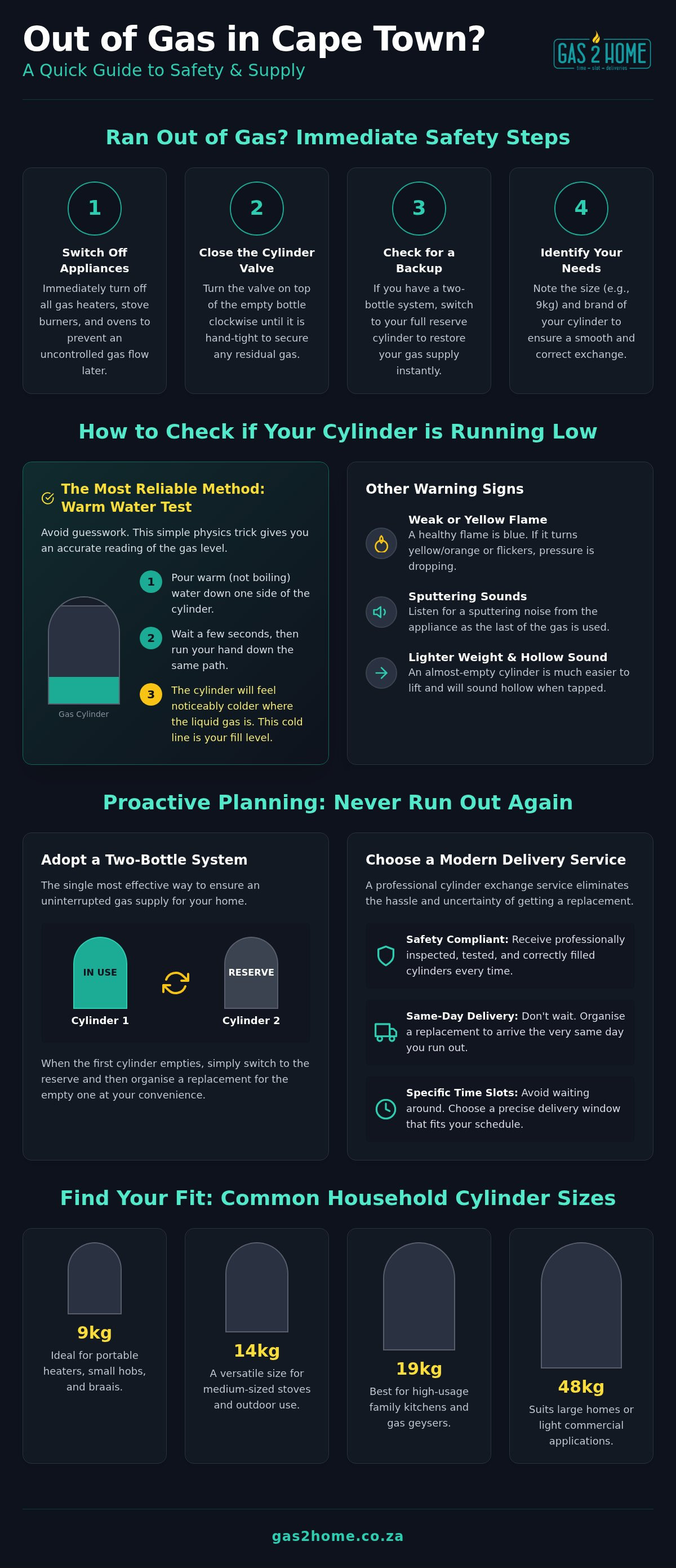
- Switch off all appliances: Turn off every gas heater, stove, or oven burner immediately. This prevents gas from flowing into the room unexpectedly when the new cylinder is connected and the valve is opened.
- Close the cylinder valve: Turn the valve on top of the bottle clockwise until it is hand-tight. Do not over-tighten it, but ensure it is firmly closed.
- Check for a backup: Look for a spare 9kg LPG Gas Cylinder or check if your dual-bottle manifold system has a full side you can switch to.
- Identify your needs: Determine if you have a branded bottle ready for exchange or if you need to purchase a brand-new cylinder and pay a deposit.
Safety First: Securing Your Empty Cylinder
Never leave an empty bottle with an open valve. Even if the flame has gone out, changes in ambient temperature can cause residual gas to expand and escape. It's a good habit to disconnect the regulator safely whilst you wait for your delivery. If you notice a distinct "rotten egg" odour, this indicates a residual leak. Move the cylinder to a well-ventilated outdoor area immediately. Since there is no Sunday delivery in the city, you must ensure the bottle is stored upright and away from drains or basement entries if you run out over the weekend.
Assessing Your Urgent Refill Needs
Decide which size is most appropriate for your current situation. A 9kg LPG Gas Cylinder is the standard choice for portable heaters and small hobs, whilst a 19kg LPG Gas Cylinder is better suited for high-usage family kitchens. Before you call for a swap, check the expiry date stamped on the cylinder stay-plate. South African regulations require these bottles to be tested every 10 years to ensure structural integrity. If you are running out of gas Cape Town, remember that specific branded cylinders belong to their respective networks; you cannot always swap one brand for another without paying a new deposit fee.
How to Tell if Your LPG Cylinder is Running Low
You don't have to wait for the flame to die mid-meal to realise you are low on fuel. Checking your gas level is a straightforward process that doesn't require expensive gauges or industrial scales. By using a few simple physical cues, you can avoid the frustration of running out of gas Cape Town when you need it most. These methods are practical for any household, whether you are using a small heater or a large stove setup.
The Condensation Method Explained
The most reliable DIY technique is the warm water test. Fill a jug with warm tap water; ensure it is not boiling, as extreme heat can be dangerous. Pour the water slowly down the side of the cylinder. After a few seconds, run your hand down the wet path on the metal casing whilst performing this check. You will feel a distinct temperature shift from the warm upper section to a cold lower section. The fill line is the point where the temperature changes. This happens because the liquid gas inside absorbs the heat from the water, cooling the metal surface instantly. This method is far more accurate than trying to guess the level by shaking the bottle.
Recognising the Signs of Impending Empty
Monitoring your appliance's performance provides another clear warning. A healthy LPG flame should be crisp and blue. If you notice the flame flickering or turning a persistent yellow-orange colour, the pressure inside the bottle is likely dropping. You might also hear a faint "sputtering" sound at the burner as the last of the liquid LPG vaporises. Recognising these signs early prevents the stress of running out of gas Cape Town during a busy dinner service. Keep in mind that cold weather in the city affects gas pressure. During a winter cold snap, your 9kg gas cylinder may feel lower than usual because the cold air reduces the rate at which the liquid turns into gas. Following Official safety regulations for LPG means keeping your cylinders in a stable environment to maintain consistent flow.
Physical weight and sound are your final indicators. A full cylinder has a heavy, solid thud when tapped with a knuckle. As it empties, this sound transitions into a higher-pitched, hollow ring. If you can move the bottle with significantly less effort than when it was first delivered, it is almost certainly time for a swap. If your checks suggest you are nearly empty, booking a fast delivery now ensures you aren't left in the cold later tonight.
The Efficiency of LPG Cylinder Exchange vs. Refilling
Running out of gas Cape Town often leads to a choice between finding a refill station or opting for a cylinder exchange. Whilst refilling a private cylinder might seem like a way to save a few Rand, the exchange model is the preferred standard for both safety and speed. This system ensures that every bottle in circulation meets the strict LPG safety regulations set out by national authorities. When you exchange a cylinder, you aren't just getting more fuel; you are receiving a piece of equipment that has been professionally inspected, cleaned, and certified for home use.
Why We Choose Exchange Over Refilling
The primary advantage of the exchange system is the elimination of wait times. You don't have to stand in a queue at a depot or leave your bottle at a hardware store for hours. A full, sealed cylinder is delivered directly to your home, ready for immediate connection. Safety is the most critical factor in this process. Every bottle returned to a filling centre undergoes a rigorous multi-point check. Technicians inspect the cylinder body for rust or dents and test the valve integrity to prevent leaks. If a bottle fails these checks, it is removed from circulation immediately.
You must avoid "parking lot refills" or unauthorised vendors who offer to fill your bottle from a larger tank. These operators often bypass safety protocols and may overfill cylinders, which creates a significant risk of fire or explosion. Legitimate exchange programmes ensure that the gas weight is precise and the seals are tamper-proof. This professional oversight provides the peace of mind you need when handling flammable gas in a domestic environment.
Swapping Different Bottle Sizes
Most exchange programmes operate on a "like-for-like" basis to keep logistics simple and costs predictable. If you have an empty 9kg LPG Gas Cylinder, you can typically swap it for a full 9kg bottle without any additional deposit fees. Upgrading to a larger size, such as a 14kg LPG Gas Cylinder or a 19kg LPG Gas Cylinder, usually requires paying the difference in the cylinder deposit. This is a one-off cost that allows you to move into a higher capacity bracket if your household usage increases during the winter months.
Ensure your empty bottle is in an acceptable condition before the delivery driver arrives. Whilst minor paint scratches are expected, cylinders with heavy structural damage or extreme corrosion might be rejected for exchange. Keeping your bottles in a dry, upright position helps preserve their condition and ensures a smooth swap every time you find yourself running out of gas Cape Town.
Planning to Prevent Future Gas Emergencies
Running out of gas Cape Town doesn't have to be a recurring household crisis. By shifting from a reactive approach to a proactive one, you can ensure your kitchen and heaters remain functional throughout the year. Planning ahead is especially vital because there is no Sunday delivery in the city. If your cylinder runs dry on Saturday evening, you may face a long wait before a replacement arrives. Using modern tools to order gas online in Cape Town allows you to stay ahead of your usage patterns without leaving your home.
Estimating Your Gas Longevity
Understanding your consumption helps you predict exactly when to book your next exchange. For a typical family of four cooking daily, a 9kg LPG Gas Cylinder usually lasts between three to five weeks. However, this lifespan drops significantly during a Cape Town winter when gas heaters are in constant use. A standard gas heater can consume a 9kg bottle in as little as 25 to 30 hours of continuous operation. If you use a 19kg LPG Gas Cylinder or a 48kg LPG Gas Cylinder for larger household systems, track your delivery dates on a calendar. This simple habit reveals your average monthly requirement and highlights when you need to order before a predicted cold front hits the Western Cape.
The Backup Bottle Strategy
The "Two-Bottle System" is the most effective way to avoid running out of gas Cape Town. This strategy involves keeping one cylinder in use whilst having a second, full backup ready in storage. When the first bottle empties, you simply switch to the backup and immediately order a replacement for the empty one. This seamless transition is essential for local restaurants and small businesses that cannot afford downtime during peak service hours. Ensure you store your backup cylinders in a cool, well-ventilated outdoor area. They must remain upright and on a stable surface at all times to comply with safety standards. Investing in a second 9kg LPG Gas Cylinder or 14kg LPG Gas Cylinder provides a reliable safety net for your home.
Don't wait until your stove stops working to take action. Check your levels today and schedule your gas delivery before the weekend rush begins.
Convenient Same-Day Gas Delivery in Cape Town
When you are running out of gas Cape Town, the immediate priority is getting your kitchen or heater back online without delay. Vague delivery windows and "sometime today" promises only add to the stress of a cold house. Gas2Home solves this by offering scheduled time slots that fit your daily routine. You can select a specific morning or afternoon window, ensuring you are present for the delivery without wasting your entire day. This methodical approach to logistics ensures that your replacement cylinder arrives exactly when you expect it.
Professional Connection and Safety Check
Many homeowners feel anxious about connecting a new 9kg or 19kg LPG Gas Cylinder themselves. A loose fitting or a worn washer can lead to dangerous leaks that are difficult to detect without the right tools. Our drivers don't just drop your bottle at the front door; they provide a full Gas Connection Service as part of the delivery. We physically connect the new cylinder to your regulator and perform a "bubble test" using a specialised solution. If bubbles appear, it indicates a leak that we rectify on the spot. This professional oversight is particularly valuable for elderly residents or anyone unfamiliar with gas equipment, providing total peace of mind that your home is safe.
Our Cape Town Service Areas and Hours
We maintain an extensive delivery network that spans from Sunset Beach and Milnerton through to the Southern Suburbs. Our teams operate from Monday to Saturday, ensuring we are available for your mid-week cooking needs and your weekend braai preparations. Because we prioritise a frictionless experience, we offer a pay-on-delivery system. You can settle the transaction via card or cash once the cylinder is safely installed and tested. This eliminates the need for complex upfront bank transfers and keeps the process simple.
For the fastest possible response, we recommend using our WhatsApp ordering channel. It allows you to share your location pin and preferred time slot in seconds, bypassing long phone queues. Whether you need a 9kg LPG Gas Cylinder for a portable heater or a 48kg LPG Gas Cylinder for a large residential installation, we ensure the process is handled with quiet expertise. Don't let running out of gas Cape Town ruin your evening when a professional, local solution is just a message away.
Restore Your Comfort with a Professional Gas Exchange
Managing your household fuel doesn't have to be a source of stress. By monitoring your cylinder levels with the warm water trick and implementing a two-bottle backup strategy, you can effectively prevent the frustration of running out of gas Cape Town. Choosing a professional exchange service ensures your equipment is always certified, safe, and ready for use. You now have the tools to identify the signs of a low bottle and understand why a professional connection is vital for your home's safety.
Take the hassle out of your next refill by choosing a service that values your time and safety. We offer same-day delivery with a professional connection included to ensure your appliances are running perfectly. You can pay on delivery via card or cash once the installation is complete. Order your gas refill now for fast Cape Town delivery and get back to your routine with total peace of mind. Your home deserves a reliable partner that keeps the kitchen warm and the stove ready.
Frequently Asked Questions
How quickly can I get gas delivered in Cape Town if I run out?
You can receive your gas on the same day you order it. We provide specific time slots to ensure you aren't left waiting for hours at home. By selecting a morning or afternoon window that suits your schedule, you can manage your day effectively whilst we handle the logistics. This rapid service is designed for households running out of gas Cape Town who need to get their kitchens or heaters operational again without delay.
Do you deliver gas on Sundays in Cape Town?
No, we do not provide delivery services on Sundays. Our operations run from Monday to Saturday to cover your domestic needs and weekend braai requirements. We recommend checking your cylinder levels on a Friday or Saturday morning to avoid being stuck without fuel until the start of the new week. Planning ahead for the weekend ensures your home remains warm and your stove stays functional during our Sunday closure.
Can I exchange a different brand of gas bottle with Gas2Home?
Yes, you can exchange any standard branded LPG cylinder with us as part of our service. We accept most major brands through our empty-for-full exchange system, provided the bottle is in a safe and acceptable condition. If you are starting from scratch or want to add a backup bottle to your setup, you can also purchase a brand-new cylinder by paying the initial deposit fee along with the gas price.
What is the safest way to check if my gas bottle is empty?
The safest and most effective method is the warm water condensation test. Pour a jug of warm water down the side of the cylinder and feel for the temperature change on the metal surface. The cold section indicates the remaining liquid gas level. Avoid shaking the bottle or using a naked flame to check levels. This physical test provides an accurate reading without the need for specialised gauges or industrial weighing equipment.
Is the connection of the gas bottle included in the delivery fee?
Yes, a professional connection service is included with every delivery we make to your home. Our drivers don't simply leave the cylinder at your gate; they will physically connect the bottle to your regulator and test for leaks. We perform a bubble test to ensure the seal is airtight and safe. This service provides peace of mind, especially for those who are uncomfortable handling gas fittings or the weight of larger cylinders.
What sizes of gas cylinders are available for home delivery?
We deliver four standard sizes to suit different household and commercial needs across the city. You can order a 9kg LPG Gas Cylinder for portable heaters, a 14kg LPG Gas Cylinder, a 19kg LPG Gas Cylinder for standard stoves, or a 48kg LPG Gas Cylinder for large residential installations. Whether you are running out of gas Cape Town in a small apartment or a large family home, we have the right capacity available for exchange.
Can I order my gas refill via WhatsApp?
Yes, ordering via WhatsApp is the fastest way to arrange your delivery and confirm your time slot. You can simply message us your name, location pin, and the size of the bottle you require for exchange. This method allows you to skip phone queues and receive a quick confirmation of your delivery window. It is a convenient, frictionless way to manage your gas refills whilst you are on the move or busy at home.
What should I do if I smell gas after connecting a new bottle?
Immediately switch off all gas appliances and close the cylinder valve by turning it clockwise until hand-tight. If the bottle is indoors, move it to a well-ventilated outdoor area away from drains or ignition sources. Do not use electrical switches or mobile phones near the suspected leak. Once the area is secure, contact us for assistance. Our drivers are trained to handle these situations and will ensure your connection is properly rectified.