
How to Store Gas Cylinders Safely: 2026 Cape Town Guide

Your home insurance policy could be completely void if your gas cylinder is sitting just a few centimetres in the wrong direction. It is a sobering thought for any Cape Town resident looking to beat the rising cost of electricity. You probably already know that LPG is a brilliant, efficient fuel for your kitchen or lounge, yet the fear of a potential leak or a fine from the fire department often lingers in the back of your mind. Learning how to store gas cylinder at home doesn't have to be a confusing technical headache.
We understand that you want clear, no-nonsense answers about South African safety laws without wading through dense legal documents. This guide provides total peace of mind by breaking down the latest SANS 10087 regulations for 2026. You'll discover the exact distance requirements for doors and drains, the specific volume limits for flats versus houses, and how to spot a leak before it becomes a hazard. By the end of this article, you'll know exactly how to keep your home compliant and your family protected.
Key Takeaways
- Understand the updated SANS 10087-1:2024 standards to ensure your home installation meets the latest South African safety and insurance requirements.
- Learn exactly how to store gas cylinder at home by applying the essential distance rules for outdoor placement near windows, doors, and drains.
- Identify the specific indoor storage limits for different property types, including the 9kg maximum for flats and 19kg for houses.
- Master the quick and effective soapy water leak test to perform routine safety checks on your cylinder valves and hoses.
- Explore the benefits of professional connection services to ensure your LPG setup is handled by experts the moment it arrives at your doorstep.
Understanding Gas Cylinder Safety: Why Proper Storage Matters
LPG stands for Liquid Petroleum Gas. It is a high-energy fuel compressed into a liquid state for easy transport and use in your kitchen or lounge. For a comprehensive overview of gas cylinders and their engineering, history shows these containers are built to withstand immense internal pressure. However, the gas inside behaves quite differently from the air we breathe. Unlike natural gas, LPG is significantly heavier than air. This specific physical property dictates every rule regarding how to store gas cylinder at home safely. If a leak occurs, the gas doesn't float away. It sinks. The primary risk of storing gas in confined or unventilated spaces is the invisible accumulation of flammable vapour that can ignite from a single electrical spark. Developing proactive safety habits is the best way to maintain peace of mind and keep your household running smoothly.
The Behaviour of LPG in Domestic Environments
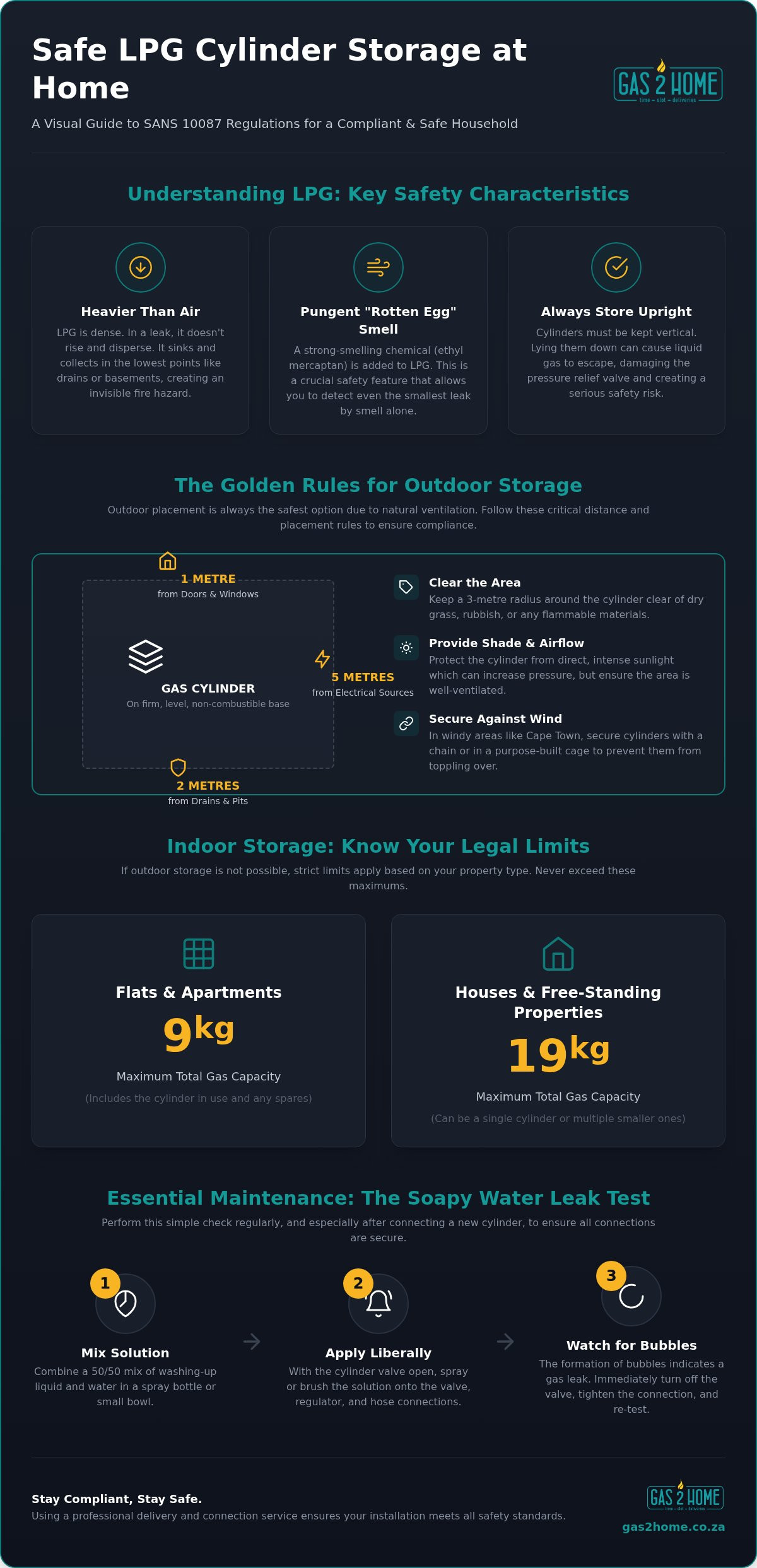
Think of leaked LPG as invisible water. Because it is dense, it flows to the lowest possible point in your home. It pools in low-lying areas like drains, floor vents, or basements. This pooling is dangerous because it displaces oxygen and creates a fire hazard that you might not notice at eye level. Fortunately, you will usually smell a leak before it becomes a crisis. Suppliers add a pungent chemical called ethyl mercaptan to the gas, giving it a distinct "rotten egg" scent. Always keep your cylinder in a vertical, upright position. This is non-negotiable for valve safety. The valve is designed to manage gas vapour; if the cylinder is on its side, liquid gas can escape and cause the valve to malfunction or freeze.
Common Misconceptions About Gas Explosions
Many homeowners live in fear of a cylinder spontaneously exploding, but actual metal failure is incredibly rare. Most gas-related incidents are caused by a leak from a worn hose or a loose connection that ignites within a room. Every modern cylinder is fitted with a Pressure Relief Valve (PRV). This component acts as a safety fuse. It is designed to vent small amounts of gas if the internal pressure reaches a dangerous level, preventing the tank from bursting. External heat is the primary catalyst for cylinder issues. A nearby fire or extreme direct sunlight can raise the internal pressure. By keeping your storage area cool and clear of flammable clutter, you remove the biggest threat to the cylinder's structural integrity.
The Golden Rules for Storing Gas Cylinders Outdoors
When deciding how to store gas cylinder at home, the outdoor environment is almost always the superior choice. Natural ventilation is your most effective safety feature. If a minor leak occurs, the wind simply carries the gas away before it can reach a flammable concentration. However, you cannot just leave a cylinder anywhere in your garden. It must stand on a firm, level, and non-combustible base like concrete or paving stones. Never place a cylinder on soil or grass; moisture from the ground will quickly corrode the base of the tank. Additionally, keep the area within three metres clear of any dry vegetation or rubbish that could fuel a fire.
Choosing the Optimal Outdoor Location
Placement is about more than just convenience. South African regulations require specific distances to keep your household safe. Because LPG is heavy, you must be precise with your measurements. Clear access is also essential for your gas delivery Cape Town driver. A clear path ensures they can swap your 19kg or 48kg cylinders safely without straining or risking damage to your property. Follow these primary distance rules:
- Maintain at least one metre of horizontal distance from doors and windows.
- Keep cylinders two metres away from drains, pits, or manholes.
- Ensure a five-metre gap from electrical sources like pool pumps or DB boards.
Avoid tucking cylinders under stairs or near primary exits. These areas are fire traps during an emergency. If a leak occurs in a confined space like a stairwell, the gas cannot escape, creating a high risk of ignition.
Protecting Cylinders from Cape Town Elements
Our local weather presents unique challenges for gas storage. If you live in coastal areas like Sunset Beach or Milnerton, salt-laden air accelerates rust. Periodically check your cylinder for signs of deep pitting or corrosion. Whilst these tanks are robust, the intense summer sun can significantly increase internal pressure. Try to place your cylinders in a shaded spot that still offers plenty of airflow. Finally, consider the South-Easter. High winds can topple unsecured cylinders, potentially damaging the valve. Use a chain or a purpose-built cage to keep them upright and stable. Following these gas cylinder safety guidelines ensures your setup remains reliable all year round. Proper placement also protects your home insurance. If a fire occurs and the fire marshal finds your cylinders were too close to a window, your claim could be rejected. This is a critical part of knowing how to store gas cylinder at home correctly. If you are unsure about your current setup, you can always ask our team for advice during your next delivery.
Indoor Gas Storage: Regulations and Practical Limits
Storing LPG inside requires strict adherence to South African National Standards. The SANS 10087-1:2024 regulations are designed to prevent gas accumulation in areas where people sleep or live. You must distinguish between a cylinder that is "in use" (connected to a stove or heater) and one that is "in storage." Prohibited areas include bedrooms, bathrooms, and any basement. Since LPG sinks, a leak in a cellar cannot dissipate naturally, creating a dangerous pocket of gas. Similarly, never place a cylinder under a staircase or near a primary exit. These locations must remain clear to ensure a safe escape route during an emergency. Knowing how to store gas cylinder at home is as much about where you don't put it as where you do. Safety is a habit. Following these rules ensures your insurance coverage remains intact.
Maximum Permissible Gas Volumes Indoors
The total amount of gas you can keep inside is strictly limited by the type of property you own. For those living in flats or multi-storey apartment blocks, the legal limit is a single 9kg cylinder. If you reside in a free-standing house, the maximum aggregate volume is 19kg. This total applies to all cylinders combined, whether they are connected to a hob or a portable heater. You should never store spare full cylinders inside your home. If you have a backup bottle, it must be kept in a ventilated outdoor area. Consulting official gas cylinder storage regulations confirms that limiting indoor volume is a global safety standard. Keeping excess gas indoors significantly increases the fuel load in the event of a house fire, which can complicate emergency response efforts.
Safe Placement for Gas Heaters and Stoves
When you use LPG for home heating or cooking, the appliance placement must follow clear safety margins. Keep portable gas heaters at least one metre away from combustible materials like curtains, bedding, or upholstered furniture. If your cylinder is housed inside a kitchen cupboard for a gas hob, the cupboard must have adequate ventilation holes at the bottom. This allows any leaked gas to escape rather than pooling around the electrical ignition. Always ensure a window is slightly ajar whilst using indoor gas appliances to maintain fresh air circulation. Mastering how to store gas cylinder at home keeps your family protected whilst you enjoy the efficiency of LPG.
Maintenance and Regular Safety Checks for Home Storage
Safety does not end once the cylinder is in position. Routine maintenance is the only way to ensure your setup remains leak-free and compliant. Inspect your equipment every time you use your appliance. Pay close attention to the orange rubber hose. These hoses are designed specifically for LPG, but they have a limited lifespan. Replace them every two to three years, or immediately if you notice any cracks, brittleness, or discolouration. Knowing signs of a bad gas connection, such as a persistent smell or a faint hissing sound, can prevent a minor issue from becoming a hazard. This proactive approach is a core part of how to store gas cylinder at home correctly.
The Soapy Water Test: A Step-by-Step Guide
This is the most reliable way to find a leak. It is simple, fast, and requires no special tools. Follow these steps every time you connect a new cylinder:
- Mix a solution of water and a few drops of liquid dish soap in a spray bottle or bowl.
- Apply the soapy water generously to the valve, the regulator connection, and along the length of the hose.
- Turn on the gas valve slowly without lighting your appliance.
- Watch for bubbles. If you see "growing bubbles" or foam forming, you have a leak.
If you confirm a leak, close the cylinder valve immediately. Disconnect the regulator and move the cylinder to a well-ventilated outdoor area. Do not attempt to use the appliance until a professional has inspected the connection whilst ensuring no ignition sources are nearby.
Handling Empty and Full Cylinders During Exchange
Never assume an empty cylinder is harmless. Even a "depleted" tank contains residual gas vapour that can ignite if the valve is left open. Treat every empty bottle with the same caution as a full one. Ensure the valve is turned tightly to the "closed" position before you prepare for your empty gas bottle exchange. When your new delivery arrives, verify that the plastic safety seal is intact. This seal is your guarantee that the cylinder has been filled correctly and hasn't been tampered with. For total peace of mind, you can book a professional gas delivery and connection through our service to ensure every joint is tested by an expert during the swap.
Hassle-Free Delivery and Professional Connection in Cape Town
Even with a thorough understanding of how to store gas cylinder at home, the connection phase remains the most critical moment for safety. A minor error during a cylinder swap can lead to a slow leak that is difficult to detect without professional equipment. This is why having an expert handle the physical setup is the ultimate safeguard for your household. Gas2Home offers a professional connection service with every delivery, ensuring your 9kg, 14kg, 19kg, or 48kg cylinder is correctly and safely integrated. Our drivers function as safety experts who inspect your storage area to ensure it remains compliant with the latest regulations. This service removes the stress of handling high-pressure equipment and ensures a frictionless experience from start to finish.
Why Professional Setup Beats DIY
A professional setup focuses on technical details that are often missed during a DIY swap. Our team specifically checks the regulator seating and the integrity of the Bullnose washer to ensure a gas-tight seal. We also verify that the correct hose clamps are used and tightened sufficiently to prevent any accidental dislodgement. You gain peace of mind knowing the entire connection was tested by a pro before the driver left your property. When you order gas online Cape Town, you are choosing a service that prioritises your safety above all else. We treat every delivery with the quiet expertise and care your home deserves.
Ordering Your Exchange with Gas2Home
We have designed our ordering process to be fast-paced and highly focused on your convenience. You can use our WhatsApp system for an immediate response, avoiding the hassle of traditional call centres. We offer specific time slots that fit into your daily routine, so you never have to waste time waiting. For added security and transparency, we provide a payment-on-delivery option. This ensures you only pay once your exchange is complete and your new cylinder is fully operational. Our same-day delivery service across Cape Town means you can stay warm and keep cooking without interruption. We are committed to being your reliable local partner, providing a masterclass in residential LPG logistics.
Secure Your Home with Expert Gas Safety
Proper LPG storage is about more than just convenience; it is a vital step in protecting your family and your property. By following the updated SANS 10087 guidelines, you ensure that your setup remains compliant and your insurance stays valid. Remember to prioritise outdoor storage with natural ventilation and maintain the correct distances from doors and drains. Mastering how to store gas cylinder at home involves a combination of smart placement and regular maintenance checks like the soapy water test.
You don't have to manage these technical details alone. We provide a professional connection service with every delivery to ensure your cylinders are perfectly fitted. Trusted by local restaurants and households across the city, we offer same-day service across Cape Town to keep your home running without interruption. Order your gas exchange now and let our experts handle the connection for you. Choosing a reliable partner means you can enjoy the efficiency of LPG with total confidence and peace of mind.
Frequently Asked Questions
Can I store a gas cylinder in my garage?
No, you shouldn't store a gas cylinder in a standard residential garage. LPG is heavier than air and will pool on the floor if a leak occurs. Most garages lack the specific high and low-level ventilation required by South African safety regulations. It's much safer to keep your cylinder in a dedicated outdoor space. This ensures any leaked gas dissipates naturally into the atmosphere without building up to a dangerous level.
Is it safe to keep a gas bottle in the sun in Cape Town?
While cylinders are built to withstand heat, direct Cape Town summer sun can cause the internal pressure to rise. If the pressure becomes too high, the safety relief valve may release small amounts of gas. It's best to place your bottle in a shaded area that still offers plenty of airflow. This simple habit is a key part of how to store gas cylinder at home to avoid unnecessary venting.
How many gas cylinders am I legally allowed to have at home?
According to SANS 10087-1:2024, the limits depend on your property type. If you live in a flat or apartment, you're legally restricted to one 9kg cylinder indoors. For a free-standing house, the total indoor limit is 19kg. If you need more gas for your home, you must store the additional cylinders outdoors. Always ensure your setup complies with these volumes to keep your household insurance valid and your family safe.
Should I store my gas bottle inside or outside for a gas heater?
Portable gas heaters are designed to hold a 9kg cylinder internally. You can safely use these indoors as long as the room has adequate ventilation, such as a slightly open window. However, for larger fixed heating systems, outdoor storage is the preferred choice. Storing the cylinder outside and piping the gas in reduces the risk of gas accumulation inside your living spaces during a leak or equipment failure.
What should I do if I smell gas in my house?
Act immediately if you smell gas. Don't operate any electrical switches or use a telephone in the area. Extinguish all open flames and open every door and window to clear the air. Turn off the cylinder valve at the top and move the bottle outside if it's safe to do so. If the smell remains, contact a professional to inspect your connections and hoses before attempting to use the appliance again.
Can I store a gas cylinder on its side if it is empty?
Never store a gas cylinder on its side, even if you believe it's empty. Residual gas vapour remains inside and can still pose a fire risk. Storing it horizontally can also damage the valve assembly or cause liquid gas to leak if any remains. Always keep your bottles in an upright position on a level, non-combustible surface. This ensures the safety relief valve functions correctly and prevents accidental leaks or valve malfunctions.
Do gas cylinders expire or need testing?
Gas cylinders don't have an expiry date, but they must undergo a professional hydraulic test every 10 years. This test verifies the structural integrity of the metal. When you use a reliable exchange service, the supplier takes responsibility for these safety checks. They pull older bottles from circulation for testing, ensuring that the 9kg or 19kg cylinder delivered to your home is always in top condition and safe for use.
How far should a gas bottle be from an electrical plug?
You must keep a minimum distance of 5 metres between a gas bottle and any electrical source. This includes wall plugs, pool pumps, air conditioning units, and distribution boards. This distance is a legal requirement in South Africa designed to prevent an electrical spark from igniting gas in the event of a leak. When planning how to store gas cylinder at home, always use a tape measure to confirm these safety gaps.