
How Long Does a 9kg Gas Bottle Last? The 2026 Cape Town Guide

Imagine you're halfway through searing a steak during a scheduled loadshedding block when your gas stove suddenly sputters and goes cold. It's a common frustration for Cape Town households, leaving many to wonder exactly how long does 9kg gas last before the next trip to the supplier. You shouldn't have to guess when your fuel will run out or worry about unexpectedly high costs during a cold winter snap. Reliable energy is a necessity, not a luxury, especially when the national grid remains unreliable.
We understand that managing your home's energy needs should be simple and predictable. This guide promises to show you exactly how many hours of cooking or heating you'll get from your 9kg cylinder based on current 2026 efficiency standards. You will learn the precise consumption rates for 3-panel heaters and gas hobs, discover how to maximise every drop by spotting micro-leaks, and find out the most reliable way to secure a same-day refill in the Mother City. Let's take the guesswork out of your gas usage and ensure you never run out mid-cook again.
Key Takeaways
- Learn how to use MJ/h ratings to calculate exactly how long does 9kg gas last for your specific appliances.
- Discover why the medium heat setting is more efficient than high and how it helps you avoid the burner setting trap.
- Master simple kitchen habits, such as the lid-on rule, that can stretch your gas supply by up to two weeks.
- Understand how professional connection services prevent micro-leaks to ensure you maximise every gram of fuel.
- Find out how to organise same-day delivery in Cape Town so you are never left without gas during loadshedding.
Understanding Your 9kg LPG Gas Cylinder
To accurately predict how long does 9kg gas last, you must first understand what's actually inside that blue or grey steel bottle. Every 9kg LPG Gas Cylinder contains Liquefied Petroleum Gas, which is a high-energy mixture of propane and butane. These gases are stored under intense pressure to keep them in a liquid state. This allows a massive amount of energy to be packed into a relatively small space. Understanding Your 9kg LPG Gas Cylinder is the first step toward managing your household budget, as this fuel is prized for its portability and instant heat.
The "9kg" label refers strictly to the weight of the gas itself. It doesn't account for the weight of the metal cylinder. If you've ever felt a "full" bottle and thought it seemed heavy, you're feeling the combined mass of the steel and the fuel. In South Africa, this specific size has become the gold standard for residential use. It's the perfect middle ground. It is light enough for one person to carry to a braai area, yet it holds enough capacity to power a kitchen stove through weeks of loadshedding. It's the versatile workhorse of the Cape Town energy mix.
The Anatomy of a 9kg Gas Bottle
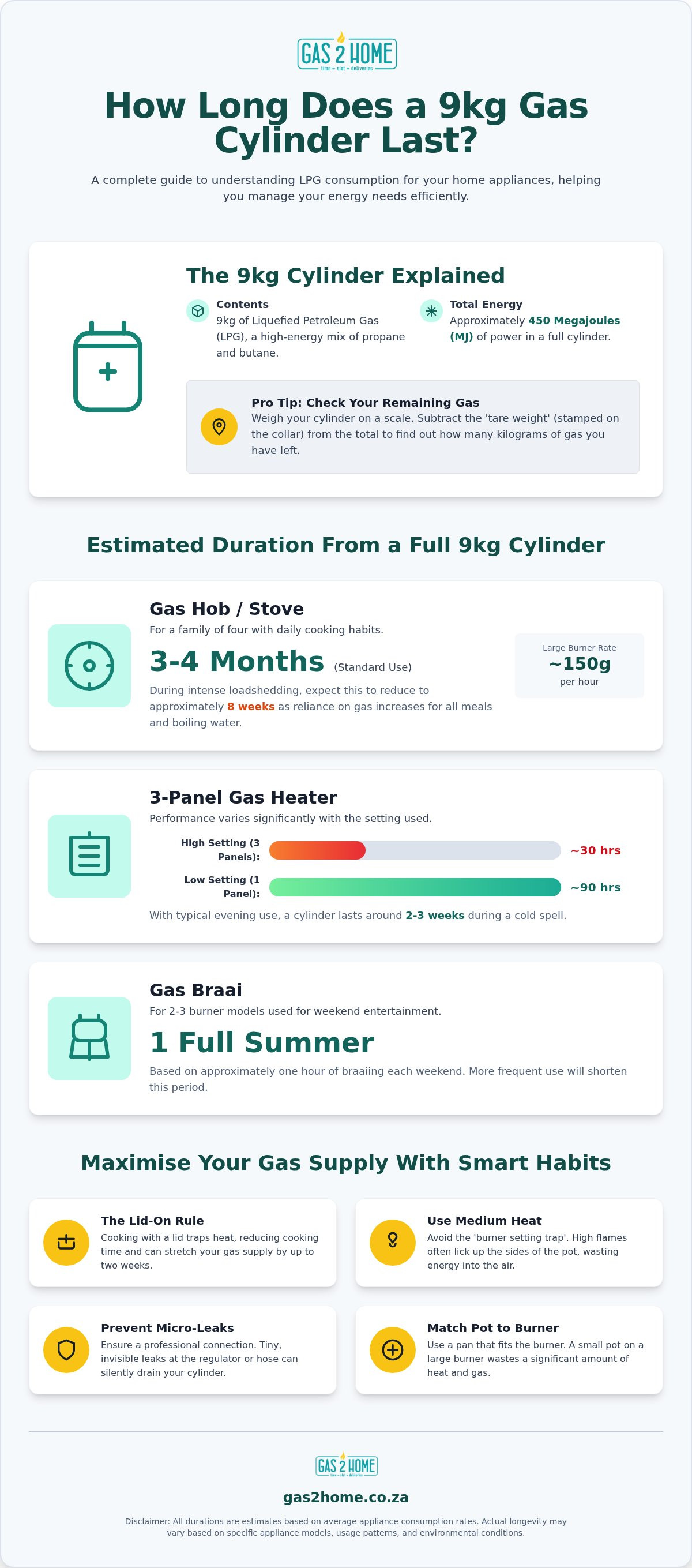
Understanding the difference between tare weight and gross weight is a pro tip for any homeowner. The tare weight is the weight of the empty cylinder, and you'll usually find it stamped clearly on the metal collar or shroud. To find out exactly how much fuel you have left, place your bottle on a standard bathroom scale. Subtract the tare weight from the total reading. The result is your remaining gas in kilograms. The valve at the top works with a regulator to control the flow. This regulator is vital. It drops the high internal pressure to a consistent level that your stove or heater can handle safely. This standardised setup makes the 9kg bottle compatible with almost any domestic gas appliance in the country.
LPG Storage and Safety Basics
Safe storage isn't just about protection; it's about performance. You must always store and use your cylinder in an upright position. If the bottle lies on its side, liquid gas can escape into the regulator, which often leads to frozen pipes or dangerous flares. Safety also involves checking the expiry date. Look for the date stamped on the shroud. In South Africa, cylinders must undergo structural testing every 10 years to stay in circulation. Temperature also changes how the gas behaves. During a cold Cape Town winter, the internal pressure drops. You might notice the flame looks slightly different, whilst summer heat causes the pressure to rise. Knowing these basics helps you understand how long does 9kg gas last under different environmental conditions.
Calculating Gas Usage by Appliance
To determine how long does 9kg gas last, you need to check the data plate on your specific appliance. This plate usually lists energy consumption in Megajoules per hour (MJ/h) or grams per hour (g/h). Grams per hour (g/h) is the standard measurement for South African gas stoves. A standard 9kg cylinder contains roughly 450MJ of total energy. You can use a simple formula to plan your household budget: divide the total energy in the bottle (450MJ) by your appliance's MJ rating to calculate the total burn hours. This removes the guesswork from your monthly energy planning.
How Long Does 9kg Gas Last for a Stove?
For a family of four using gas for daily cooking, a 9kg bottle typically lasts between 3 to 4 months. A single large burner on a standard hob consumes approximately 150g of gas per hour. This longevity changes quickly during intense loadshedding periods. When you rely solely on gas for every meal, morning coffee, and boiling water, your consumption spikes. You might find yourself needing a refill closer to the 8-week mark if the grid remains unstable for long stretches. It's helpful to keep a spare bottle if you do most of your cooking on a gas hob.
Using a 9kg Cylinder for Gas Heaters
Winter in Cape Town puts the heaviest demand on your gas supply. A standard 3-panel gas heater burns roughly 300g/h when all three panels are active on the high setting. At this rate, a full 9kg bottle provides about 30 hours of continuous heat. If you switch to a single panel on the low setting, you can stretch that same bottle to 90 hours. This is a significant difference that helps you manage your winter fuel costs. Most households find that a single 9kg bottle lasts about two to three weeks during a typical cold snap if used only in the evenings.
Braais and Outdoor Cooking
Outdoor cooking is a staple of Cape Town life. A typical 2-burner or 3-burner gas braai consumes gas at a rate similar to a large indoor stove burner. If you braai every weekend for about an hour, a single 9kg refill will easily last you through an entire summer season. To get the most out of your cylinder, consult the 9kg gas cylinder guide for more specific appliance models. If you notice your flame getting low during a Saturday afternoon cookout, remember that ordering a refill with a professional connection service ensures you don't waste gas through micro-leaks at the regulator point.
Factors That Impact Your Gas Longevity
Cape Town's unique geography plays a massive role in fuel efficiency. The damp, salty air and fluctuating temperatures directly influence how long does 9kg gas last in your home. Coastal humidity can affect the pressure within the cylinder, whilst the notorious South Easter wind acts as a silent thief during outdoor braais. Wind pulls heat away from the cooking surface, forcing you to use higher settings for longer periods to achieve the same results. This environmental factor is often overlooked but can drain a bottle significantly faster than indoor use.
Many users fall into the "burner setting trap" by cranking their stove or heater to maximum from the start. This often leads to energy waste through incomplete combustion. Medium heat is typically more efficient for most cooking tasks. It allows for a more controlled burn, ensuring you extract the full 49 MJ of energy available in every kilogram of LPG. If your regulator is old or faulty, it won't maintain the steady pressure needed for this efficiency. Industry standards suggest replacing your regulator and flexible hoses every five years to avoid hidden waste and ensure safety.
The Cape Town Winter Effect
During a cold July night, you might notice your cylinder "sweating" or even frosting up. This occurs when you draw gas too quickly in low ambient temperatures, causing the liquid inside to struggle with vaporisation. Cold air also requires more energy to heat a room to a comfortable level. You can optimise your heater's performance by placing it in a central spot away from damp walls or drafts. This simple change reduces the need for high settings and stretches your supply further during the peak of winter.
Appliance Efficiency and Maintenance
The colour of your flame is the best indicator of efficiency. A healthy flame is crisp and blue. If you see yellow or orange tips, your burners are likely clogged with dust, pet hair, or carbon deposits. This yellow flame indicates incomplete combustion, which wastes gas and produces unwanted soot. Clean your burners regularly with a soft brush to ensure a clean burn. Getting a professional gas connection service is the most reliable way to prevent micro-leaks. These tiny leaks often go unnoticed but can significantly reduce how long does 9kg gas last by slowly draining the bottle whilst it stands idle.
How to Make Your 9kg Gas Bottle Last Longer
While the technical specs of your appliances set a baseline, your daily habits ultimately decide how long does 9kg gas last. You can easily extend the life of your cylinder by up to two weeks just by changing how you interact with your stove and heater. One of the most effective ways to prevent waste is to perform a regular leak test using the soapy water method. Simply apply a mixture of dish soap and water to the valve and regulator connections. If bubbles form whilst the gas is on, you have a micro-leak that is silently draining your bottle and your budget.
Efficiency is about ensuring every gram of fuel is converted into useful heat rather than escaping into the air. Simple adjustments to your routine can significantly reduce your refill frequency. If you want to ensure your setup is perfectly airtight from the start, you can order a 9kg LPG Gas Cylinder with a professional connection service included to eliminate the risk of leaks.
Smart Cooking Habits
The kitchen is where most gas is wasted through poor technique. Always follow the "Lid-On" rule; keeping a lid on your pots traps steam and heat, which can reduce cooking time by as much as 30%. It is also vital to match your pot size to the burner size. If the flames are licking up the sides of the pan, you are heating the air instead of the food. Another effective hack is using an electric kettle to boil water before transferring it to the gas stove for pasta or vegetables. Finally, try turning off the gas a few minutes before your meal is fully cooked. The residual heat in the heavy base of your cookware is often enough to finish the process without using extra fuel.
Heating Efficiency Strategies
Managing a gas heater in Cape Town requires a tactical approach. Use the "1-2-3 strategy" to stay warm without burning through your supply. Start the heater on all three panels for ten minutes to break the initial chill in the lounge, then immediately drop down to a single panel to maintain the temperature. This maintainance phase uses roughly one-third of the gas required for the high setting. You should also take the time to seal draughts under doors and around window frames to keep the warm air inside. Never leave a gas heater running whilst you are sleeping. It is an unnecessary safety risk and a massive waste of fuel that will drastically shorten how long does 9kg gas last during the winter months.
Reliable 9kg Gas Delivery and Connection in Cape Town
Knowing the math behind your consumption is only half the battle. Even with the best efficiency habits, your cylinder will eventually run dry, often at the most inconvenient moment. This is why having a dependable partner for gas delivery in Cape Town is essential for a stress-free home. Most local households calculate how long does 9kg gas last to predict their next refill date, but life doesn't always go to plan. Gas2Home offers same-day delivery slots to ensure you aren't left in the cold during a winter snap or a long loadshedding block.
We've designed our service to be as straightforward as possible for busy residents. You can order gas online in Cape Town using our web portal or send a quick message via WhatsApp. We understand that energy is a critical utility, so we move quickly from the moment you place your order to the moment the bottle arrives at your doorstep. This proactive approach removes the domestic stress of managing fuel levels manually.
Professional Connection: More Than Just Safety
Our service doesn't end at your front gate. Our team connects every bottle on delivery to ensure a perfect, airtight seal. This is a vital step because micro-leaks are often the silent culprit when a customer wonders why their gas didn't last as long as expected. These tiny leaks at the regulator point can slowly drain your 9kg LPG Gas Cylinder whilst it stands idle. By providing a professional connection, we give you peace of mind and ensure you aren't wasting money on leaked fuel. We also take a moment to inspect your regulator and hose condition, providing expert advice if we spot any signs of perish or wear that could compromise your safety.
Convenient Delivery That Fits Your Schedule
We know your time is valuable, so we don't expect you to wait at home all day for a delivery vehicle. We offer specific time slots so you can plan your day with confidence. Our team operates from Monday to Saturday, ensuring that your weekend braai or Sunday roast is never in jeopardy. To make the exchange as frictionless as possible, we offer both cash and card payment options on delivery. It's a no-nonsense, reliable service built around the needs of Cape Town families. Whether you're in the CBD or the Southern Suburbs, we bring the energy to you with quiet expertise and local care.
Master Your Home Energy in Cape Town
Managing your household fuel doesn't have to be a guessing game. By understanding the energy ratings of your appliances and adopting simple efficiency habits like the 1-2-3 heating strategy, you can take full control of your domestic budget. Knowing exactly how long does 9kg gas last gives you the peace of mind to navigate loadshedding and cold winter nights without the fear of running out mid-cook.
Reliability is just a click away when your cylinder finally runs low. You can order your 9kg gas refill for same-day Cape Town delivery and let our experts handle the rest. We include a professional connection with every delivery to ensure a perfect seal and prevent wasteful leaks. With specific time slots and the convenience of paying via card or cash on delivery, staying powered up has never been easier. Take charge of your home comfort today and enjoy a seamless, stress-free energy experience.
Frequently Asked Questions
How long does a 9kg gas bottle last on a 2-plate stove?
A 9kg bottle typically lasts between 3 to 4 months for a standard family using a 2-plate stove for daily cooking. This assumes you use the burners for approximately one hour per day. If you increase usage during loadshedding, this duration will naturally decrease. To accurately track how long does 9kg gas last, consider your specific cooking habits and the heat settings you use most frequently during meal preparation.
Is it cheaper to cook with gas or electricity in South Africa?
Cooking with gas is generally more cost-effective than electricity in South Africa, especially with rising electricity tariffs. Gas provides instant heat and stops consuming energy the moment you turn it off. Whilst the initial cost of a 9kg LPG Gas Cylinder and stove might be higher, the monthly savings on your utility bill are significant. Gas also ensures you can prepare meals during power outages, providing invaluable reliability for your home.
How can I tell how much gas is left in my 9kg bottle?
The most reliable method is to weigh the bottle on a bathroom scale. Find the "Tare Weight" (TW) stamped on the cylinder shroud, which is the weight of the empty bottle. Subtract this number from the total weight shown on the scale. The remainder is the weight of the gas left inside. Avoid the dangerous practice of shaking the bottle, as this doesn't provide an accurate measurement and can cause safety issues with the valve.
What happens if I leave my gas heater on all night?
Leaving a gas heater on all night is dangerous and wasteful. It depletes the oxygen in the room and can lead to a buildup of carbon monoxide if ventilation is poor. From a budget perspective, it will significantly reduce how long does 9kg gas last, as a standard heater can drain a bottle in just a few days of continuous use. Always turn off your heater before going to bed to ensure safety.
Can I use a 9kg gas bottle for a large gas geyser?
While a 9kg bottle can connect to a gas geyser, it is not recommended for large units. A 16L/min geyser can consume up to 2.5kg of gas per hour, meaning a 9kg bottle would last less than four hours of continuous hot water. For geysers, larger 19kg or 48kg cylinders are more appropriate as they provide the sustained pressure and volume required for consistent water heating without needing constant refills.
Why does my gas bottle feel cold or get frost on the outside?
This happens because of the "refrigeration effect" as liquid LPG turns into gas inside the cylinder. This process draws heat from the surroundings, making the metal cold to the touch. If you draw gas too quickly, especially during a cold Cape Town winter, frost may form on the outside. This is a normal physical reaction, but it indicates that the bottle is working hard to keep up with the appliance demand.
How often should I replace my gas regulator and hose?
You should replace your gas regulator and flexible orange hose every five years. Over time, the rubber components can perish or develop micro-leaks due to the salty coastal air in Cape Town. Checking the date stamped on the hose is a vital safety habit. Using a professional connection service during your next delivery ensures that your equipment is inspected by an expert to maintain maximum efficiency and prevent any unnecessary fuel waste.
Does the 9kg gas price change every month?
Yes, the Department of Mineral and Petroleum Resources regulates the Maximum Retail Price (MRP) of LPG, which typically changes on the first Wednesday of every month. These adjustments are based on global crude oil prices and the ZAR/USD exchange rate. Whilst the gas price itself is regulated, delivery fees and service charges may vary between suppliers. Staying informed about these monthly changes helps you plan your household energy budget more effectively.