
Gas for Pizza Oven Cape Town: The Complete Guide to Fuel and Delivery

You've spent hours proofing your dough and prepping fresh toppings, but just as the first pizza hits the stone, the flame flickers and dies. Running out of gas for pizza oven Cape Town mid-party is a nightmare every outdoor chef wants to avoid. It's frustrating to struggle with heavy cylinders or feel anxious about whether you've connected the regulator safely. You want to focus on the perfect bake, not the logistics of your fuel supply.
We agree that you deserve consistent, high heat for that restaurant-quality crust without the domestic stress of managing gas bottles. This guide helps you choose between the portable 9kg favourite and the high-capacity 19kg cylinder for your patio. You'll discover how to secure reliable delivery and professional connection services that ensure your setup is leak-free and ready to fire. We'll also cover essential safety tips and storage regulations to keep your home and guests safe while you cook.
Key Takeaways
- Understand why LPG is the superior fuel choice for achieving the consistent 500°C temperatures needed for authentic crusts.
- Identify whether the portable 9kg cylinder or the high-capacity 19kg bottle is the best fit for your specific pizza oven model.
- Learn how to perform the "soapy water test" and manage your regulator to ensure a safe, leak-free connection every time.
- Estimate your hourly burn rates so you never run out of gas for pizza oven Cape Town during a busy garden party.
- Discover the convenience of same-day delivery services that include professional connection and safety checks at your home.
Choosing the Right Gas for Your Pizza Oven in Cape Town
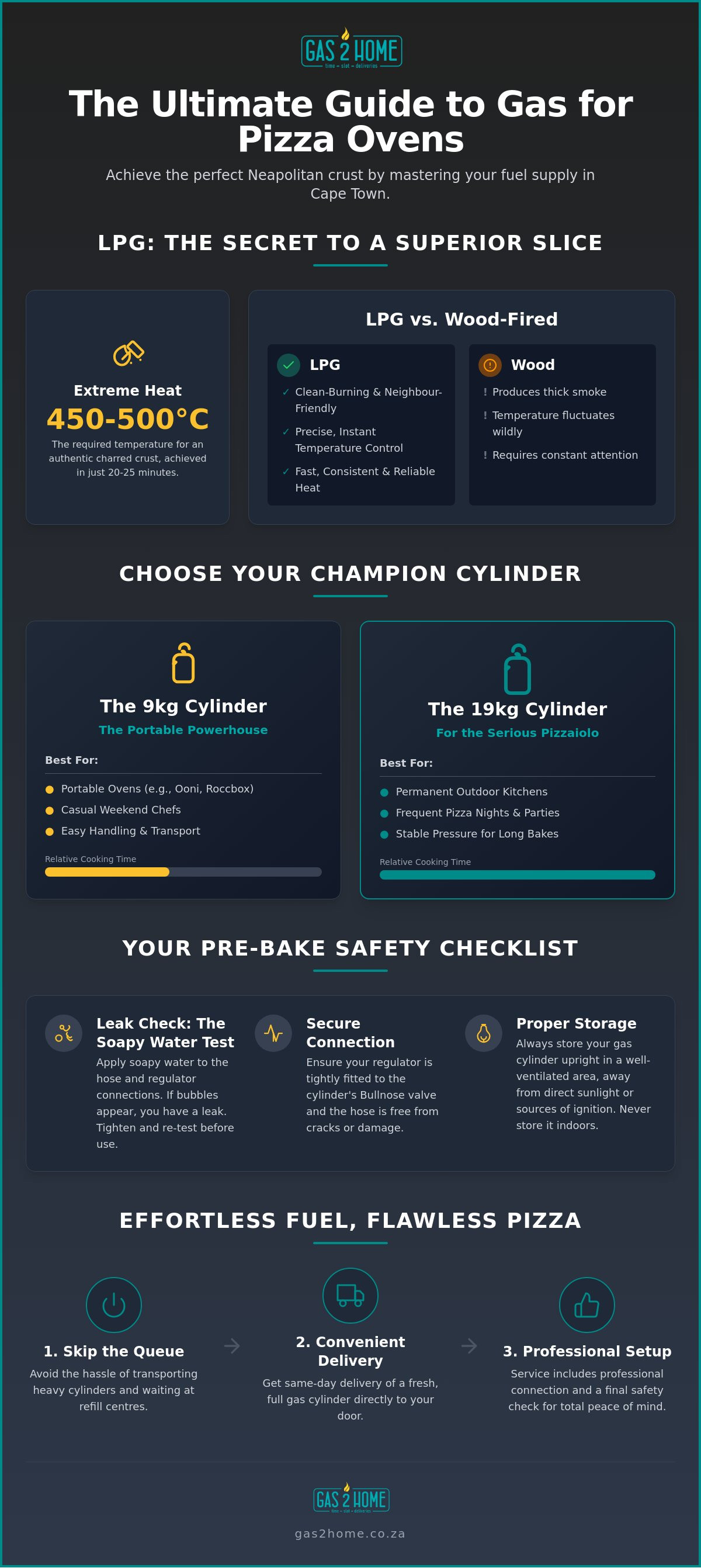
Neapolitan-style pizza requires extreme heat. You need to reach temperatures between 450°C and 500°C to achieve that signature charred crust and airy crumb. In South Africa, Liquefied Petroleum Gas (LPG) is the industry standard for both domestic and commercial ovens. It provides the high-calorific value necessary to get your oven stone hot in about 20 to 25 minutes. Choosing the correct gas for pizza oven Cape Town ensures your equipment performs exactly as the manufacturer intended.
LPG vs Wood-Fired: The Pizza Enthusiast’s Debate
Wood-firing is a traditional method, but it comes with challenges in an urban environment. Gas is the favourite for those using ovens on balconies or small patios because of its clean-burning behaviour. You won't have to worry about thick smoke drifting amongst your neighbours. This is particularly important in densely populated Cape Town suburbs where local bylaws regulate smoke emissions. Whilst wood requires constant attention, gas offers instant temperature precision. Turn a dial to adjust the flame height immediately. This control prevents burnt toppings and undercooked bases.
Propane and Butane: What is in the Bottle?
LPG is a mixture of propane and butane used for high-efficiency cooking. The specific blend provided by gas delivery Cape Town services is designed to work reliably in our local climate. Gas behaviour changes with the temperature. During a cold Cape Town winter, the pressure inside the bottle might drop slightly. High-quality LPG ensures your oven still reaches peak heat even on a chilly evening. In summer, the gas expands, but modern cylinders and regulators are built to handle these fluctuations safely.
Using the right gas for pizza oven Cape Town makes the difference between a soggy base and a crisp, professional result. Don't waste your weekend queuing at a petrol station or hardware centre for a refill. Transporting heavy bottles in your personal vehicle is difficult and often messy. Professional delivery services bring the fuel directly to your door. This saves time and ensures you have a fresh cylinder ready before your guests arrive. Relying on a professional service is far more efficient than searching for an open refill centre on a busy Saturday morning.
The Best Gas Bottle Sizes for Pizza Enthusiasts
Choosing the right size of gas for pizza oven Cape Town depends on how often you cook and whether your setup is portable or permanent. Domestic models like the Ooni Koda 12 or Gozney Roccbox are designed for mobility. They pair perfectly with smaller cylinders. If you have a built-in outdoor kitchen with a larger oven, you'll need a fuel source that matches that scale. Matching your cylinder to your oven model ensures you have enough pressure to reach those critical high temperatures.
The 9kg Cylinder: The Portable Powerhouse
The 9kg gas cylinder is the most popular choice amongst Cape Town pizza lovers. It offers the best balance between weight and capacity. You can easily move it from your storage area to the garden or pack it into a car for a weekend away. Most domestic pizza ovens sold in South Africa use a standard 5/8" Bullnose regulator that fits these bottles perfectly. This makes it the favourite for casual weekend chefs who value ease of use.
Safety is paramount when handling these portable units. You should follow best practices for the safe handling and storage of LP-Gas to ensure your patio remains a safe environment. Always store your 9kg bottle upright in a well-ventilated area. Never keep it indoors or in a confined space. If you are planning a big garden party, it is a smart move to order a 9kg refill in advance so you don't run out mid-bake.
19kg and Larger: For the Serious Pizzaiolo
If you host pizza nights frequently, consider a 19kg or even a 48kg cylinder. These larger bottles are more cost-efficient over the long term. They also provide better pressure stability during extended cooking sessions. Smaller bottles can occasionally lose pressure as the liquid gas evaporates quickly to keep up with high demand. A 19kg bottle has more surface area, which keeps the gas flowing consistently to maintain that 500°C heat for hours on end.
Larger setups require more careful planning. A 19kg bottle is heavy and difficult to move manually. It is best suited for permanent outdoor kitchen stations. You will need longer high-pressure hoses and a dedicated housing unit to protect the cylinder from the elements. Swapping these cylinders amongst different Cape Town suppliers is straightforward because the valves are standardised. This ensures you can always find a reliable supply of gas for pizza oven Cape Town regardless of your location.
Ensuring a Safe Connection and Optimal Performance
A perfect pizza starts with a safe setup. Even the best gas for pizza oven Cape Town won't perform if your connection is loose or your regulator is faulty. You must ensure every component between the cylinder and the burner is in peak condition to reach those 500°C temperatures. Professional delivery services often include a connection check, which removes the anxiety of handling the regulator yourself. Following South African gas safety regulations is the best way to protect your home whilst enjoying your outdoor cooking.
Regulators and Hoses: The Lifeline of Your Oven
Most domestic pizza ovens in South Africa require a standard 2.8kPa low-pressure regulator. Some high-end commercial models might use adjustable versions, but using the wrong one leads to "yellow flames" and soot buildup on your pizza stone. Check your oven's manual before buying a spare. The Cape Town sun is notoriously harsh on rubber. Inspect your gas hoses every few months for cracks or UV damage. If the hose feels brittle or shows visible "crazing," replace it immediately. Industry experts generally recommend replacing your regulator every five to ten years to ensure the internal diaphragm remains flexible.
Safe Outdoor Setup in the Cape Town Wind
Wind is a major factor for outdoor cooking in the Mother City. The legendary South-Easter can blow out your burner or cause uneven heating across the stone. Position your oven so the back faces the wind, protecting the flame. Always keep your gas bottle at least one metre away from the oven's heat exhaust to prevent the cylinder from overheating. A gas bottle must always remain upright whilst in use to prevent liquid gas entering the burner. If liquid gas enters the system, it can cause dangerous flare-ups or damage the internal components of your oven.
The Soapy Water Test: A Simple Safety Check
Perform a leak test every time you connect a new bottle. This is a vital habit for every pizza enthusiast. Mix a few drops of dishwashing liquid with water and apply it to the regulator connection and the length of the hose. Turn on the gas at the bottle without lighting the oven. If you see bubbles forming, you have a leak. Turn off the gas immediately and tighten the connection. If bubbles persist, the regulator or hose may be faulty. This simple behaviour prevents domestic accidents and ensures you aren't wasting fuel. Choosing a supplier that offers a professional connection service on delivery is the easiest way to organise a safe, leak-free pizza night.
Managing Your Gas Consumption for the Perfect Pizza Night
Running out of gas for pizza oven Cape Town mid-party is an avoidable disaster. To prevent this, you must understand your oven's burn rate. Most users focus on the actual cooking time, but the pre-heat phase is where the bulk of your fuel is consumed. You need to run your burner on high for at least 20 to 30 minutes to saturate the pizza stone with heat. If you are hosting a large group, this initial "heat soak" can account for nearly half of your gas usage for the evening. Efficient temperature management is the secret to getting the most out of every cylinder.
Estimating Your Burn Rate
Your oven's size is the biggest factor in fuel consumption. Small 12-inch ovens are naturally more efficient than their 16-inch counterparts. A 16-inch oven has a larger internal volume and a wider opening, which requires more gas to maintain 500°C. A standard 9kg gas bottle typically provides 15 to 25 hours of cooking time depending on the oven model. You can extend this time by turning the flame to low whilst you stretch the next piece of dough. This behaviour keeps the stone hot without wasting fuel between launches. If you notice your flames turning yellow or flickering, it is often a sign that your pressure is dropping because the bottle is nearly empty.
Never Run Out Mid-Cook: Tips and Tricks
Don't wait for the flame to die before you check your fuel level. Use the warm water method to get an accurate reading. Pour warm water down the side of the cylinder and wait a few seconds. Run your hand down the bottle; the portion containing liquid gas will feel cold to the touch. This simple check gives you peace of mind before you start your pre-heat. For those who entertain frequently, a dual-bottle setup is a professional solution. You can finish your cook on the backup bottle and order a replacement 9kg cylinder immediately to ensure you're never caught short.
Planning for a large gathering requires a proactive approach to your gas for pizza oven Cape Town. If your bottle feels light at 4 PM, don't risk it. Same-day delivery services are a lifesaver for last-minute realisations. It is far better to have a full cylinder ready than to leave your guests waiting whilst you hunt for an open refill centre. Always keep a spare regulator and hose amongst your pizza tools as well. A small equipment failure can be just as disruptive as an empty bottle, and having a backup ensures your pizza night stays on track.
Hassle-Free Gas Delivery and Connection in Cape Town
Securing a reliable supply of gas for pizza oven Cape Town shouldn't be a chore that eats into your weekend. Modern delivery services have replaced the need to queue at a petrol station or struggle with heavy cylinders in your car. You can now organise your fuel supply via WhatsApp or our online platform in seconds. This streamlined approach ensures you spend more time perfecting your dough and less time worrying about logistics. We provide same-day delivery across major areas, including the CBD, Sea Point, the Southern Suburbs, and Milnerton.
Peace of mind is a priority when dealing with flammable fuel. That's why we offer flexible payment options, including the ability to pay on delivery. You only settle the account once the cylinder is at your door and ready for use. This transparent process removes the stress of online transactions and ensures you're completely satisfied with the service before any money changes hands. It's a functional, no-nonsense solution designed for the busy Cape Town lifestyle.
The Gas2Home Connection Service
The most daunting part of getting a new bottle is often the setup. Our professional connection service is what makes us a favourite amongst local pizza enthusiasts. Every driver is trained to connect your cylinder and perform a thorough leak test on the spot. This removes the anxiety of handling the regulator or worrying about loose fittings. We handle the heavy lifting for you, moving the bottle to your patio or kitchen station so you don't have to. This service ensures your oven is safe and ready for high-heat cooking the moment we leave.
How to Organise Your Next Refill
Organising your next exchange is a simple, three-step process. First, select your required size, whether it's the portable 9kg cylinder or a larger 19kg bottle for a permanent setup. Next, choose a delivery slot that fits your party preparation schedule. We operate Monday to Saturday to ensure you're never left without fuel for a weekend gathering. Finally, confirm your location in Cape Town, and our team will handle the rest. Our methodical approach ensures that the most critical information regarding "how" and "when" is always prioritised for your convenience.
Don't let an empty bottle ruin your next garden party. A professional delivery and connection service is the most efficient way to maintain your gas for pizza oven Cape Town. It's time to stop the DIY struggle and start enjoying a frictionless cooking experience. Order your pizza oven gas now and get it connected on delivery!
Fire Up Your Perfect Pizza Night
Achieving a restaurant-quality crust requires more than just good dough; it needs a consistent and safe fuel source. You now know how to choose between the portable 9kg favourite and the high-capacity 19kg cylinder for your specific garden setup. By understanding your oven's burn rate and prioritising professional safety checks, you can focus on the cooking instead of the logistics. Managing your gas for pizza oven Cape Town shouldn't be a source of stress during your weekend gatherings.
We've designed our service to be as frictionless as possible. We operate from Monday to Saturday, providing same-day delivery with specific time slots to fit your party preparation. Our professional connection service is included with every delivery, so you can be certain your setup is safe and leak-free without doing any heavy lifting. Order your 9kg or 19kg gas bottle for same-day delivery in Cape Town and let us handle the technical details. We look forward to helping you make your next pizza night a success.
Frequently Asked Questions
How long does a 9kg gas bottle last for a pizza oven?
A 9kg cylinder typically provides between 15 and 25 hours of cooking time. This range depends on your specific oven model and how long you pre-heat the stone. Large 16-inch ovens consume fuel faster than compact 12-inch models. You can extend the life of your bottle by turning the flame to low between pizza launches whilst you prep your next topping.
Can I use a 19kg gas bottle for my portable pizza oven?
Yes, you can use a 19kg bottle if you have the correct hose length and a stable location for the cylinder. It provides better pressure stability for long cooking sessions amongst large groups. However, these bottles are heavy and difficult to move manually. They are best suited for permanent outdoor kitchen stations rather than portable garden setups that move frequently.
Is it safe to store my gas bottle under the pizza oven?
No, you should never store your gas bottle directly under the pizza oven whilst it is in use. The heat exhaust from the oven can cause the cylinder to overheat, which is a significant safety risk. Always keep your bottle at least one metre away from the heat source. Ensure it is placed in a well-ventilated area to prevent gas buildup.
Do I need a special regulator for an Ooni or Gozney oven in South Africa?
Most Ooni and Gozney ovens in South Africa use a standard 2.8kPa low-pressure bullnose regulator. You don't usually need a unique version, but you must ensure the regulator matches the oven’s pressure requirements. Always check your manufacturer’s manual to confirm the specific fitting needed for your gas for pizza oven Cape Town to ensure optimal burner performance.
What happens if I run out of gas mid-cook?
If you run out of gas mid-cook, the flame will extinguish and the stone will begin to lose heat immediately. You won't be able to finish the bake or achieve a crisp crust. To avoid this frustration, keep a backup bottle ready or use the warm water test to check your fuel levels before you start the pre-heat process.
Does Gas2Home deliver to the Southern Suburbs in Cape Town?
Yes, we provide reliable delivery to the Southern Suburbs and across the wider metropolitan area. Our service covers areas from Constantia and Newlands to the Atlantic Seaboard and Milnerton. We operate from Monday to Saturday to ensure you have a fresh supply of gas for pizza oven Cape Town ready for your weekend garden parties.
Can I exchange any brand of gas bottle with Gas2Home?
You can exchange any standard LPG cylinder brand with our delivery service. The South African gas industry uses a standardised exchange system for 9kg, 14kg, 19kg, and 48kg bottles. As long as your empty cylinder is in a safe, reusable condition, we will swap it for a full one without any complication or additional deposit fees.
What is the safest way to check for gas leaks at home?
The safest way to check for leaks is the "soapy water test" on all connections and hoses. Apply a mixture of dishwashing liquid and water to the regulator and hose joints whilst the gas is turned on. If bubbles form, you have a leak. Turn off the gas immediately and tighten the fittings before testing the connection again.