Gas Cylinder Delivery vs Pickup: Which is the Best Choice for Your Home?

Is driving to a gas depot really the cheapest way to fuel your home, or is it a false economy that drains your time? Many Cape Town residents assume that picking up 19kg or 48kg cylinders saves money, especially with the R1.96 per litre drop in petrol prices this July. It's natural to want to trim your budget where possible. However, heavy lifting and the risk of finding a depot out of stock make the DIY approach far less appealing. Understanding the benefits of home gas delivery helps you see that saving a few Rand on a delivery fee isn't worth the hassle of navigating traffic and hauling heavy steel bottles.
We believe you should save money without sacrificing your safety or your Saturday morning. This guide reveals the hidden costs, safety risks, and convenience factors of gas delivery versus pickup to help you make the smartest choice for your household. Discover why a professional connection is safer than a DIY setup and how scheduled time slots end the frustration of waiting all day. Make a better choice for your home and keep your kitchen running smoothly.
Key Takeaways
- Calculate the true cost of DIY pickup by accounting for petrol expenses and the time lost navigating Cape Town traffic.
- Identify the legal and safety risks involved in transporting hazardous LPG cylinders in the boot of a private car.
- Explore the benefits of home gas delivery, such as having a professional perform a leak test and secure connection for every exchange.
- Learn how to avoid the physical strain of moving 19kg or 48kg cylinders by letting experts handle the heavy lifting.
- Discover how to streamline your home energy supply using WhatsApp ordering and scheduled delivery windows that fit your daily routine.
Gas Cylinder Delivery vs Pickup: Understanding the Basics
Cape Town residents face a simple but critical choice every time the stove runs cold or the heater flickers out. Do you struggle with a heavy bottle yourself or call in the experts? Gas cylinder delivery is a professional, door-to-door service that handles the transport and connection of your fuel. In contrast, gas pickup requires you to drive to a local depot or petrol station to exchange your empty cylinder. This decision is especially important during Cape Town's peak traffic hours or the rainy winter months when a trip to the shop feels like a major chore.
By 2026, consumer behaviour in the Western Cape has shifted significantly. More households now prioritise service-heavy models that remove domestic stress. To understand this shift, it helps to know What is Liquefied Petroleum Gas and why handling it requires specific care. One of the primary benefits of home gas delivery is the removal of risk from your daily routine. Professional providers ensure that the entire process, from the warehouse to your kitchen, remains seamless and secure.
What does 'Full Service' delivery actually include?
A professional delivery service does more than just drop off a bottle. It includes the safe transport of heavy 9kg, 19kg, or 48kg cylinders in specialised vehicles designed for hazardous materials. Once at your home, the team performs professional safety checks to ensure your appliances are in peak condition. They handle the physical removal of the empty cylinder and secure the new one whilst you stay comfortable inside. This end-to-end support ensures your home remains a safe environment without you lifting a finger. It's a comprehensive solution for busy families.
The typical 'DIY' pickup experience
Choosing the DIY route often involves more work than expected. You must first find a local stockist that actually has your required cylinder size amongst varying stock levels. Once you find a depot, you face the physical requirement of loading a heavy, dirty cylinder into your private vehicle. This process repeats when you get home. Perhaps most importantly, the total responsibility for a leak-free and safe connection rests entirely on your shoulders. Without professional tools or training, this final step can be the most stressful part of the entire exchange. Many find that the benefits of home gas delivery far outweigh the perceived savings of a solo trip.
Cape Town's weather and infrastructure play a massive role in this choice. During the cold, wet winter months, nobody wants to be out on the driveway wrestling with a 48kg cylinder. Peak hour traffic also adds a layer of frustration. A simple trip to the depot can easily turn into a ninety-minute ordeal. Professional delivery removes these variables from your schedule entirely, allowing you to focus on what matters most.
The Hidden Costs of Choosing Gas Pickup in Cape Town
Many residents believe they save money by driving to a depot themselves. However, the true expense of a DIY exchange often exceeds the small delivery fee you might avoid. While petrol prices for 95 ULP decreased by R1.96 per litre in July 2026, the overall cost of a round trip involves more than just fuel. One of the major benefits of home gas delivery is the elimination of these invisible expenses that drain your wallet and your weekend. When you factor in the 19 cents per kilogram increase in LPG prices effective July 2026, every Rand spent on logistics matters even more.
Fuel and Traffic: More than just a quick trip
Cape Town's unique geographical layout means even a "near me" search can lead to a long journey. Navigating the M3 or N1 during peak hours turns a simple errand into a stressful ordeal. You might spend forty minutes idling in traffic, burning fuel that costs more than a professional service fee. There's also the risk of arriving at a depot only to find they're out of stock. This forces you to drive to a second or third location, doubling your fuel consumption and frustration. A flat-rate delivery fee provides a predictable cost that protects you from these variables.
Physical Strain and Health Risks
Moving a 19kg or 48kg cylinder is not a one-person job for most. These bottles are heavy, awkward, and can cause serious back injuries if lifted incorrectly. If you live in an upstairs apartment or a home with narrow stairs, the risk increases. Professional drivers use specialised equipment and trolleys to move these cylinders without damaging themselves or your property. Beyond the physical toll, transporting these items in a private car can be dangerous. Proper securing of hazardous materials is a global safety standard, often reflected in U.S. Department of Transportation regulations regarding securement. Without the right straps or vehicle layout, a heavy cylinder can damage your car's interior or become a projectile during sudden braking.
Time is your most valuable resource. A DIY exchange typically takes an hour or more when you factor in traffic, queuing, and the physical struggle of the swap. When you choose professional support, you reclaim that hour for your family or work. Incorrect DIY connections also lead to wasted gas. A small leak might go unnoticed for days, costing you far more in lost fuel than the price of a delivery. To ensure your home is both safe and efficient, it's often better to book a professional exchange that includes a leak-free connection. This proactive approach ensures you get every gram of gas you paid for without the physical or financial strain.
Safety First: Risks of Transporting Gas Cylinders in Private Vehicles
Driving through Cape Town traffic with a 19kg cylinder in your boot is more dangerous than many realise. LPG is a hazardous substance that requires specific handling protocols. One of the primary benefits of home gas delivery is that it keeps these risks away from your family car. Professional delivery vehicles are specially designed with ventilation and racks to prevent the most common transport accidents. They turn a potentially high-risk chore into a safe, routine service.
Ventilation and Leak Risks
What happens if a valve is slightly open whilst you're driving? In an enclosed car boot or cabin, escaping gas has nowhere to go. Because LPG is heavier than air, it pools in low-lying areas like footwells or the spare wheel well, creating an invisible fire hazard. A single spark from your car's electrical system or someone lighting a cigarette amongst the fumes could lead to a disaster. Professional handlers follow strict protocols, often aligned with Official OSHA guidelines, to ensure valves are capped and cylinders are stored in open-air environments during transit. This prevents the dangerous accumulation of gas that occurs in a standard passenger vehicle.
Securing the Load: SANS Regulations
South African National Standards (SANS) provide clear rules for the transport of gas. These regulations require cylinders to be transported in an upright position and properly secured. Most standard SUVs or hatchbacks don't have the anchor points needed to keep a 48kg bottle steady. If you have to brake suddenly on the N1, an unsecured cylinder becomes a heavy projectile that can cause severe damage or even a vehicle rollover. It's simply not worth the risk to your vehicle's interior or your passengers.
Liability is another factor you shouldn't ignore. If an accident occurs whilst you're carrying a gas cylinder, your insurance company may refuse to pay out. They often classify the transport of hazardous materials in a private car as an undisclosed risk. Choosing a professional provider ensures you aren't held liable for transport mishaps. The benefits of home gas delivery extend beyond convenience; they protect your legal standing and your physical safety. Don't turn your daily commute into a high-risk operation when a professional team can handle the logistics for you.
Professional Connection vs DIY Setup: The Critical Difference
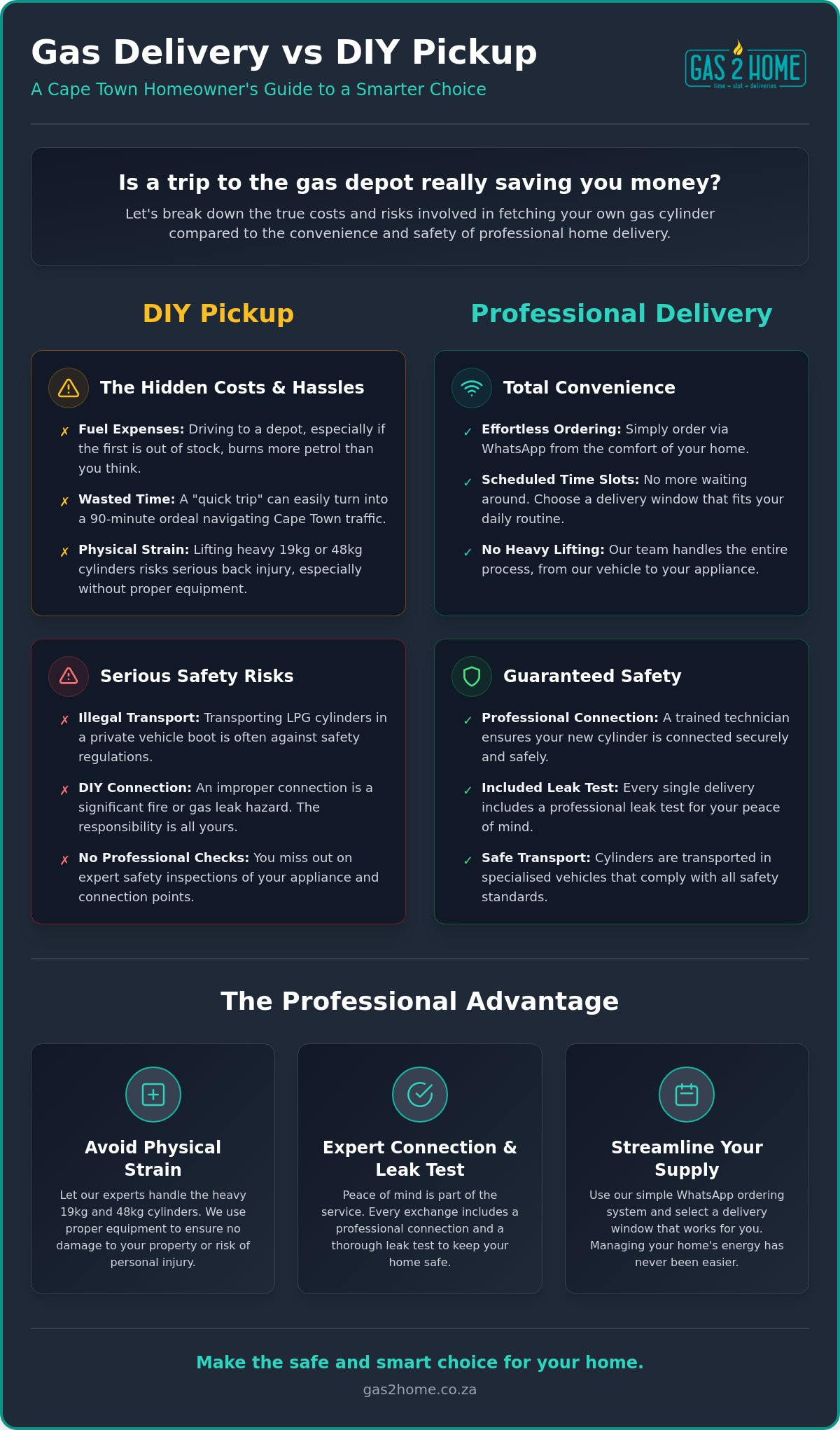
Connecting a gas cylinder might seem like a simple task. You just screw the regulator on and turn it, right? In reality, the final connection is the most safety-critical part of the entire process. One of the standout benefits of home gas delivery is the inclusion of a professional setup. Experts don't just drop the bottle and leave. They perform a rigorous check to ensure your home remains secure. This proactive step eliminates the guesswork and risk associated with a DIY approach.
The "Soap Water Test" is the industry standard for finding leaks. Professionals apply a soapy solution to the valve and regulator joints. If bubbles appear, there's a leak. It's a simple test, but most homeowners skip it. This leads to "phantom" leaks; tiny escapes of gas that you can't always smell but definitely pay for. Over a month, a slow leak can drain a significant portion of your bottle. By choosing a professional service, you ensure that every gram of gas you buy actually reaches your stove. It's about efficiency as much as it is about safety.
The Gas2Home Connection Protocol
Every visit follows a strict safety checklist. Our team inspects your regulator and hose for signs of wear. Rubber washers often perish over time, and hoses can develop hairline cracks that are hard to see. We use specific tightening techniques to create a perfect seal without damaging the delicate brass threads. Once the cylinder is connected, we verify the flame colour and pressure. A healthy blue flame indicates efficient combustion, whereas a yellow flame might signal a problem with your appliance. This level of detail provides total peace of mind for your family.
Common DIY Mistakes
Most DIY errors stem from over-tightening. Many people believe that tighter is always better, but this often leads to cross-threading the regulator. Once the threads are damaged, the regulator is ruined and a safe seal becomes impossible. Another frequent mistake is ignoring the expiry date on the gas hose. These hoses are made of rubber and degrade over time. Even if the bottle is new, an old hose is a major safety risk. Many residents also turn on their appliances before checking for leaks, which is a dangerous gamble in an enclosed kitchen.
Don't leave your family's safety to chance. A small mistake during a DIY swap can lead to wasted fuel or a domestic fire. Professional handlers have the training to spot problems before they become emergencies. If you want to ensure a leak-free home, it's best to book a professional gas connection with your next order. It's the smartest way to manage your home energy without the stress of uncertainty.
Streamlining Your Supply with Gas2Home Delivery
Gas2Home is built on the principle of local reliability. We understand that Cape Town life is fast-paced. You don't have time to chase stock at a depot or wrestle with heavy bottles. Our service organises your energy supply so you can focus on your home. One of the greatest benefits of home gas delivery is the absolute removal of domestic friction. Whether you need a small 9kg gas cylinder for your heater or a massive 48kg unit for your kitchen, we ensure it arrives safely and is connected professionally.
Our commitment to the community goes beyond just transport. We act as your dependable neighbourhood partner. We provide a frictionless experience from the moment you place your order until the flame is lit. By using modern tools like WhatsApp, we've made ordering gas as simple as sending a text to a friend. This efficiency is why so many local households have moved away from the DIY model. We handle the logistics so you don't have to navigate traffic or lift a single heavy bottle. Beyond domestic support, for students in the hospitality or aviation sectors looking to take their skills global, Cape Talent offers a platform to facilitate international internships.
Scheduled Time Slots: No more waiting all day
Waiting for a delivery shouldn't feel like a prison sentence. Our booking system eliminates uncertainty by providing specific time slots that fit your schedule. You can plan your morning or afternoon with confidence. We cover a wide range of areas, reaching from Seapoint to the Southern Suburbs, including the CBD and Milnerton. Our team operates from Monday to Saturday to ensure you never run out of gas when you need it most. This consistent support is a cornerstone of the benefits of home gas delivery in the Western Cape.
Ready to switch to stress-free gas?
Switching to a professional service takes less than a minute. You can place your order directly through our website or via WhatsApp for immediate assistance. We value your trust, which is why we offer a 'Pay on Delivery' option. This ensures you only pay once the cylinder is at your door and safely connected to your appliance. It's a transparent, no-nonsense way to manage your utility needs. Stop wasting your weekends at a petrol station depot. Order your gas delivery now and experience the difference of a service designed for your lifestyle.
Secure Your Cape Town Home Energy Today
Choosing between pickup and delivery is about more than just a few Rand. It's about protecting your time, your vehicle, and your family's safety. By opting for a professional service, you eliminate the hidden costs of petrol and the physical strain of moving heavy cylinders. The benefits of home gas delivery include peace of mind from a professional leak test and the convenience of scheduled time slots that respect your busy day.
Don't risk the dangers of transporting hazardous gas in your private car or the uncertainty of a DIY connection. Our team provides a frictionless experience with same-day delivery available in Cape Town and WhatsApp ordering for instant service. Professional connection is included with every delivery to ensure your kitchen remains safe and efficient. Stop the heavy lifting and start enjoying a reliable energy supply.
Ready to experience the easiest way to fuel your home? Order your gas delivery with professional connection today and let us handle the logistics. We look forward to being your dependable neighbourhood partner.
Frequently Asked Questions
Is it cheaper to refill a gas bottle or exchange it?
Exchanging is the standard and most efficient method for 9kg to 48kg cylinders in South Africa. While some believe refilling is cheaper, the hidden costs of driving to a specialised filling station and the time spent waiting often outweigh any small price difference. Exchanging at your doorstep ensures you receive a cylinder that has been safety-checked, pressure-tested, and refurbished by professionals.
Can I transport a 19kg gas cylinder in my car safely?
Transporting a 19kg cylinder in a passenger car is generally unsafe and not recommended. Private vehicles lack the specialised ventilation required to prevent gas accumulation and the heavy-duty anchor points needed to keep the bottle upright during transit. Using a professional service is one of the primary safety benefits of home gas delivery, as it keeps hazardous materials out of your family vehicle.
Does Gas2Home connect the gas bottle for me on delivery?
Yes, we include a professional connection service with every exchange. Our team handles the heavy lifting and performs a safety leak test to ensure your regulator and hose are secure. This service removes the stress of DIY setups and guarantees your appliances are ready for immediate, safe use without you needing to find a spanner.
What should I do if I smell gas after a DIY connection?
Turn off the cylinder valve immediately and extinguish any open flames or heat sources. Open all windows and doors to ventilate the room, and avoid operating any electrical switches, as a small spark could ignite the fumes. Once the area is ventilated, contact a professional to inspect your connection and identify the leak before attempting to use the appliance again.
How long does gas delivery take in Cape Town?
We offer same-day delivery for orders placed within our daily operating windows from Monday to Saturday. Our system uses scheduled time slots to ensure you don't have to wait around all day for your fuel to arrive. This reliable turnaround is one of the most practical benefits of home gas delivery for busy households in the Southern Suburbs and CBD.
Are there extra charges for delivery to upstairs apartments?
We provide a transparent service with a flat-rate delivery fee for all standard residential orders. Our drivers are trained and equipped to handle the physical challenge of moving 9kg or 19kg cylinders to your doorstep, even in apartment blocks. You won't face hidden surcharges for stairs; the price we quote is the price you pay.
Can I exchange a different brand's gas bottle with Gas2Home?
Yes, you can exchange any legal South African LPG cylinder of the same size with us. We accept all major brands provided the bottle is in a safe, exchangeable condition. This flexibility allows you to switch to a more reliable delivery provider without the unnecessary expense of purchasing a brand-new cylinder for your home.
What payment methods are accepted for gas delivery in Cape Town?
We accept several secure payment methods, including card payments and a "Pay on Delivery" option for maximum trust. You can easily organise your entire order via WhatsApp and settle the balance once the gas is safely connected and tested at your home. This ensures a frictionless transaction that respects your time and security.