
Gas Bottle Safety Checks at Home: A Complete 2026 Checklist

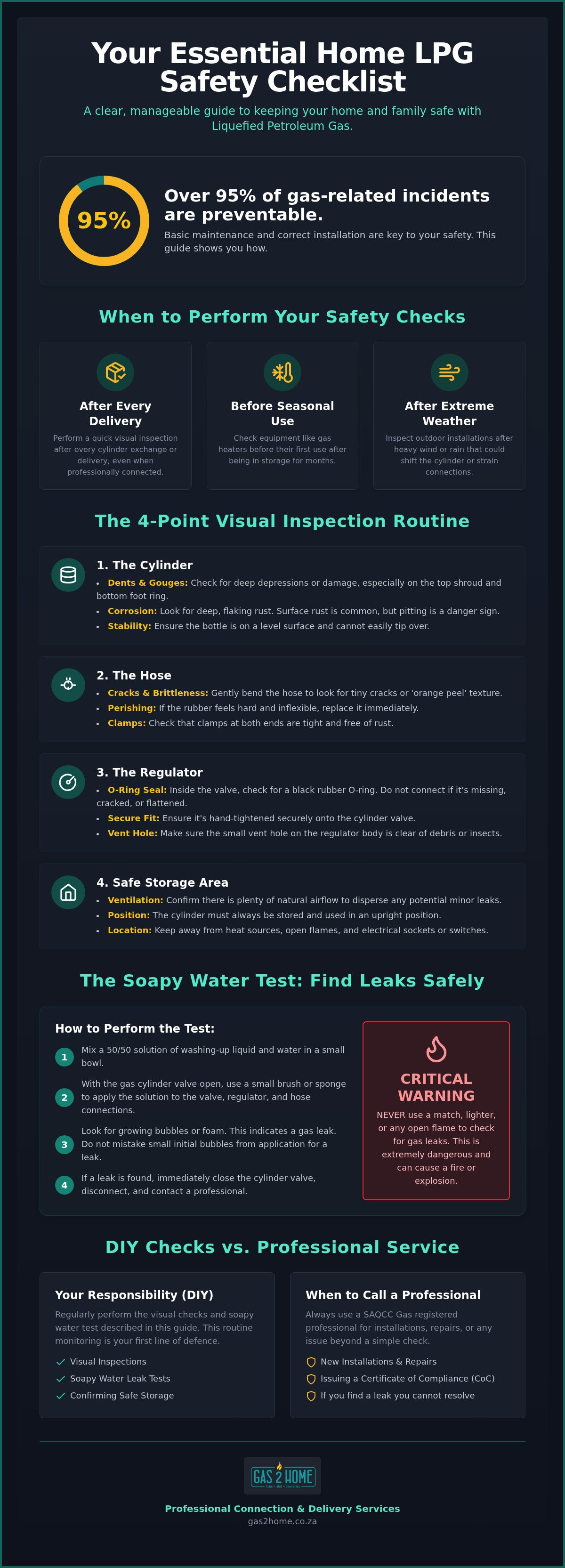
According to a 2025 report, over 95% of gas-related incidents in South Africa are preventable through basic maintenance and correct installation. It's natural to feel a bit of anxiety about potential leaks or when exactly to replace a worn hose. You want the convenience of LPG for your braai or kitchen without the stress of domestic safety concerns. Establishing a routine for gas bottle safety checks home ensures your setup remains compliant and your family stays protected.
This guide simplifies your home safety routine into a clear, manageable checklist. You'll learn how to identify a faulty connection using the soapy water method, recognise the signs of a perishing hose, and understand the latest SANS 10087-7 storage regulations for your property. We'll also clarify when you can handle a check yourself and when you must call a SAQCC Gas registered professional to maintain your mandatory Certificate of Compliance. By the end, you'll have the confidence to manage your gas supply with total peace of mind and professional certainty.
Key Takeaways
- Master the soapy water test to detect small leaks safely and avoid dangerous methods like using a flame.
- Identify early signs of wear in your hardware by checking the rubber O-ring and hose integrity before every use.
- Follow a simple monthly routine for gas bottle safety checks home to keep your family protected and your insurance valid.
- Ensure your LPG cylinders are stored upright and correctly ventilated according to the latest South African safety standards.
- Learn why professional connection services provide the ultimate peace of mind when swapping out your 9kg or 19kg cylinders.
Essential Gas Bottle Safety Checks for Every Home
Regular Liquefied Petroleum Gas (LPG) safety isn't a task you can tick off once and forget. It's a proactive habit that protects your household. While a professional delivery team checks your connection during setup, the environment at home changes constantly. Dust, coastal salt air in Cape Town, and general wear affect your equipment over time. Performing consistent gas bottle safety checks home prevents minor leaks from turning into hazardous situations. It's about spotting a small issue before it becomes a major problem.
The Importance of a Safety-First Mindset
LPG behaves differently than the air we breathe. It's heavier than air, so any leaked gas doesn't float away; it collects at floor level or in low-lying drains. This physical property makes "set and forget" a dangerous strategy. Establish a dedicated schedule for your 9kg gas cylinder inspections. Monthly checks are the gold standard for active households. Simple habits, like keeping the cylinder level, reduce structural stress on valves and hoses.
When to Perform Your Safety Checks
Timing is everything. Don't wait for a distinct smell of gas to start looking. Conduct a visual inspection immediately after every new exchange or delivery. Even though professionals handle the initial connection, a quick second look gives you total peace of mind. You must also check your equipment before the first winter use of a seasonal gas heater. These units often sit in storage for months, which is exactly when rubber hoses can become brittle or perish.
Keep an eye on the weather. If Cape Town experiences extreme wind or heavy rain, inspect your outdoor installations as soon as it's safe. Strong gusts can shift bottles or put tension on the regulator. Routine gas bottle safety checks home should always focus on these four specific zones:
- The Cylinder: Look for surface rust, deep dents, or any signs of heat damage.
- The Hose: Look for cracks, "alligatoring," or signs that the rubber is hardening and losing its flexibility.
- The Regulator: Ensure it's securely fitted and the tiny vent hole isn't blocked by debris or insects.
- Storage: Confirm the bottle remains upright and has plenty of natural airflow to disperse any potential leaks.
Inspecting Your LPG Cylinder and Hardware
Your gas bottle is a precision-engineered pressure vessel. It's designed to contain high-pressure gas safely, but it relies entirely on the integrity of its metal body and brass fittings. Routine gas bottle safety checks home must start with a thorough visual inspection of the hardware before you even think about turning the valve. If the container itself is compromised, the rest of your system is at risk. Following professional Gas Cylinder Safety Guidance ensures you treat these components with the respect they deserve.
The valve is the most critical moving part of your setup. Every time you exchange a bottle, look inside the valve outlet for the rubber "O-ring" seal. This tiny component prevents gas from escaping at the connection point. If the seal is missing, cracked, or flattened, don't attempt to connect your regulator. Similarly, the regulator itself has a limited lifespan. Most manufacturers recommend replacing regulators every five to ten years, as the internal diaphragm can perish. If you notice a drop in flame performance or a humming sound from the valve, your hardware might be reaching the end of its safe service life.
Checking for Physical Damage and Corrosion
Dents are dangerous. Any significant gouge or depression in the cylinder wall creates a stress point where the metal is thinner and weaker. Pay close attention to the foot ring at the base and the shroud protecting the valve at the top. These areas provide stability and protection; if they're bent or loose, the bottle could tip or the valve could be sheared off in a fall. Surface rust is common, but deep pitting that flakes off is a sign of structural failure. The high salt content in Cape Town’s coastal air causes metal to oxidise and pit significantly faster than inland areas. If your cylinder shows signs of advanced corrosion, it's time to order a fresh exchange immediately.
Evaluating the Regulator and Hose Integrity
Hoses are the most frequent point of failure in home gas systems. Bend the hose slightly to look for "orange peel" cracking or brittleness. If the rubber feels hard or shows visible tiny splits, replace it instantly. Ensure the regulator is properly seated and the locking nut is tightened firmly by hand. Check the hose clamps at both ends. They should be free of rust and tight enough that the hose cannot be twisted or pulled off the nipple. A loose clamp is a common cause of slow, persistent leaks that often go unnoticed during daily use.
The Soapy Water Test: Identifying Gas Leaks Safely
LPG is naturally odourless and colourless. To make it detectable, suppliers add a pungent "rotten egg" smell known as mercaptan. While your nose is your first line of defence, a scent alone won't tell you exactly where a leak is coming from. The soapy water test is the most reliable method for your routine gas bottle safety checks home. It's simple, cost-effective, and highly accurate for pinpointing the source of escaping gas. Never use a lighter or match to check for leaks. This might seem like common sense, but open flames near high-pressure gas lead to catastrophic incidents every year.
If you discover a leak during your inspection, don't panic. Close the cylinder valve immediately by turning it clockwise. Once the gas is shut off, disconnect the regulator and move the bottle to a well-ventilated outdoor area. Avoid using any electrical switches or phones near the leak, as a tiny spark can ignite the concentrated gas. Safety is about quick, calm action and knowing when to replace your hardware rather than trying to patch it up.
Step-by-Step Leak Detection
Create a simple solution using one part common dishwashing liquid and four parts water. You can use a spray bottle or a sponge to apply the mixture. Ensure the gas bottle valve is closed before you begin. Coat the entire valve assembly, the regulator connection, and the full length of the hose, including the joints where the hose meets the appliance.
Slowly open the gas valve without turning on your stove or heater. Watch the soapy film closely. If you see bubbles growing in size or multiplying rapidly, you've found a leak. Small, fizzing bubbles usually indicate a slow leak at a connection point, while large, expanding bubbles suggest a more serious breach in the hose or valve. Wipe the solution off with clean water once you've finished to prevent the soap from corroding the brass fittings over time.
Recognising the Signs of a Bad Connection
Sometimes, the indicators of a problem aren't as obvious as a growing bubble. You should be able to identify other signs of a bad gas connection during your walkthrough. Listen for a faint hissing or whistling sound near the bottle or the back of your appliance. This often points to a poorly seated regulator or a perishing O-ring seal inside the valve.
What should you do if the smell of gas persists even after you've tightened every joint? If the soapy water test doesn't show bubbles but the odour remains, the leak might be internal to the appliance or buried deep within the regulator. In these cases, stop using the gas immediately. Don't take chances with your family's safety. When your DIY gas bottle safety checks home suggest a persistent issue, it's time to call a professional to inspect the system thoroughly.
Safe Storage and Ventilation Requirements
Storing your LPG correctly is just as vital as the hardware inspections themselves. The absolute golden rule of gas safety is that cylinders must always remain upright. This position ensures the safety relief valve stays in the "vapour space" of the bottle. If a cylinder is on its side and the pressure builds up, liquid LPG could escape through the valve, which is far more hazardous than escaping gas. Incorporating storage reviews into your gas bottle safety checks home prevents environmental risks from compromising your setup.
In South Africa, residential storage is strictly regulated by SANS 10087-1 standards. For free-standing houses, the legal limit is 19kg of gas per 100 square metres of property, up to a maximum of 100kg total. If you live in a flat or apartment, you're restricted to a single 9kg cylinder. These limits exist to ensure that emergency services can manage the volume of fuel on-site in the event of a fire. If you need more capacity for a large home, order your next LPG delivery from a provider that understands these local compliance rules.
Indoor vs Outdoor Storage Rules
Whenever possible, store your gas bottles outdoors in a well-ventilated area. LPG needs constant airflow to disperse any minor leaks that might occur. If you must keep a bottle outside, it must be placed at least 1 metre away from doors and windows and at least 5 metres away from electrical ignition sources like pool pumps or air conditioning units. Drains are another concern; keep bottles 2 metres away from any openings to prevent gas from pooling in underground pipes.
Special care is required for indoor appliances like mobile gas heaters. Never use these heaters in bedrooms, bathrooms, or small lounges with poor ventilation. These units consume oxygen and release carbon monoxide. Always crack a window slightly to ensure a fresh supply of air. When the heater is not in use, turn the gas off at the cylinder valve rather than just using the appliance switch.
Protecting Your Bottle from Cape Town Elements
Keep the area around your gas supply clear of dry leaves, long grass, or flammable debris. This is especially important during the dry summer months when fire risks are high. A clean, paved, or gravelled surface is the ideal base for your cylinders. Taking these extra steps during your gas bottle safety checks home ensures your fuel supply remains a help, not a hazard, to your household.
Professional Connection and Delivery Services in Cape Town
Professional installation provides the foundation for all your future gas bottle safety checks home. While DIY inspections are necessary for ongoing maintenance, the initial setup requires a trained eye. Many local competitors focus on speed alone, offering "drop and go" deliveries that leave you to struggle with regulators and wrenches. This approach often leads to improperly seated valves or damaged seals. Choosing a service that includes professional connection ensures your system is safe from the very first spark.
A professional setup is the most effective way to start your gas safety journey. It eliminates the guesswork involved in handling high-pressure cylinders. When a professional manages the connection, they verify that the regulator is compatible with your appliance and that the seals are airtight. This proactive step prevents the most common causes of domestic gas leaks before they ever start. It turns a technical task into a frictionless experience for the homeowner.
The Gas2Home Safety Commitment
Our commitment to safety means we don't just leave a bottle on your driveway. Every Gas2Home driver is trained to handle the technical requirements of LPG connections. They verify the integrity of your regulator and ensure the rubber O-ring is in perfect condition before completing the setup. This service is designed to remove the stress of domestic gas management. You don't have to guess if the connection is tight enough; our team confirms it for you. This professional oversight complements your own gas bottle safety checks home, giving you double the protection.
We prioritise professional installation over simple delivery because your peace of mind is our primary goal. Before our drivers leave your premises, they ensure your appliance is functioning correctly. This final check confirms that the gas flow is consistent and the connection is secure. We believe that a utility service should be a dependable partner in your home safety, not just a logistics provider. For more on how full-service firms manage residential energy needs, you can visit Top Tier Energy.
Getting Your Gas Delivered Safely
Safety also depends on having a reliable, consistent supply. Running out of gas often leads to rushed connections or the use of old backup cylinders that haven't been checked in months. Our same-day delivery service in Cape Town ensures you never have to compromise on safety due to an emergency. Whether you need a 9kg cylinder for your weekend braai or a 48kg bottle for your home heating, we provide the right size with a professional touch.
When you order gas online in Cape Town, you can select delivery windows that fit your schedule. This ensures you are home to watch the connection and ask any questions about your specific appliance. For even faster service, we offer ordering via WhatsApp. This allows for immediate confirmation and local logistics management. By choosing a partner that prioritises connection as much as delivery, you ensure that every meal cooked is done so with total confidence.
Securing Your Home with a Proactive Safety Routine
Maintaining a safe home environment relies on consistency. By mastering the soapy water test and inspecting your hardware for signs of wear, you eliminate the risks associated with LPG use. Remember that proper ventilation and upright storage are non-negotiable for compliance with South African safety standards. Implementing regular gas bottle safety checks home transforms a technical worry into a simple, manageable habit that protects your family and property.
You don't have to manage every technical detail alone. We provide same-day delivery across Cape Town from Monday to Saturday to ensure you never run out of fuel. Our trained drivers perform a professional connection with every delivery to verify your setup is secure before we leave. This expert oversight gives you total peace of mind from the very first use. Order your next gas bottle from Gas2Home and get a professional safety connection included. Enjoy your next braai or home-cooked meal with the confidence that your gas supply is handled by local experts who prioritise your safety.
Frequently Asked Questions
How often should I check my gas bottle for leaks?
Perform your gas bottle safety checks home every time you connect a new cylinder and at least once a month for active installations. Regular inspections catch wear and tear on hoses and regulators before they become hazardous. If you use gas for seasonal heating, always conduct a full check before the first winter use. This routine ensures that any degradation from storage or coastal air is identified early.
What should I do if I smell gas in my kitchen?
Extinguish all open flames immediately and don't flip any electrical switches, as a tiny spark can trigger an explosion. Open all doors and windows to create a cross-breeze and clear the air. Turn the gas bottle valve clockwise to the fully closed position. If the smell persists, move the cylinder to a well-ventilated outdoor area and contact a professional installer to inspect your appliance and connections.
Can I store my 9kg gas bottle inside my house?
You can store a single 9kg cylinder inside a residential unit in South Africa, provided the room is well-ventilated and not a bedroom or bathroom. SANS 10087-1 regulations limit indoor storage to one bottle per unit to manage fire risks. For larger properties, any additional gas capacity must be stored outdoors. Always ensure the bottle is kept away from heat sources and electrical sockets to maintain a safe home environment.
How do I know if my gas regulator needs replacing?
Replace your gas regulator every five to ten years or immediately if you notice signs of failure. These signs include a persistent humming noise, a lazy yellow flame instead of a crisp blue one, or visible soot on your pots. If the locking mechanism feels loose or the internal diaphragm appears perished, it's no longer safe. Using an outdated regulator can lead to inconsistent pressure and increased risk of leaks.
Is it safe to keep a gas bottle in the sun on a balcony?
It's safer to keep your gas bottle in a shaded area of the balcony rather than in direct sunlight. While cylinders are designed to withstand heat, direct sun causes the internal pressure to rise. If the pressure becomes too high, the safety relief valve may release a small amount of gas to compensate. To avoid this, use a dedicated gas cage or a simple cover to keep the cylinder cool and protected.
Why does my gas bottle have ice or frost on the outside?
Frost or ice forms on the outside of a cylinder when you draw gas at a very high rate. This happens because the liquid LPG inside boils rapidly to turn into gas, which pulls heat from the cylinder walls and surrounding air. This refrigeration effect is common with large heaters or multiple burners. If the icing is severe, it can restrict gas flow, suggesting you might need a larger cylinder.
What is the soapy water test for gas leaks?
The soapy water test is a simple DIY method used during gas bottle safety checks home to identify leaks. Mix one part dishwashing liquid with four parts water and apply it to the valve, regulator, and hose joints using a sponge or spray bottle. If bubbles grow or multiply when the gas is turned on, you've found a leak. It's a much safer alternative to using a flame, which should never be attempted.
Can I transport a gas bottle in my car safely?
You can transport a gas bottle in your car if it remains upright and is securely fastened to prevent tipping. Never leave a cylinder in a parked vehicle, as temperatures can rise quickly and trigger the safety relief valve. Ensure there is adequate ventilation by keeping a window slightly open during the journey. Once you arrive, remove the cylinder immediately and store it in its permanent, well-ventilated location.