
Exchange Your Gas Cylinder for a Full One: The Ultimate Cape Town Buying Guide

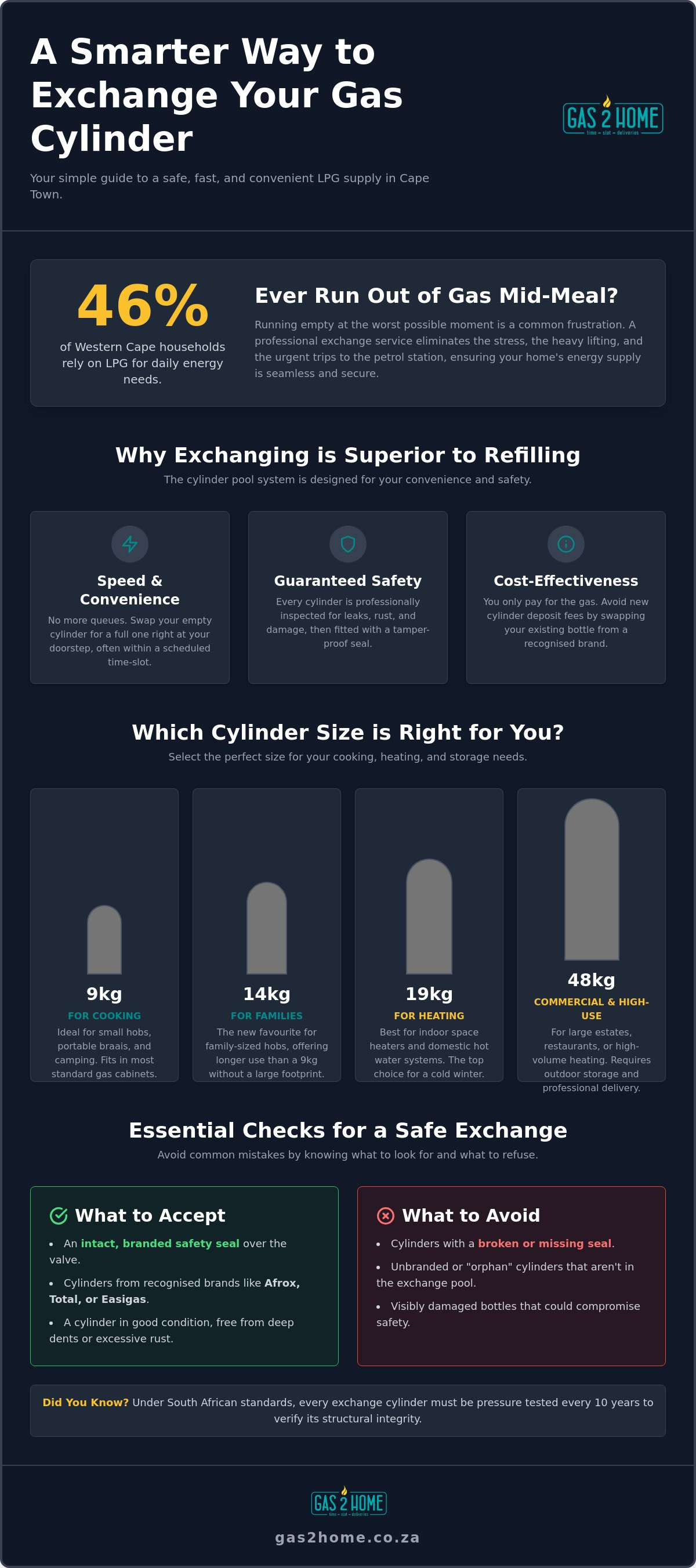
Have you ever been halfway through preparing a family meal when the flame suddenly flickers and dies? It is a common frustration for the 46% of Western Cape households that now rely on LPG for their daily energy needs. Instead of struggling to heave a heavy bottle into your car, you can simply exchange your gas cylinder for a full one through a service that comes directly to your gate.
We know that the last thing you want to do during a cold snap is lug a 19kg or 48kg cylinder to a petrol station. You deserve a solution that is fast, safe, and entirely hands-free. This guide promises to simplify your life by revealing the most efficient way to manage your gas supply whilst keeping your home secure. We want to remove the domestic stress of running empty at the worst possible moment.
You will discover which cylinder size provides the best value for your specific needs, from compact 9kg bottles to high-capacity 48kg units. We also explain why a professional connection service is the best way to ensure your regulator is fitted perfectly every time. Let's get your kitchen back up and running without the physical labour or the worry.
Key Takeaways
- Understand the efficiency of the cylinder pool system and why it is a faster, more reliable alternative to waiting for a refill at a station.
- Learn how to exchange your gas cylinder for a full one whilst selecting the ideal size for your specific cooking or heating requirements.
- Avoid common safety mistakes by identifying authentic protective seals and understanding brand compatibility within the exchange market.
- Discover the benefits of a professional connection service that eliminates physical labour and ensures your home remains leak-free.
- Explore the diverse range of LPG cylinder sizes available for delivery in Cape Town, from portable 9kg units to large 48kg bottles.
Understanding the Gas Cylinder Exchange System
When you decide to exchange your gas cylinder for a full one, you're participating in a highly regulated system designed for speed and safety. This process involves swapping your certified empty bottle for one that has been professionally cleaned, inspected, and pre-filled with Liquefied Petroleum Gas (LPG). It's a seamless cycle that keeps your home running without the delays of traditional refilling methods.
The system relies on a concept called the cylinder pool. Instead of owning a specific piece of steel, you effectively own a share in a massive, circulating collection of certified bottles. This is far more efficient than waiting for a technician to refill your specific container at a depot. Every time a bottle returns to a filling plant, it's checked for structural integrity. The plastic safety seal you find over the valve is your guarantee. If that seal is intact, you know the bottle is full, untampered, and has passed a rigorous safety inspection. Reusing these heavy-duty steel cylinders for decades also provides a massive environmental benefit, as it significantly reduces the carbon footprint compared to disposable energy containers.
Why Exchange is Better than Refilling
- Speed: Doorstep delivery removes the need to drive to a depot or queue at a petrol station. You can simply swap and go.
- Safety: Every exchanged bottle undergoes a professional inspection for rust, deep dents, and valve leaks. You don't have to worry about the condition of the tank.
- Cost-effectiveness: You avoid paying a new "empty bottle" deposit fee. As long as you have a swap-ready cylinder in the pool, you only pay for the gas inside.
The Legalities of Cylinder Brands
Most major brands in South Africa, such as Afrox, Total, and Easigas, belong to a shared exchange pool. This means you can often trade one major brand for another without any legal or financial hurdles. If you find yourself with an "orphan" or unbranded cylinder, it might not be accepted in the standard pool. These unbranded bottles often require a specialized inspection before they can be legally refilled or swapped. It's always best to stick with recognised brands to ensure your exchange is frictionless. Under the South African LPG exchange standards for 2026, every cylinder entering the exchange pool must be retested every 10 years to verify its structural integrity and safety for home use.
Comparing Gas Bottle Sizes: Which Should You Exchange?
Your choice of cylinder size depends on how much gas you consume daily and where you plan to store the bottle. Selecting the wrong size can lead to frequent trips to the shop or, conversely, a bottle that simply won't fit in your gas cage. When you prepare to exchange your gas cylinder for a full one, consider both the physical dimensions and the weight of the unit. A standard 9kg bottle is easy to handle, but 19kg and 48kg cylinders are significantly heavier. These larger sizes necessitate professional delivery to avoid injury and ensure the bottle is positioned correctly according to safety standards.
Physical space is a critical factor often overlooked. A 9kg cylinder usually stands about 460mm high, making it perfect for under-counter cupboards. In contrast, a 48kg commercial-grade cylinder stands over 1.3 metres tall and must be stored outdoors. Always measure your storage area before ordering a swap. If you're unsure which size fits your setup, you can browse our full range of LPG cylinders to find the exact dimensions for your home.
The 9kg and 14kg Options for Cooking
The 9kg cylinder remains the most popular choice for weekend braais and small two-plate stoves. It's portable and fits most standard gas braai cabinets. However, the 14kg cylinder is quickly becoming the favourite for modern family-sized hobs. It offers a longer lifespan than the 9kg model without the massive footprint of a 19kg bottle. This "sweet spot" size means you won't have to exchange your gas cylinder for a full one as often during busy cooking months. For a deeper look at the smaller options, read The 9kg Gas Cylinder: Cape Town’s Ultimate Guide to LPG.
The 19kg and 48kg Options for Heating
If you use gas for internal space heating or high-use domestic hot water, the 19kg cylinder is your best bet. It provides enough volume to keep a large heater running through a cold Cape Town winter whilst remaining manageable for a two-person delivery team. For large estates or restaurants, the 48kg cylinder is the only logical choice. Because of the high pressure and volume, 48kg installations must comply with strict South African gas regulations. These rules require external placement on a solid base and specific piping to ensure the gas reaches your appliances safely. Professional delivery is mandatory for these units to ensure every connection is tested and secure.
Common Mistakes to Avoid When You Exchange Your Gas Cylinder
Safety should always be your primary concern when you handle LPG. One of the most frequent errors homeowners make is accepting a bottle with a broken or missing safety seal. This plastic wrap over the valve is not just for decoration. It serves as a professional guarantee that the bottle has been filled to the correct weight and has not been tampered with since leaving the depot. If the seal is torn or absent, refuse the delivery immediately. You have no way of knowing if the gas inside is at the correct level or if the valve is compromised.
Another common pitfall is "brand snobbery." Many users believe they must stick to the exact brand they currently own. In reality, most major branded bottles like Afrox, Total, and Easigas are part of a shared exchange pool. They are technically identical in terms of safety and volume. Refusing a different brand can lead to unnecessary delays in your delivery. However, you must still check the physical condition of the cylinder. Look at the collar for a stamped test date. According to South African LPG regulations, cylinders must be retested every 10 years. If the date on the collar is older than a decade and lacks a recent retest stamp, do not accept it. Using an outdated cylinder is a significant safety risk that can lead to leaks or valve failure.
The "No Cylinder to Swap" Problem
If you are a first-time user, you cannot simply pay for the gas. When you exchange your gas cylinder for a full one, the system assumes you are providing an empty steel bottle in return. If you don't have an empty, you will need to pay a initial deposit for the steel container itself. This is often where new users feel "trapped" by unexpected costs. If you have an old, dented, or rusted bottle that is still part of a major brand pool, the exchange system is actually your best friend. Swapping it for a newer, professionally inspected bottle is the easiest way to upgrade your equipment without buying a brand-new cylinder at full retail price.
Incompatible Regulators and Valves
Never force a regulator onto a valve. Most domestic cylinders in South Africa use a standard Bullnose valve, but you may occasionally encounter different fittings like the LCC27. If the connection doesn't feel smooth and easy, stop immediately. Cross-threading a valve can cause a permanent leak. Once connected, always perform a leak test using the soapy water method. Apply a mixture of dish soap and water to the join; if bubbles appear, you have a leak. This simple check takes seconds and prevents the domestic stress of an undetected gas build-up in your kitchen or gas cage.
The Benefits of a Delivered and Connected Gas Exchange
Lifting a 19kg cylinder across a driveway is a recipe for a back injury. Professional delivery teams use specialised equipment and techniques to move these heavy units safely into position without damaging your flooring or garden paths. When you choose to exchange your gas cylinder for a full one through a professional service, you are paying for more than just the fuel. You are investing in the removal of physical labour and the assurance that your heavy bottle is placed correctly on a stable, level surface.
A doorstep exchange also removes the domestic stress of transporting a pressurised vessel in your private vehicle. Many people don't realise that transporting large cylinders in a closed car boot can be hazardous if there is even a minor valve weep. Choosing a dedicated delivery service means your gas arrives in an open-air, compliant vehicle. This keeps the risk away from your family and your car's interior. For the best experience, you should book a reliable Cape Town gas delivery that includes full handling and placement.
Safety First: The Professional Connection
A delivery professional does more than just drop off a bottle; they act as a safety inspector for your entire gas setup. During the swap, they look for perished orange hoses that may have developed tiny cracks over time. They check for loose or corroded clamps and ensure your regulator isn't showing signs of wear. This level of scrutiny is critical for indoor appliances like hobs and heaters where ventilation is limited. A professional on-site leak test ensures that every joint is airtight before they leave your property. You can order a professional gas connection on delivery to ensure your home remains safe and compliant with local standards.
Time-Saving Logistics for Cape Town Residents
Life in Cape Town moves fast, and running out of gas during a cold snap or a dinner party is a major inconvenience. The most effective "never run out" strategy is to order your swap via WhatsApp the moment your backup bottle runs dry. This proactive approach, combined with same-day delivery slots, ensures you always have a full reserve. You don't have to spend your Saturday morning queuing at a depot or searching for a shop with stock. Instead, you can plan your day with confidence, knowing exactly when your full cylinder will arrive at your gate. This frictionless process allows you to exchange your gas cylinder for a full one without ever leaving your home.
Featured Exchange Options from the Gas2Home Collection
Matching your appliance consumption with the correct cylinder capacity is the best way to manage your household budget. We have curated a selection of exchange sizes designed to meet every domestic requirement in Cape Town. Whether you're firing up the braai or keeping a large home warm during a winter cold snap, our collection provides a reliable energy supply. When you decide to exchange your gas cylinder for a full one through our service, you get a safety-tested bottle delivered directly to your gate.
Standout Products in Our Collection
- 9kg LPG Gas Cylinder Exchange: This remains our most popular residential service. It's the standard for weekend braais and small two-plate stoves. The compact size fits easily into most kitchen cupboards or braai cabinets.
- 14kg LPG Gas Cylinder Exchange: This is the efficient choice for modern kitchens with full-sized hobs. It offers a significantly longer burn time than the 9kg model, making it a favourite for frequent home cooks who want to reduce the frequency of their swaps.
- 19kg and 48kg LPG Gas Cylinder Exchange: These units provide reliable bulk energy for high-use domestic hot water systems and space heating. The 48kg option is the commercial-grade choice for large estates or restaurants requiring consistent, heavy-duty power for winter warmth.
How to Order Your Exchange Online
Ordering your next swap is a simple, methodical process. We've removed the complexity to ensure you never run out of gas unexpectedly. Follow these steps to get started:
- Select your size: Choose the cylinder that matches your current empty bottle from our online shop.
- Choose a delivery slot: Select a time that works for you. Our local logistics team manages routes to ensure prompt arrival across Cape Town.
- Prepare your empty bottle: Have your empty cylinder ready for our team to collect when they arrive with your full replacement.
Don't forget that professional connection is included with every delivery. Our team will perform a leak test and ensure your regulator is secure before they leave. This removes all the physical labour and safety anxiety from the process. You can exchange your gas cylinder for a full one today and let our experts handle the heavy lifting for you.
Simplify Your Home Energy Today
Managing your household energy doesn't have to be a heavy chore. By choosing the right cylinder size for your specific cooking or heating needs, you ensure your home runs efficiently throughout the year. Always remember to check for intact safety seals and valid test dates to keep your family secure. A professional connection is the most reliable way to remove the domestic stress of potential leaks and heavy lifting.
It is time to experience a faster, safer way to power your appliances. We provide same-day delivery slots from Monday to Saturday, proudly servicing Sunset Beach and the greater Cape Town area. Every delivery includes a professional connection service to ensure your setup is leak-free and compliant. When you choose to exchange your gas cylinder for a full one with our team, you're choosing local expertise and total peace of mind.
With your domestic energy needs handled, you might find time to plan your next escape; those interested in high-end experiences can find inspiration through luxury south africa travel packages that showcase the very best of the region.
Order your gas cylinder exchange for Cape Town delivery and let us handle the hard work. We look forward to being your dependable neighbourhood partner for all your LPG needs.
Frequently Asked Questions
Can I exchange my gas cylinder for a different brand?
Yes, you can swap between most major brands like Afrox, Total, and Easigas without extra fees. These companies participate in a shared exchange pool, which means their steel bottles are considered interchangeable for the consumer. Just ensure your empty bottle is a recognised brand and is in a safe, reusable condition without excessive rust or structural damage.
What happens if I do not have an empty gas bottle to exchange?
If you don't have an empty bottle, you will need to pay an initial deposit for the steel cylinder itself. This payment allows you to purchase the container and enter the exchange pool. Once you have a bottle, you will only pay for the gas whenever you exchange your gas cylinder for a full one in the future.
How do I know if my gas cylinder is actually empty?
The most reliable way to check is the warm water method. Pour a jug of warm water down the side of the cylinder and feel the steel; the part where gas remains will feel cold to the touch, whilst the empty part will stay warm. You might also notice your stove flame turning yellow or flickering just before the gas runs out completely.
Is it safe to transport a gas cylinder in my own car?
It is generally discouraged to transport large cylinders in a closed vehicle because of the risk of gas build-up. If a valve has a minor weep, gas can accumulate in your car boot, creating a significant fire hazard. Professional delivery in open-air vehicles is the safest way to get your fuel home without risking your car's interior or your family's safety.
Do you provide a connection service when you deliver the gas?
Yes, a professional connection service is included with every delivery we make. Our team will physically connect the new bottle to your appliance and perform a thorough leak test. This ensures your home is safe and removes the need for you to handle heavy regulators or tools yourself.
What areas in Cape Town do you deliver to?
We deliver to Sunset Beach and the greater Cape Town region, ensuring local homes have a dependable neighbourhood energy partner. Our logistics network is designed to cover residential and commercial areas efficiently. If you are unsure if your specific suburb is covered, our team can confirm your location immediately via WhatsApp.
How can I tell if my gas connection has a leak?
Apply a mixture of dishwashing liquid and water to the valve and regulator join. If you see growing bubbles, you have a gas leak that needs immediate attention. You should also trust your sense of smell; LPG has a distinct, pungent odour added specifically to help you detect leaks before they become dangerous.
Are there specific times for gas delivery in Cape Town?
We deliver from Monday to Saturday, offering various time slots to suit your daily schedule. You can often secure a same-day delivery if you place your order early in the morning. This allows you to exchange your gas cylinder for a full one without having to wait days or queue at a petrol station.