
Cooking During Cape Town Power Cuts: 2026 LPG Guide

Could your gas hob still work when the lights go out? LPG can keep meals on track during a Cape Town power cut, but some appliances rely on electricity for ignition or controls. A cooking during power cuts gas solution Cape Town households can depend on starts with checking how the hob works, rather than assuming it will operate as usual.
An outage can interrupt dinner and the rest of your household routine. A little preparation makes cooking more predictable: check your appliance’s instructions before a power cut, and never improvise an ignition method or cylinder connection.
This guide explains how to check whether your gas hob can operate during an outage, prepare a practical and safe LPG backup plan, and choose a cylinder size that fits your cooking needs. Gas2Home delivers LPG cylinders in Cape Town and provides professional connection on delivery, with options from 9kg to 48kg. Plan ahead, follow the appliance and cylinder instructions, and make your next interruption easier to manage.
Key Takeaways
- A practical cooking during power cuts gas solution Cape Town households can consider starts with checking whether the appliance is designed for gas.
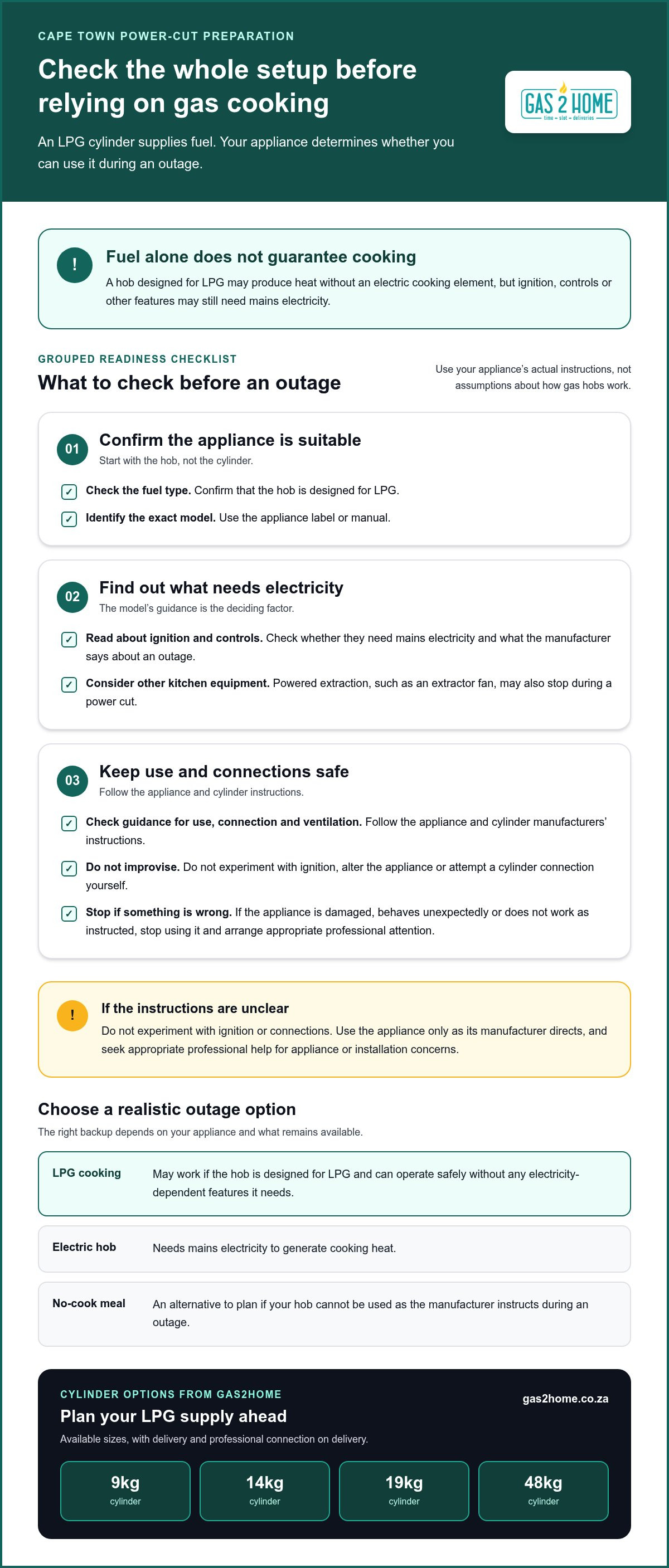
- An LPG cylinder supplies fuel, but electrical ignition or controls may still affect whether a hob works during an outage.
- Compare LPG, electric cooking and no-cook meals to find a backup approach that suits your household and appliances.
- Build a safer plan by following appliance and cylinder instructions, keeping the cooking area ventilated and planning your supply ahead.
- Gas2Home offers 9kg, 14kg, 19kg and 48kg cylinders, with delivery and professional connection to help prepare your kitchen.
Cooking during Cape Town power cuts: where LPG fits into your plan
A power cut can bring dinner preparation to a halt just when you need a straightforward backup. LPG may keep cooking possible, but only if your appliance is designed for gas and can operate safely without mains power. The right cooking during power cuts gas solution Cape Town plan starts with checking the appliance, not simply having a cylinder nearby.
Liquefied petroleum gas (LPG) is a fuel used for cooking. In a compatible setup, LPG reaches the appliance and burns to produce heat. The hob’s design determines how that heat is ignited and controlled. An electric hob, by contrast, needs mains electricity to generate cooking heat.
What a gas cooking setup can and cannot do
A hob designed for LPG can produce cooking heat without an electric cooking element. That does not automatically mean it will work during a power cut: ignition, appliance controls or other features may still need electricity. Your usual cooking routine may also rely on powered ventilation, such as an extractor fan, which could stop during an outage.
LPG availability alone does not guarantee that every hob will work during a power cut.
Before relying on your hob, read its manual and check the appliance label to confirm the fuel type. Look for the manufacturer’s guidance on power interruptions, ignition and controls. If the instructions are unclear, do not experiment with ignition or alter the appliance or cylinder connection. Follow the manufacturer’s directions and seek appropriate professional help for appliance or installation concerns.
Why Cape Town households plan for load-shedding
Outages are a practical household planning issue, whether scheduled or unexpected. Eskom supplies electricity nationally, while the City of Cape Town also manages its own electricity arrangements. Local outage information can therefore affect your routine. Build your plan around what your home can safely use rather than assuming a particular schedule.
A gas cooking option can be useful when mains power is unavailable, but it does not replace checking safety or appliance compatibility. Think through a typical meal: can your hob produce a flame without mains electricity, and can you operate it as the manufacturer instructs? If not, plan an alternative, such as a meal that does not need cooking.
Keep the distinction clear: the cylinder provides fuel, but the appliance must be suitable for that fuel and able to operate without any electricity-dependent features it needs. Ventilation matters too. Follow the appliance and cylinder manufacturers’ instructions, and do not use a gas appliance in a way they advise against. Next, check which parts of your setup need electricity so you can make a realistic backup plan for your kitchen.
How LPG cooking works during an outage, and where electricity still matters
An LPG cooking setup has two parts to consider: the fuel supply and the appliance. The cylinder stores LPG, which reaches a compatible appliance through its approved connection. The hob uses that fuel to produce a cooking flame. But the flame is only one part of the process. Ignition, controls and other features may still depend on mains electricity.
Appliance design, not the cylinder alone, determines whether gas cooking is usable during an outage. A cylinder can contain LPG and still be of no help if the hob needs electricity to start or operate. That distinction is central to planning a cooking during power cuts gas solution Cape Town households can use safely.
Does a gas hob need electricity to light?
It depends on the appliance model. Gas hobs use different ignition arrangements, and their controls may vary too. Do not assume your hob will light simply because it runs on LPG, or that a particular lighting method is approved for your appliance.
Find the manufacturer’s manual for your exact model. Read its instructions for power interruptions and any approved lighting procedure. If the manual does not clearly explain what to do, do not experiment or improvise. Use the appliance only as its manufacturer directs.
What to check before depending on gas cooking
Check these points before an outage, while you have time to read the instructions and make a considered plan:
- Appliance type: Confirm that the hob is designed for LPG and identify the model using its label or manual.
- Ignition and controls: Check whether these features need mains electricity and what the manufacturer says about operating them during an outage.
- Kitchen equipment: Consider whether your usual cooking routine also depends on powered extraction or other electrical equipment. Those features may not be available during an outage.
- Overall guidance: Follow the appliance and cylinder manufacturers’ instructions for use, connection and ventilation. Do not alter the setup or attempt a connection yourself.
If the appliance appears damaged, behaves unexpectedly or does not operate as the instructions describe, stop using it. Arrange appropriate professional attention rather than trying to troubleshoot it during a power cut. Gas2Home’s professional cylinder connection on delivery helps with the cylinder side of outage preparation. Explore LPG cylinder options for your household supply.
Once you know which parts of your setup need electricity, decide whether the hob is a suitable outage option or whether a different meal plan makes more sense. Work from the manual and the appliance’s actual design, not assumptions about gas cooking.
LPG, electric cooking, and other backup options: what suits your household?
There is no single backup that suits every Cape Town household. Your choice depends on your appliances, the meals you usually make, how many people you cook for and the space available for safe cylinder storage. A layered plan can be more practical than relying on one method: use a compatible gas appliance when appropriate, and keep simple meals ready for times when cooking is not possible.
| Option | During an outage | What to plan | May suit |
|---|---|---|---|
| LPG cooking | Can work if the appliance and the features you need operate without mains electricity. | Check appliance guidance, cylinder setup, storage and household cooking needs. | Homes with an LPG-compatible appliance and a suitable cylinder arrangement. |
| Electric cooking | Generally unavailable if the appliance’s power source is off. | Consider what you’ll use if mains electricity is unavailable. | Everyday cooking when electricity is available, alongside another outage plan. |
| No-cook meals | Don’t depend on a cooking appliance. | Keep suitable ingredients and meal ideas ready. | As a fallback for households of any size, or when cooking equipment can’t be used. |
When LPG cooking may suit a Cape Town home
LPG may suit your plan if you already have a compatible appliance, an appropriate cylinder setup and space to store it in line with the manufacturers’ instructions. Consider your usual meals: a household that often prepares several dishes may plan differently from one that can manage with a simple meal. Match the supply arrangement to your actual cooking habits, rather than an assumed household size. For those looking beyond indoor cooking and evaluating whether an exterior setup makes sense, reviewing the typical outdoor kitchen island cost can help you decide whether a dedicated garden installation is a worthwhile investment. The appliance may still depend on electricity for ignition or controls, so do not treat gas as a guarantee of cooking through every outage.
When another backup plan makes more sense
If your cooking appliance needs mains electricity, it may not be usable during an outage, even if you have other equipment at home. Battery-powered devices are only a potential option if their specifications support the appliance and intended use. Do not assume a battery or portable device will safely power cooking equipment.
No-cook meals make a useful second layer. Keep suitable ingredients on hand and choose options that fit your household’s needs, such as a meal assembled from ready-to-eat items. You can also prepare food ahead when power is available. This takes pressure off your backup appliance and gives you another option if it cannot be used.
For a cooking during power cuts gas solution Cape Town households can plan around, compare your appliance’s actual outage behaviour with your meal needs and available storage. Pairing a suitable cooking option with a simple no-cook fallback keeps the plan practical without relying on one method to work every time.
Prepare a safe, practical gas cooking plan before the next power cut
A useful backup plan is made before the electricity goes off. Set aside time to check your appliance instructions, cylinder supply and household needs. That way, you can decide calmly whether gas cooking is suitable instead of trying to work out how equipment operates during an outage. Safety comes first: use the appliance and cylinder only as their manufacturers instruct.
Build an outage cooking checklist
Work through these checks in advance. Keep the guidance accessible and make sure everyone who may use the hob knows where to find it.
- 1. Read the appliance manual. Note the manufacturer-approved instructions for an outage, including any guidance on ignition and controls. Do not rely on memory or try an unapproved method.
- 2. Check the cylinder supply. Review your supply before an outage, not when the cylinder is empty and you need to cook. Plan a replacement in good time and use the cylinder as directed.
- 3. Match meals to the appliance. Consider what your household usually needs to prepare, how many people you cook for and what the appliance can safely do without electricity. Keep a simple no-cook meal as a fallback.
- 4. Prepare the cooking area. Follow the manufacturer’s ventilation guidance and account for any kitchen equipment that normally needs electricity. Do not assume an extractor or other powered feature will operate during an outage.
This makes your cooking during power cuts gas solution Cape Town plan more practical: it connects the fuel supply to the appliance’s actual capabilities and your household’s routine.
Keep cylinder handling and use safety-led
Never modify the appliance, cylinder or connection, and do not attempt to connect a cylinder yourself. Follow the product instructions and use a professional connection service where required. If equipment appears damaged or behaves unexpectedly, stop using it and arrange appropriate professional attention. For signs that may indicate a connection problem, review these gas connection safety warning signs.
If you smell gas or suspect a leak, stop using the appliance. Do not light a flame or operate electrical switches. Leave the area and seek urgent help from a safe location. Do not try to find or fix the leak yourself. Apply the same safety-first approach to cylinder handling: do not improvise. This safe gas bottle connection guide covers warning signs to recognise.
Once your plan is clear, organise the cylinder supply ahead of time instead of waiting for an outage. Arrange your LPG cylinder supply as part of your household preparation.
Keep your Cape Town kitchen ready with Gas2Home cylinder delivery
Once you have checked that your appliance can be used safely during an outage, plan the cylinder supply that supports your household’s cooking routine. Gas2Home supplies LPG cylinders in Cape Town in 9kg, 14kg, 19kg and 48kg sizes. The right option depends on your needs, setup and storage arrangements. Consider how often you cook rather than assuming one size suits every home.
Orders can be placed online or through WhatsApp from Monday to Saturday. Gas2Home offers same-day delivery in time slots, with payment upon delivery. Read the Cape Town gas delivery guide for more on arranging local cylinder supply.
Arrange cylinder delivery and connection
Choose a cylinder option that fits your cooking needs and setup, place your order online or through WhatsApp, then select an available delivery time slot. Gas2Home provides professional cylinder connection on delivery, so you do not need to attempt the connection yourself. Follow the cylinder and appliance manufacturers’ instructions for safe use once connected.
If you are new to ordering online, the online gas ordering guide walks through the process. Ordering before your current supply runs out gives you time to plan, rather than leaving cylinder arrangements until a power cut interrupts meal preparation.
Make the next step straightforward
Build cylinder supply into your outage preparation alongside your appliance checks and meal plan. Think about your typical cooking routine, the people you cook for and the storage arrangements in your home. These details can help you choose between the available cylinder options without treating any one size as the default for every household.
A dependable cooking during power cuts gas solution Cape Town plan still starts with compatibility and safe use. Delivery helps with the practical supply side, but it does not change whether your hob needs electricity for ignition or controls. Follow the appliance instructions, and do not use equipment that appears faulty or unsafe.
Arrange your cylinder supply before an outage disrupts the kitchen. Choose a Gas2Home delivery option that fits your household’s cooking needs and prepare your kitchen ahead of time.
Make your next outage plan before you need it
A calmer kitchen starts with a decision made ahead of time. Set a reminder to review your appliance instructions and household meal plan, then decide what you’ll do if your hob cannot operate without electricity. That small step can prevent a power cut from becoming a last-minute scramble.
The right cooking during power cuts gas solution Cape Town plan suits your home, appliance and household routine. LPG may be part of it, alongside a simple no-cook fallback. Keep safety at the centre: never improvise a connection or ignition method, and stop using equipment if something seems wrong.
If LPG suits your setup, organise your cylinder supply before an outage disrupts your routine. Gas2Home makes it straightforward to arrange delivery and professional connection, so you can prepare without leaving cylinder logistics until the last moment.
Arrange a Cape Town gas cylinder delivery and take a practical step towards a more prepared kitchen. A little planning now can help you face the next interruption with greater confidence.
Frequently Asked Questions
Can I cook on a gas hob during a power cut?
Possibly, if your hob can operate safely without mains electricity. The flame may use LPG, but starting it or controlling the appliance could depend on power. Before an outage, find the model number and read the manufacturer’s instructions for power interruptions. Also consider your kitchen setup: if ventilation equipment you normally rely on stops working, follow the appliance guidance and do not cook in conditions the manufacturer advises against.
Does a gas stove need electricity to work?
Some gas stoves need electricity for features such as ignition or electronic controls, while others may not rely on those features in the same way. LPG provides the fuel, but that alone does not tell you how your particular stove operates. Check the manual for the exact model, including any instructions for a power failure. If you cannot establish how to operate it safely without electricity, do not test it by improvising.
Is it safe to use an LPG gas cylinder indoors?
It can be used only as part of a suitable appliance setup, in a space with the ventilation required by the manufacturer. Follow both the appliance and cylinder instructions for positioning, use and storage. For example, do not move a cylinder beside a heat source to make room for cooking. If you smell gas or suspect a leak, stop using the appliance, avoid flames and electrical switches, leave the area and seek urgent assistance.
What should I do if I smell gas during a power cut?
Stop cooking, avoid lighting flames or operating electrical switches, and leave the area. Seek urgent help from a safe location. Only close the cylinder valve if you can do so without approaching the suspected leak or putting yourself at risk. Do not reconnect equipment, search for the leak or try to repair anything yourself. Keep people away from the affected area until the situation has been dealt with safely.
Can I use any LPG cylinder with my gas stove?
No. The cylinder and connection must be suitable for your appliance, so do not assume different cylinders, regulators or fittings are interchangeable. Use the appliance manufacturer’s instructions to understand what setup is appropriate, and never force or modify a connection. Gas2Home offers cylinder delivery and professional connection in Cape Town, giving you a practical way to arrange the connection without attempting an improvised setup yourself.
How can I prepare my kitchen for load-shedding in Cape Town?
Start by checking your stove manual and noting whether ignition, controls or other features need power. Then make a short meal plan for an outage, including at least one option that does not depend on cooking. A cooking during power cuts gas solution Cape Town households prepare in advance should also include a cylinder supply plan and accessible safety instructions. Do not rely on an ignition method unless the manufacturer approves it.
Can Gas2Home deliver a gas cylinder during a power cut?
Gas2Home supplies LPG cylinders in Cape Town, with orders placed online or through WhatsApp. Delivery operates Monday to Saturday, with time slots and professional cylinder connection on delivery. Because a power cut may disrupt your plans, arrange your cylinder supply before you need it rather than making it part of an urgent outage response. Payment is made upon delivery.