
48kg Gas Cylinder: Cape Town Home Guide 2026

Imagine you're halfway through a hot shower on a chilly morning when the water suddenly turns icy because your small gas bottle ran dry. It's a frustrating reality for many households. You likely agree that frequent trips for refills are a nuisance, and the physical strain of moving heavy bottles is something you'd rather avoid. Choosing a 48kg gas cylinder for home use Cape Town residents can rely on is the smartest way to ensure your energy never cuts out when you need it most.
This expert guide explains how a larger capacity system provides uninterrupted hot water and heating whilst lowering your overall energy costs per kilogram. We'll walk you through the essential safety distances required by SANS 10087-1:2024, legal compliance requirements, and how professional delivery services take the heavy lifting out of the equation. You'll discover how easy it is to keep your home running smoothly with a "set-and-forget" energy solution that works as hard as you do.
Key Takeaways
- Learn why the 48kg gas cylinder for home use Cape Town residents prefer is the most efficient solution for powering multi-burner stoves and high-capacity gas geysers.
- Understand the critical SANS 10087-1 safety regulations, including mandatory distance requirements from windows, drains, and electrical points to ensure your home remains compliant.
- Discover how the exchange and deposit system works to provide a seamless fuel supply without the need for frequent, time-consuming refills.
- Find out why professional handling is essential for safely moving these heavy units and why expert leak detection is vital during every connection.
- See how upgrading to a larger capacity bottle provides a "set-and-forget" energy experience that eliminates the frustration of running out of gas at inconvenient times.
What is a 48kg Gas Cylinder and Why Choose It for Home Use?
A 48kg gas cylinder for home use Cape Town households rely on is the heavy-duty powerhouse of residential energy. It stands as the largest standard LPG unit available for domestic use in South Africa. These cylinders contain approximately 80 to 90 litres of liquid petroleum gas, providing a massive reservoir of power. To understand the fuel inside, it helps to know What is LPG and how its high energy density makes it the perfect choice for consistent domestic heating and cooking.
Many homeowners prefer this size because of the "set-and-forget" advantage. You won't find yourself rushing to the shop every few weeks or worrying about an icy shower on a winter morning. Instead, you get a consistent, long-term energy supply that keeps your kitchen and bathrooms running without interruption. It offers a level of convenience and peace of mind that smaller bottles simply cannot match.
Comparing 48kg to Smaller Residential Cylinders
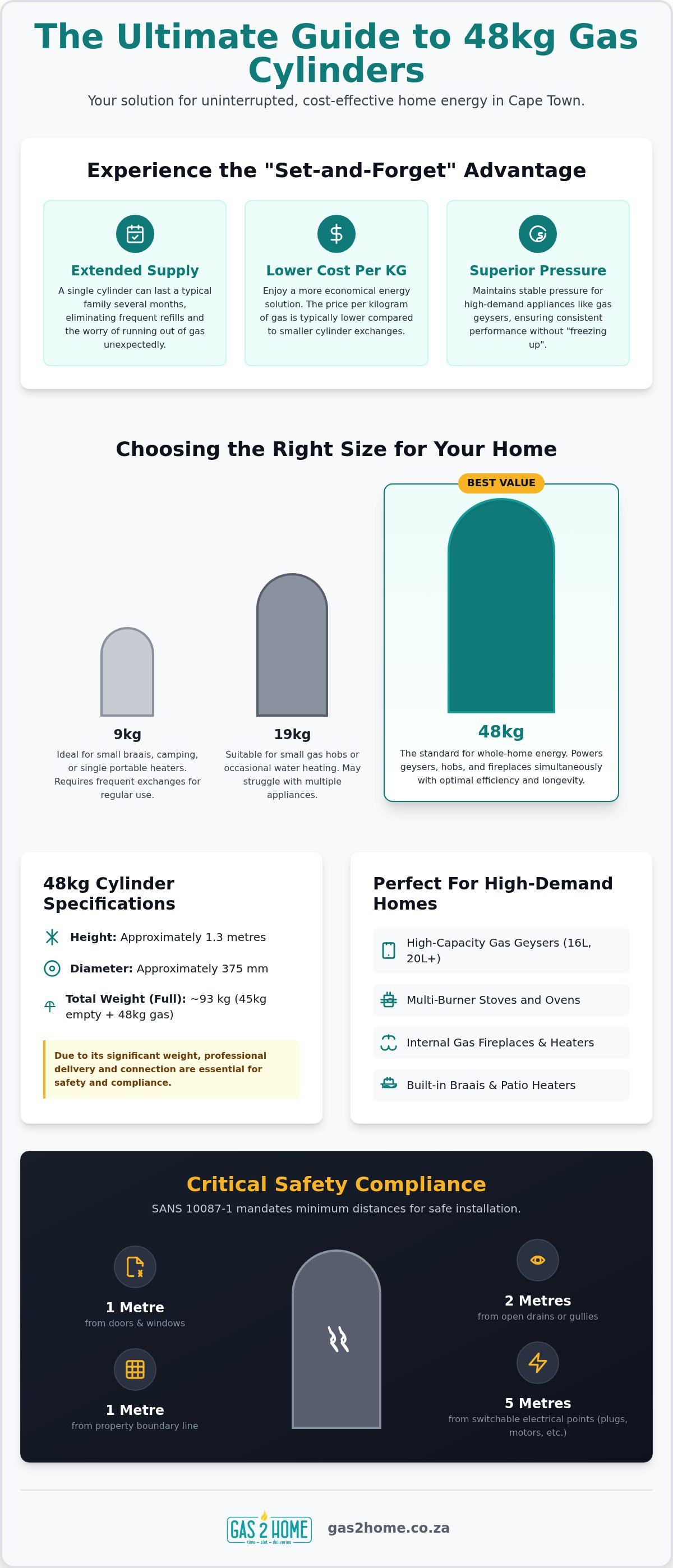
Choosing a larger cylinder is often a matter of long-term efficiency. Whilst 9kg or 19kg bottles are excellent for portable heaters or small braais, they often fall short for full-home systems. One of the primary benefits is cost-efficiency; the price per kilogram of gas is typically lower when you exchange a 48kg unit compared to smaller alternatives. This makes it a much more economical choice for families looking to manage their monthly utility budgets.
Longevity and performance also set this size apart. A typical family of four using gas for both cooking and water heating can often expect a single 48kg bottle to last several months. Additionally, these larger cylinders offer superior pressure stability. When you run multiple appliances simultaneously, the larger volume inside the tank prevents the gas from "freezing up" or losing pressure. This ensures your geyser stays hot even while your stove is at full blast.
Physical Specifications You Need to Know
Before you commit to an installation, you must understand the physical footprint required for these units. A 48kg cylinder is a substantial piece of equipment that requires a stable, level surface. It is not a portable item that you can easily move on your own. Consider these specifications for your planning:
- Total Height: Approximately 1.3 metres
- Diameter: Roughly 375mm to 380mm
- Footprint: Requires a firm, non-combustible base
An empty 48kg cylinder weighs roughly 45kg on its own, whilst a full 48kg cylinder reaches a total weight of approximately 93kg. This significant weight is why professional delivery is essential. Attempting to transport or connect a 93kg bottle without the right equipment can lead to physical injury or damage to your property. Expert handlers ensure the bottle is positioned correctly and connected securely to your home's gas line, keeping your family safe and your system compliant.
The Best Residential Applications for 48kg LPG in Cape Town
A 48kg gas cylinder for home use Cape Town households typically choose is designed to handle multiple high-demand tasks at once. Smaller bottles often struggle to maintain the necessary flow rate for modern domestic systems. In a busy Cape Town kitchen, a large cylinder easily powers multi-burner gas hobs and ovens, providing the consistent heat needed for complex meals. It removes the worry of a flame flickering out just as you are finishing a Sunday roast.
Beyond the kitchen, these units are the standard for whole-home comfort. They provide a steady fuel source for internal gas fireplaces and wall heaters, which are far more efficient than electrical alternatives during a cold Atlantic front. If you enjoy outdoor living, these cylinders also supply built-in braais and patio heaters, ensuring your entertainment areas remain warm and functional throughout the year. For a seamless experience, ordering your 48kg refill through a professional service ensures your home energy supply is never interrupted.
Gas Geysers: The 48kg Cylinder’s Primary Role
The most common reason for upgrading to a larger capacity is the installation of a gas water heater. High-flow geysers, such as 16L or 20L units, require a significant volume of gas to heat water instantly. When using a 9kg bottle, the rapid extraction of gas can cause the cylinder to "freeze up," leading to a sudden drop in pressure and a cold shower. A 48kg cylinder has a larger surface area, allowing for better vaporisation and consistent performance, even in freezing winter temperatures.
All installations must adhere to South African Gas Regulations to ensure the system handles this high energy demand safely. Proper sizing of your supply is just as critical as the appliance itself. For more details on optimising your setup, read our guide on LPG Gas Cape Town: The Complete Guide to Home Heating in 2026.
Dual-Cylinder Systems for Uninterrupted Supply
Many homeowners choose to install a dual-cylinder manifold system. This setup connects two 48kg bottles to your home via a manual or automatic change-over valve. When the first bottle runs dry, the system switches to the second, giving you ample time to book a replacement without losing hot water. It is a simple, effective way to manage your domestic energy without the stress of monitoring levels daily.
You can check your remaining gas by pouring warm water down the side of the cylinder; a condensation line will form at the gas level. If you notice your first bottle is empty, simply flip the valve and contact your local supplier. Organising your backup supply this way ensures you never have to deal with the physical challenge of an unexpected outage.
Safety Regulations and Placement for 48kg Cylinders
Installing a 48kg gas cylinder for home use Cape Town residents must ensure follows strict national safety standards. These regulations aren't just suggestions; they are legal requirements defined by SANS 10087-1:2024. Because these cylinders hold a significant volume of fuel, their placement is critical to preventing domestic accidents. Proper planning ensures your system operates reliably whilst keeping your family and property protected from potential leaks or ignition risks.
One of the most important rules is that 48kg cylinders must always be stored outdoors. Unlike smaller 9kg bottles sometimes found in kitchens, these large units require constant ventilation. LPG is heavier than air, meaning any leaked gas will sink and pool at the lowest point. Storing them outside allows any escaped gas to dissipate safely into the atmosphere rather than collecting inside your home. Additionally, you must provide a solid, level base made of non-combustible material, such as concrete or paving. A full cylinder weighs nearly 100kg, and any tilting could strain your high-pressure hoses or copper piping.
Legal Placement Checklist for Homeowners
When selecting a spot for your installation, you need to measure distances carefully. A registered installer will verify these gaps before signing off on your system. Use this checklist to evaluate your intended site:
- Doors and Windows: Keep cylinders at least 1 metre away from any openings into the house.
- Drains and Vents: Maintain a minimum 2-metre distance from open drains, manholes, or air vents to prevent gas from pooling in low-lying areas.
- Electrical Points: Ensure a 5-metre gap from electrical switches, DB boards, plug points, or air conditioning units.
- Property Boundaries: Cylinders must be at least 1 metre away from your property's boundary wall.
The Role of the Gas Compliance Certificate (COC)
A Certificate of Compliance (COC) is a vital legal document that proves your installation meets South African National Standards. You cannot issue this yourself. Only a registered SAQCC Gas practitioner is authorised to inspect your setup and provide this certificate. If you ever need to claim from your home insurance due to a fire or explosion, the first thing your provider will ask for is a valid COC. Without it, they can legally repudiate your claim, leaving you with the full cost of repairs.
During a 48kg setup, an expert looks for more than just distances. They check for the correct use of pigtails, regulators, and shut-off valves. Following professional LPGas safety tips is the best way to maintain your system between inspections. If you notice a faint smell of gas or see rust on your fittings, it's time for a check-up. Knowing the signs of a bad gas connection can help you spot and fix safety risks before they become dangerous. Always prioritise professional oversight to ensure your high-capacity gas system remains a safe asset for your home.
Ordering and Exchange: How to Get Your 48kg Cylinder in Cape Town
Securing a 48kg gas cylinder for home use Cape Town families require shouldn't be a logistical burden. Because a full cylinder weighs approximately 93kg, collecting one yourself in a standard car is often impossible. Most domestic vehicles aren't built to carry such heavy, upright loads safely. This is why professional delivery is the standard for households using high-capacity gas. It saves you the physical strain and ensures the cylinder arrives in perfect condition without damaging your vehicle's interior.
The exchange process is simple and efficient. When your current bottle runs dry, you swap it for a full one and only pay for the gas refill. If you don't have an empty bottle to trade, you'll simply pay a once-off cylinder deposit to get started. We accept most major South African LPG brands for exchange, so you aren't locked into a single manufacturer. Once you have your initial cylinder, the ongoing exchange process is frictionless and cost-effective, allowing you to maintain a steady energy supply year-round.
Gas2Home Same-Day Delivery Service
We've designed our delivery system around your busy life. We offer dedicated morning and afternoon time slots to ensure you aren't waiting around all day. Our team provides comprehensive coverage across the peninsula, from the bustling CBD and Sea Point to the leafy Southern Suburbs. We understand that running out of gas is an emergency, so we prioritise speed and reliability in every drop-off. You can check our full service map and coverage details at Reliable Gas Delivery Seapoint, Camps Bay, CBD, Southern suburbs, Milnerton.
The WhatsApp Ordering Advantage
Ordering a 48kg gas cylinder for home use Cape Town households need is now as simple as sending a text. Our WhatsApp system removes the need for complex forms or long phone calls. Just follow these steps:
- Save our number and send a "Hello" to start the process.
- Select the 48kg cylinder size from our digital menu.
- Share your location pin directly through the app so our drivers find you without a hitch.
- Confirm your preferred delivery slot and pay on arrival for maximum trust.
This mobile-first approach ensures accuracy and speed. For a deeper look at how to streamline your energy refills, read our How to Order Gas Online in Cape Town: A Complete 2026 Guide. Ready to get started? Book your 48kg gas delivery today and let us handle the heavy lifting for you.
Professional Connection: Why Expert Handling Matters
Handling a 48kg gas cylinder for home use Cape Town residents rely on requires more than just physical strength. When full, these units weigh over 90kg. Attempting to move or connect one without the proper training and equipment is a significant safety risk. DIY installation is never a recommended option for large-scale gas refills. Professional handling ensures the cylinder is moved safely into position without damaging your property or straining your back.
Expert connection goes beyond just tightening a valve. Our delivery team performs a thorough inspection of your entire manifold system during every exchange. We use a professional leak detection process, often involving a specialised soapy water test, to ensure no gas escapes from the connection points. This immediate verification provides peace of mind that your home remains safe the moment we leave. We also check your regulator to ensure it's delivering the correct pressure to your high-flow geysers and appliances.
The Gas2Home Connection Guarantee
We believe our job isn't finished until your gas is flowing safely. Unlike services that merely drop a bottle at your gate, we include a professional connection service with every delivery. Our technicians inspect the condition of your orange pigtail hoses and rubber seals. These components can perish over time due to heat and friction. If we spot a worn seal, we replace it on the spot to prevent future leaks.
Once the new cylinder is connected, we verify the system's performance. We look for a consistent blue flame on your stove and check that your geyser ignites promptly. A yellow or flickering flame can indicate a pressure issue or a dirty burner. By checking these details during the exchange, we ensure your home energy system operates at peak efficiency from day one.
Maintaining high standards of efficiency and safety is essential for any gas-powered system. For those looking for expert services in South West Scotland, you can explore Boiler Installation with Gas2Heat.com Ltd to ensure your property is heated effectively and safely.
Safe Storage and Cage Requirements
Because of their size and value, 48kg cylinders often require additional protection. A lockable gas cage is an excellent investment for Cape Town homeowners. These cages provide several benefits:
- Security: They prevent unauthorised tampering or theft of your cylinders.
- Stability: Cages provide a fixed structure to keep the heavy bottles upright at all times.
- Protection: They shield your equipment from the harsh Cape Town elements, including intense sun and corrosive salt air.
Always remember the golden rule of gas safety: keep your cylinders upright. Storing or transporting a 48kg bottle on its side can lead to liquid LPG entering the regulator, which is extremely dangerous. By choosing a professional delivery and connection service, you ensure your high-capacity gas system is handled with the quiet expertise it deserves. Let our team manage the logistics whilst you enjoy the benefits of a warm, efficient home.
Upgrade Your Home Energy Today
Switching to a larger energy source is the best way to ensure your household runs without interruption. You've seen how these high-capacity units provide consistent pressure for geysers and cooking whilst reducing the frequency of refills. By following the SANS 10087-1 safety standards and ensuring professional placement, you create a secure and reliable energy hub for your property.
Choosing a 48kg gas cylinder for home use Cape Town residents trust means you no longer have to worry about the heavy lifting or technical setup. We handle the entire process for you. Our service includes same-day delivery in scheduled time slots, a professional connection with every drop-off, and a convenient pay-on-delivery system for your peace of mind. If you are managing a larger move, coordinating with specialists like Relopet for pet transport can further simplify your relocation process.
Ready to simplify your domestic utilities? Order your 48kg gas cylinder for home delivery in Cape Town today and enjoy a warmer, more efficient home immediately.
Frequently Asked Questions
Can I use a 48kg gas cylinder inside my house in Cape Town?
No, you cannot store or use a cylinder of this size indoors. South African safety standards, specifically SANS 10087-1, mandate that all 48kg cylinders must be installed outside in a well-ventilated area. Because LPG is heavier than air, any leak inside a building could lead to gas pooling at floor level, creating a dangerous situation. Outdoor placement ensures that any escaped gas dissipates safely into the atmosphere.
How long does a 48kg gas cylinder last for a typical family?
A 48kg cylinder typically lasts between three to five months for a family of four using it for daily cooking and water heating. The exact lifespan depends on the energy rating of your gas geyser and your household's hot water consumption. This large capacity is ideal for those who want a reliable energy source without the hassle of monthly refills or the risk of running out mid-shower.
Do I need a special regulator for a 48kg gas bottle?
Yes, you require a regulator specifically designed for high-capacity flow or a manifold system. High-draw appliances like 16L or 20L gas geysers need a consistent volume of gas that standard 9kg regulators often cannot provide. A professional installer will verify that your regulator and pigtail pipes are correctly rated for your specific home appliances to ensure peak performance and safety.
What brands of 48kg gas cylinders can I exchange?
Most major South African LPG brands are accepted for exchange in Cape Town. We accept all reputable national brands, provided the cylinder is in a safe, reusable condition. During the exchange, our team inspects the bottle for excessive rust or structural damage. If your cylinder is in good health, we will swap it for a full unit regardless of the original brand name.
Is it cheaper to use one 48kg cylinder or several 9kg bottles?
It is significantly more cost-effective to use a single 48kg cylinder. The cost per kilogram of gas is typically lower for larger refills compared to smaller units. By choosing a 48kg gas cylinder for home use Cape Town residents also save on long-term logistics, as you pay for fewer deliveries and spend less time managing your fuel supply.
What should I do if I smell gas near my 48kg installation?
Extinguish all open flames and close the cylinder's main valve immediately if it is safe to do so. Do not flip any electrical switches or use a mobile phone in the immediate vicinity of the leak. Move away from the installation and contact a registered gas practitioner to inspect your connections. Professional leak detection is the only way to ensure your system is safe to use again.
Does Gas2Home deliver 48kg cylinders to the Southern Suburbs?
Yes, we provide full delivery and connection services across the Southern Suburbs, including areas like Constantia, Rondebosch, and Tokai. We understand the local geography and offer scheduled time slots to fit your daily routine. Our team ensures that every 48kg gas cylinder for home use Cape Town delivery includes a safety check and professional connection as standard.
Can I buy a 48kg cylinder if I don’t have an empty one to swap?
You can definitely start from scratch by paying a once-off cylinder deposit. This deposit covers the cost of the steel bottle itself, which then becomes part of the exchange pool. Once you have paid the initial deposit and for your first gas refill, all future orders will only require you to pay for the gas when you swap your empty bottle for a full one.