
Who Can Issue a Gas COC in Cape Town? 2026 Guide

A connected cylinder isn’t the same thing as a certified gas installation. When arranging 48kg gas cylinder delivery Cape Town households and businesses may need, remember that a cylinder exchange or connection doesn’t automatically include a Gas Certificate of Conformity (COC). This distinction matters when you’re checking a property’s paperwork or have made changes to its gas system.
In South Africa, a gas COC must be issued by a gas practitioner registered with the South African Qualification & Certification Committee (SAQCC Gas), and the work must fall within the practitioner’s authorised scope. You can check a practitioner’s registration through the SAQCC Gas website.
This 2026 guide explains what a gas COC covers, when one may be needed and how to check a practitioner’s registration. It also clarifies the difference between certification and cylinder delivery or connection, so you can decide on a sensible next step for your Cape Town home or business.
Key Takeaways
- A Gas COC relates to the gas installation. A cylinder exchange or connection service doesn’t certify the installation.
- Check that the practitioner is registered with SAQCC Gas and authorised for the work being assessed.
- New installations, changes to an existing system and property transactions may call for COC checks. The circumstances matter.
- If paperwork is missing, gather the records you have and arrange for a suitably registered practitioner to assess the installation.
- For 48kg gas cylinder delivery Cape Town customers can keep supply arrangements separate from installation certification.
Who can issue a gas COC in Cape Town, and what does it prove?
A gas Certificate of Conformity (COC) may be issued by a gas practitioner registered with the South African Qualification & Certification Committee for Gas (SAQCC Gas), provided the work falls within the practitioner’s authorised scope. The certificate records the outcome of an assessment of a gas installation. It isn’t a general approval of every gas-related item at a property, nor does a cylinder become certified simply because it has been delivered or connected.
South Africa’s Occupational Health and Safety Act 85 of 1993 and Pressure Equipment Regulations govern gas installations. For LPG installations, SANS 10087-1 sets relevant technical requirements, and an SAQCC Gas-registered practitioner is authorised to issue a COC within their registered scope.
What does a gas Certificate of Conformity cover?
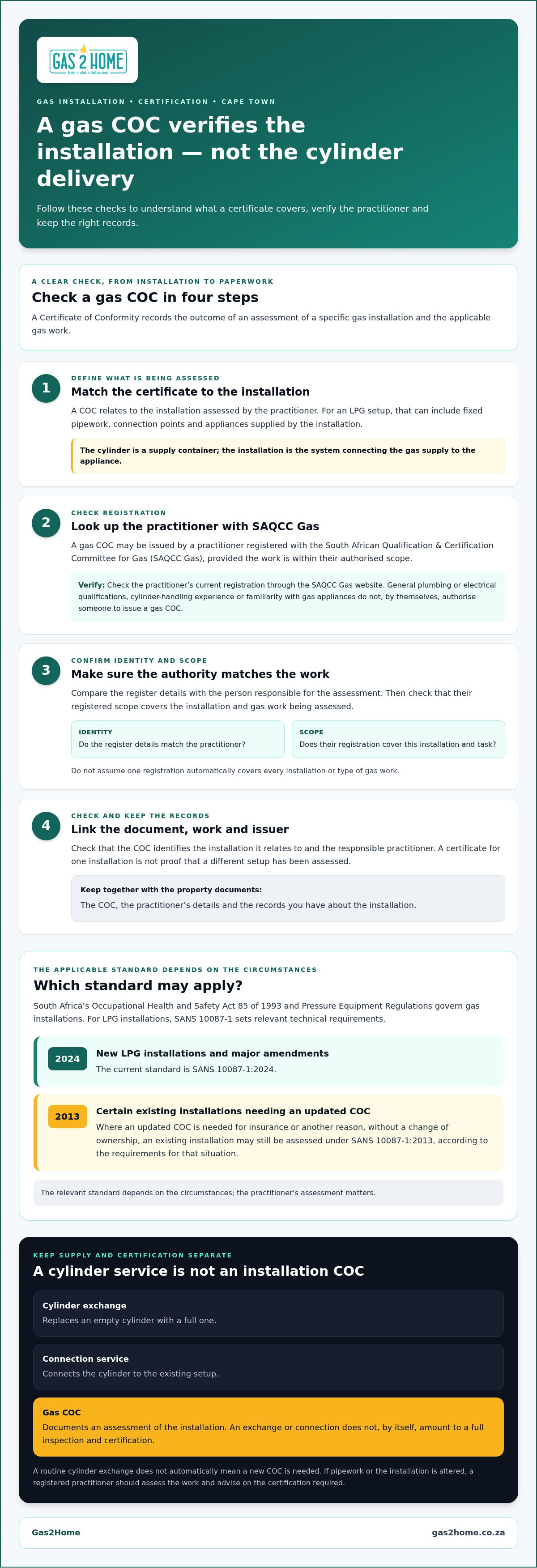
A COC relates to the gas installation assessed by the practitioner and the applicable gas work. For an LPG setup, this can include fixed pipework, connection points and appliances supplied by the installation. The practitioner assesses the relevant components against applicable requirements, rather than simply confirming that gas can flow.
The cylinder is different: it is a supply container, while the installation is the system that connects the gas supply to the appliance. A cylinder may be part of the setup being inspected, but the COC should identify the installation it relates to and the responsible practitioner. Check that the document, the work and its issuer correspond. A certificate for one installation isn’t proof that a different setup has been assessed.
For new LPG installations and major amendments, the current standard is SANS 10087-1:2024. An existing installation that needs an updated COC for insurance or another reason, without a change of ownership, may still be assessed under the previous SANS 10087-1:2013 standard, according to the requirements provided for that situation. The relevant standard depends on the circumstances, so the practitioner’s assessment matters.
Is a gas COC the same as a cylinder connection?
No. An exchange replaces an empty cylinder with a full one. A connection service connects the cylinder to the existing setup. Neither action, by itself, amounts to a full inspection and certification of the installation. Connecting a cylinder during delivery doesn’t establish that all fixed pipework and connected appliances comply.
For example, a Cape Town household may exchange a 48kg cylinder used with an existing gas appliance. That routine supply change doesn’t automatically mean the installation needs a new COC. But if pipework or the installation is altered, a registered practitioner should assess the work and advise on the certification required. When arranging 48kg gas cylinder delivery Cape Town, remember that delivery and connection support gas supply, while a COC documents installation compliance.
Which qualifications should a Cape Town gas practitioner have?
Look for a gas practitioner registered with the South African Qualification & Certification Committee for Gas (SAQCC Gas), with registration covering the work and type of installation being assessed. General plumbing or electrical qualifications, experience handling cylinders, or familiarity with gas appliances don’t, on their own, authorise someone to issue a gas COC.
SAQCC Gas is the relevant South African body for gas practitioner registration and certification. Its SAQCC Gas certified practitioners information can help you verify a practitioner’s registration. Check not only that someone has gas experience, but also that their current registration and scope match the installation and work in question.
What does gas practitioner registration mean?
Registration helps distinguish an authorised gas practitioner from someone whose experience is limited to another trade or to cylinder handling. A plumber may have useful pipework skills, for example, but that alone doesn’t establish authority to assess an LPG installation or issue its COC. Similarly, experience exchanging or connecting cylinders isn’t the same as qualification to inspect fixed gas pipework and connected appliances.
Practitioner categories and authorised scopes relate to the gas work a person is permitted to undertake. Don’t assume that one registration automatically covers every installation or task. For a COC, the practitioner’s authority needs to match the work assessed. This is particularly important if your property has had alterations or includes more than one type of gas equipment.
How can you verify a practitioner’s credentials?
Use the SAQCC Gas website to check the practitioner’s current registration. Compare the register details with the person carrying out the assessment, then confirm that their listed scope is relevant to the installation and work. Keep the practitioner’s details with the COC and other property records so they’re easy to find later.
Use this checklist before relying on a certificate:
- Registration: Is the practitioner listed with SAQCC Gas?
- Identity: Do the register details match the person responsible for the assessment?
- Scope: Does the registered scope cover the gas work and installation being assessed?
- Records: Have you kept the COC and practitioner details with the property documents?
These checks help distinguish installation credentials from general trade experience. They also give you a clear record of who assessed the system and what their registration covered. Keep the credentials check separate from arrangements for 48kg gas cylinder delivery Cape Town. Once your installation documentation is in order, you can arrange 48kg gas cylinder delivery as a separate supply service.
When might a Cape Town gas installation need a COC?
A Certificate of Conformity may be required because of the gas installation or work carried out, not simply because a cylinder has been delivered. South Africa’s Pressure Equipment Regulations require a COC for permanent gas installations. New work, changes to an existing system and a property sale are key situations to consider. The assessment depends on the installation and applicable requirements.
This applies to permanent LPG installations in homes and businesses. Commercial setups may have different equipment or practical requirements from domestic ones, so consider the installation’s design and the work involved. A suitably registered gas practitioner can interpret the requirements for the particular system.
Does a new gas installation or alteration need certification?
A new permanent gas installation needs to be assessed and certified by a registered practitioner. Changes to existing work can also require assessment. Examples include moving an appliance, adding a gas appliance, or altering pipework or the system layout. These examples aren’t a substitute for an installation-specific assessment; the nature and extent of the work matter.
For new installations and major amendments, the relevant LPG standard is SANS 10087-1:2024. If you’re planning work, include the compliance assessment in your project rather than assuming that a previous certificate automatically covers the altered installation. Keep the new documentation with the property records.
A gas system in a business may have different equipment or a more involved layout than one in a home. The same basic point applies: consider a permanent installation and any changes to it in light of the applicable rules and the work performed. The practitioner’s scope must match the installation being assessed.
Does exchanging a cylinder require a new COC?
A routine exchange of an empty cylinder for a replacement is different from changing the fixed installation. Replacing a cylinder of the same size, without altering the connected system, doesn’t automatically mean a new COC is needed. Cylinder size alone doesn’t determine whether an installation needs certification.
For example, a household using a 48kg cylinder may arrange an exchange while leaving the existing pipework and appliance setup unchanged. If the cylinder position, pipework, appliance or system arrangement changes, a registered gas practitioner should assess the installation. A delivery connection is a supply service, not an installation compliance inspection.
How to check a gas COC and prepare for an inspection
A quick document check can help you spot missing records or a mismatch before an inspection. Find the existing COC, compare it with the installation in place and note any changes since it was issued. The aim isn’t to approve the system yourself. A registered gas practitioner must assess compliance and advise on any follow-up work.
What details should you review on the certificate?
Check who issued the COC, the practitioner’s registration details, the issue date and the installation description. These details help you understand who assessed the system and what the document relates to. Don’t assume a certificate for one appliance or setup covers later work or a different installation at the property.
Compare the description with the gas appliances, pipework and cylinder arrangement currently in place. If the certificate is digital, keep an accessible copy. Store it with property maintenance records, previous certificates and relevant work documents.
Use this sequence to organise your records:
- Locate any current or previous COCs and installation paperwork.
- Check the issuer’s details and the date shown on the certificate.
- Compare the installation described with the appliances and pipework currently present.
- Write down any changes, missing records or questions for the practitioner.
What should you prepare before an inspection?
Gather previous certificates, installation records and details of alterations, such as a moved appliance or changed pipework. Clear reasonable access to the appliances, visible pipework and cylinder area so the practitioner can assess the relevant parts of the installation. Don’t adjust fittings or attempt repairs yourself.
Make a note of concerns you’ve noticed, such as damage, unusual smells or a connection that appears loose. If you suspect a gas leak, treat it as urgent: avoid flames and electrical switches, move people away from the area and follow appropriate emergency guidance. For non-urgent questions about visible connection issues, use a guide to signs of a bad gas connection as a prompt for what to report, not as a substitute for an inspection.
Keep the practitioner’s findings and any recommended follow-up actions with your property records. If work is required, ask for the outcome and updated documentation to be recorded once the assessment or work is complete. This creates a clearer history for future maintenance or a handover.
Once your paperwork is organised, keep cylinder supply separate from certification. A connection during delivery doesn’t replace an installation inspection. If you need to replenish your supply, arrange 48kg gas cylinder delivery as a separate step.
Next Steps for a Gas COC in Cape Town
Start by identifying what needs attention: missing paperwork, planned changes to the gas system, or a property handover. Keep certification and gas supply as separate tasks. A gas COC must come from a suitably registered gas practitioner whose scope covers the installation and work being assessed. Gas2Home delivers LPG cylinders and provides a professional cylinder connection service on delivery.
What should you do if a COC is missing?
Don’t rely on a cylinder exchange or connection as evidence that an installation has been inspected. Gather what you know about the setup, then arrange an assessment with a registered gas practitioner. These steps will help you move forward:
- Collect the records. Look for previous COCs, installation paperwork and maintenance documents. Note any known changes to pipework, appliances or the system layout.
- Arrange the right assessment. Use a practitioner registered with SAQCC Gas whose authorised scope is relevant to your installation. Share the available records and explain what has changed, if anything.
- Follow the assessment outcome. Keep a record of any recommended work and arrange the necessary follow-up with the practitioner.
- File the updated documents. Save the resulting COC and related paperwork with the property’s maintenance records, where they can be found for future work or a handover.
If alterations are planned, organise the compliance assessment around the work rather than assuming an older certificate covers a changed system. If you’re preparing for a sale or transfer, gather the available documents early and have a registered practitioner assess the installation and its paperwork. They can explain what action is needed for the specific setup.
Missing paperwork doesn’t tell you on its own whether an installation is compliant. An assessment provides a clearer answer. Make the process easier by sharing the property details, records and known changes with the practitioner, and keeping the resulting advice and documents together.
How does cylinder delivery fit into the process?
Cylinder delivery and exchange address LPG supply. They don’t certify fixed pipework, appliances or the wider installation. A cylinder can be connected during delivery, but that service doesn’t replace an inspection or include a COC. Keep those responsibilities clear, particularly if delivery is happening around planned installation work.
Once your certification question is being handled by a suitably registered practitioner, arrange supply separately. For 48kg gas cylinder delivery Cape Town customers, Gas2Home offers cylinder delivery and a professional connection service on delivery. Arrange LPG gas delivery in Cape Town when you’re ready to organise your cylinder supply.
Make your next gas task easier to manage
Keep your installation paperwork somewhere easy to find, and add a note whenever gas work is assessed or changed. This simple habit can make future maintenance or a property handover less stressful. Treat cylinder supply as a separate practical task, so you know which arrangements address the installation and which keep your appliances supplied.
For your next supply order, Gas2Home serves residential and commercial customers in Cape Town, with same-day delivery and convenient time slots. A professional cylinder connection service is also available on delivery. If you need 48kg gas cylinder delivery Cape Town, arrange convenient LPG gas delivery in Cape Town.
Keep the paperwork organised and arrange your gas supply when you’re ready. A clear plan makes it easier to manage your property’s gas needs.
Frequently Asked Questions
Can a gas supplier issue a gas COC in Cape Town?
A supplier can issue a COC only through an individual gas practitioner registered with SAQCC Gas and authorised for the installation work being assessed. Supplying or connecting a cylinder doesn’t itself qualify someone to certify an installation. If a supplier presents a certificate, check that it identifies the responsible practitioner and relates to the correct property and gas system. For 48kg gas cylinder delivery Cape Town customers, keep supply arrangements separate from certification.
Does changing a gas cylinder mean I need a new COC?
No, a routine cylinder exchange doesn’t automatically require a new COC if the fixed installation remains unchanged. For example, replacing an empty cylinder with a compatible full one is a supply change, not necessarily an alteration to the system. If the exchange involves changing pipework, the cylinder position or the appliance connection, a registered gas practitioner should assess whether the work needs updated documentation.
Does a gas COC expire in South Africa?
A gas COC is generally valid for five years, provided no alterations are made to the installation. This doesn’t mean every document will meet every later requirement: for a property transfer, the COC must be no older than three months at the time of transfer. Insurers may also set their own inspection conditions, so check your policy and keep the certificate date in your records.
What happens if a property has no gas COC?
A missing COC leaves you without documentation showing that the installation has been assessed as compliant. South African requirements make a valid COC necessary for a permanent gas installation; operating without one can also create legal and insurance difficulties if an incident occurs. Gather any installation records and arrange an assessment with a registered practitioner. They can identify whether remedial work or further documentation is needed.
Can a landlord or seller provide an existing gas COC?
Yes, a landlord or seller can provide an existing certificate if they have it. Before relying on it, compare the property details and installation description with the gas system currently in place, and check the issue date. Ask for records of changes made since it was issued. For a sale, remember that the COC must be no older than three months at transfer.
Is a gas COC the same as a gas leak test?
No. A leak test checks for gas escaping from a particular connection or part of a system; a COC documents an assessment of the relevant installation against applicable requirements. A leak test alone doesn’t establish that the entire installation has been inspected or certified. If you smell gas or suspect a leak, treat it as urgent and follow appropriate safety guidance rather than relying on paperwork.
Can I issue my own gas COC after connecting an appliance?
No. Connecting an appliance yourself doesn’t authorise you to issue a COC. The certificate must be issued by an SAQCC Gas-registered practitioner whose authorised scope covers the work and installation. Keep details of the appliance and connection work, then arrange an assessment by an appropriately registered practitioner. A delivery connection or personal check cannot replace that professional certification.