
Gas for Gas Stove Cape Town: The Homeowner’s 2026 Guide

It’s 6:00 PM on a Tuesday, the power has just cut, and your half-cooked dinner is sitting on a cold hob because your cylinder unexpectedly ran dry. We’ve all felt that sinking feeling of running out of gas for gas stove Cape Town right when the family is hungry. It’s frustrating to juggle unreliable delivery times whilst worrying if your connections are truly safe and compliant.
You deserve a kitchen that runs like clockwork regardless of the load-shedding schedule. This guide provides everything you need to manage your home’s LPG with total confidence. We’ll show you how to choose the perfect cylinder size for your cooking habits and ensure your setup meets the latest safety regulations. Our goal is to remove the domestic stress of energy management so you can focus on enjoying your home.
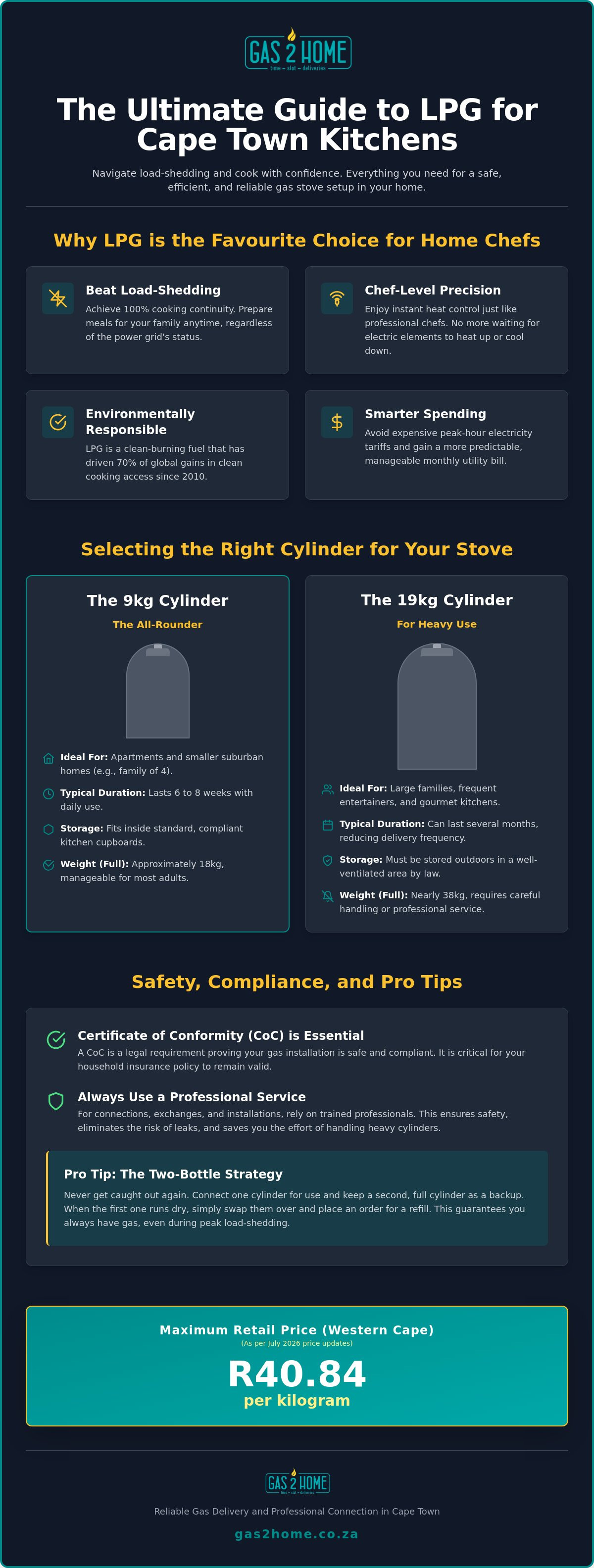
We will walk you through the July 2026 price updates, including the current maximum retail price of R40.84 per kilogram in the Western Cape. From understanding the necessity of a Certificate of Conformity to organising professional connections that protect your insurance, this is your roadmap to a reliable and stress-free Cape Town kitchen.
Key Takeaways
- Learn why switching to LPG is the most efficient way to maintain a functional kitchen whilst avoiding the frustrations of a failing electricity grid.
- Discover how to select the ideal cylinder size when buying gas for gas stove Cape Town, from the standard 9kg to larger 19kg options for heavy use.
- Understand the critical safety standards for gas connections and why a professional setup is essential for your home’s compliance and insurance.
- Master the "Two-Bottle Strategy" to ensure you never run out of fuel during peak load-shedding cycles or high-demand periods.
- Find out how a professional connection service included with your delivery can save you time and eliminate the anxiety of handling gas equipment yourself.
Why LPG is the Favourite Choice for Cape Town Home Chefs
LPG stands for Liquefied Petroleum Gas. It is a clean-burning, portable energy source that has become the backbone of modern Cape Town kitchens. If you are asking What is LPG?, it is a mixture of hydrocarbon gases that provides a high-intensity flame for efficient cooking. Selecting the right gas for gas stove Cape Town allows you to bypass the grid entirely for your meal preparation. This shift isn't just about convenience; it's a strategic move for home energy management.
Professional chefs insist on gas because it provides instant heat control. When you adjust the dial, the flame changes immediately. There is no waiting for an electric element to heat up or a glass plate to cool down. This precision makes it the favourite choice for delicate sauces and high-heat searing alike. Beyond performance, LPG is an environmentally responsible choice. Since 2010, LPG has driven 70% of global gains in clean cooking according to the World Liquid Gas Association. By using gas directly in your hob, you avoid the massive energy losses that occur when electricity is generated from coal and sent across hundreds of kilometres of power lines.
Beating Load-Shedding in the Kitchen
The most compelling reason to choose gas for gas stove Cape Town is energy resilience. The City of Cape Town aims to mitigate up to four stages of load-shedding by the end of 2026. However, even with these improvements, power cuts can still disrupt your evening routine. A gas stove provides 100% cooking continuity. You can prepare meals, boil water, and host dinner parties regardless of the load-shedding schedule. It is also a smart financial decision. Using gas helps you avoid expensive peak-hour electricity tariffs, keeping your monthly utility bills more predictable and manageable.
LPG vs. Natural Gas: What You Need to Know
Many homeowners confuse LPG with natural gas. In Cape Town, residential areas do not have access to a piped natural gas network like those found in parts of Johannesburg. Instead, we use LPG stored in cylinders. This is actually a major benefit for local residents. Cylinders are portable, easy to exchange, and don't require expensive infrastructure changes to your property. LPG is also safe for domestic use when handled correctly. It is stored under pressure as a liquid but turns into a gas the moment you open the valve. It includes a specific odour so that you can quickly detect any leaks, ensuring your family stays safe whilst you cook.
Selecting the Right Cylinder Size for Your Gas Stove
Choosing the correct volume of fuel is as important as the stove itself. For most households seeking gas for gas stove Cape Town, the decision usually comes down to frequency of use and available storage space. You want a bottle that fits your lifestyle without becoming a logistical burden. Selecting the right size ensures you aren't swapping bottles every fortnight whilst also ensuring you don't have a massive cylinder taking up unnecessary space.
The 9kg Cylinder: The All-Rounder
The 9kg LPG Gas Cylinder is the most popular choice for a reason. It is the perfect size for Cape Town apartments and smaller suburban homes. For a family of four using the stove for daily dinners and weekend breakfasts, a 9kg bottle typically lasts between six to eight weeks. It fits comfortably inside most standard kitchen cupboards designed for gas appliances. It also uses a standard regulator connection, making it compatible with almost every domestic hob on the market today. Its compact size makes it easy to tuck away, keeping your kitchen looking tidy and organised.
Larger Solutions for Gourmet Kitchens
If you are a frequent entertainer or have a large family, consider the 14kg or 19kg LPG Gas Cylinder. These larger sizes are ideal for heavy kitchen use because they significantly reduce how often you need to book a delivery. A 19kg cylinder can often power a busy kitchen for several months before needing an exchange. However, these larger bottles cannot be stored inside your kitchen. According to South African gas safety standards, any cylinder larger than 9kg must be stored outdoors in a well-ventilated area. This requires a fixed line installation to bring the gas safely into your home.
Weight is another practical factor to keep in mind. A full 9kg cylinder weighs about 18kg in total, which is manageable for most people to move short distances. A 19kg cylinder, however, weighs nearly 38kg when full. Handling these requires more physical effort and careful posture to avoid injury. This is why many homeowners prefer a service that does the heavy lifting for them. If you aren't sure which size fits your current setup, you can view the available cylinder sizes to find the best match for your specific cooking needs. Choosing the right size today saves you from the frustration of a mid-meal empty bottle tomorrow.
Ensuring Your Gas Stove Connection Meets Safety Standards
Safety is your first priority when managing gas for gas stove Cape Town. Whilst many residents feel confident swapping a cylinder, a professional standard must be maintained to protect your home and insurance policy. All permanent installations require a Certificate of Conformity (CoC) issued by a registered practitioner. This document proves your setup meets the South African National Standards (SANS) 10087-1. Beyond legal requirements, the benefits of cooking with LPG include enhanced safety compared to older energy sources, provided the equipment is maintained correctly.
Never attempt to force a regulator connection. If the threads do not align easily, stop and inspect the valve. Forcing a connection can damage the seal and lead to dangerous leaks. You should also learn to identify the distinct, pungent scent of LPG. This odour is added specifically to help you detect leaks. If you smell gas, turn off the cylinder valve immediately, open all windows, and do not operate any electrical switches. A simple soapy water test on the joints can help you find a leak without using a flame.
The Role of the Regulator and Hose
Your regulator and hose are the most critical components of your gas system. The orange hose has a "best before" date printed directly on its surface. Check this date every six months. If the hose is cracked, brittle, or past its expiry, replace it immediately. The regulator ensures the gas reaches your stove at the correct pressure. If your burners are producing a lazy yellow flame instead of a crisp blue one, your regulator might be failing. Professional replacement of these parts is a quick and affordable way to maintain peak performance.
Indoor vs. Outdoor Cylinder Placement
Cape Town municipal bylaws are strict regarding where you store your fuel. A single 9kg cylinder may be stored indoors, provided the room is well-ventilated and away from heat sources. However, any setup involving larger cylinders or multiple bottles must be located outdoors. Outdoor cylinders should be placed on a solid, level base and protected from the Cape Town wind and rain. Ensure they are at least one metre away from any doors, windows, or drains to prevent gas from pooling in low areas. Proper placement is a simple step that ensures your kitchen remains a safe space for your family.
Managing Your Gas Supply During Load-Shedding Cycles
When the City of Cape Town announces higher stages of load-shedding, the demand for LPG surges immediately. Thousands of households simultaneously shift their meal preparation to gas hobs, which can put immense pressure on local delivery networks. If you wait until your flame flickers out to search for gas for gas stove Cape Town, you may find that delivery slots are already fully booked. Managing your supply requires a proactive approach to ensure your kitchen remains functional when the lights go out.
The "Two-Bottle Strategy" is the most effective way to maintain energy resilience. Instead of relying on a single cylinder, keep a second bottle as a dedicated backup. When your primary cylinder runs dry, you simply switch the regulator to the full one. This gives you a generous buffer of several weeks to organise an exchange for the empty bottle without any domestic stress. It eliminates the anxiety of running out of fuel mid-meal and ensures you aren't left stranded during a long weekend or a period of intense power cuts.
Checking your gas level is easy with the warm water method. Pour a jug of warm, not boiling, water down the side of your cylinder. After a few seconds, run your hand down the metal. The cylinder will feel warm at the top where it is empty and noticeably cold where the liquid gas remains. This simple physical check is far more reliable than shaking the bottle or guessing based on weight. Perform this check every Sunday evening so you can plan your week ahead.
Timing Your Orders Effectively
Delivery lead times often increase during peak winter months or during Stage 4 load-shedding and above. Avoid the Friday afternoon rush by placing your orders early in the week. Use WhatsApp for rapid ordering to skip the queues and get your request into the system immediately. This allows you to schedule your exchange around your own load-shedding schedule, ensuring you are home to receive the professional connection service when the team arrives.
Winter Cooking Challenges
Colder temperatures in the Western Cape can affect the pressure inside your cylinder. On a freezing July morning, you might notice your burners seem slightly weaker than usual. This is a natural physical reaction as the LPG struggles to vaporise in the cold. During these months, your gas consumption often increases as you prepare more hot meals or use gas heaters. Staying organised with a regular delivery schedule is the only way to avoid being caught out by a sudden cold snap. To ensure your kitchen is ready for the next power cut, order your 9kg or 19kg gas exchange now and keep your home running smoothly.
Reliable Gas Delivery and Professional Connection in Cape Town
Finding reliable gas for gas stove Cape Town shouldn't be a chore that requires you to haul heavy metal bottles in your car boot. We believe that a utility service should be frictionless. Gas2Home provides a comprehensive solution that covers everything from the initial order to the final flame check. You don't need to worry about the physical strain or the technical setup. We handle the 9kg, 14kg, 19kg, and 48kg LPG Gas Cylinders with ease, ensuring they are placed exactly where you need them. This service is designed for homeowners who value their time and want to avoid the mess of traditional gas refills.
Our Gas Connection Service is included with every exchange. This is where we differ from standard retailers who often treat the connection as an afterthought. Most suppliers simply drop a cylinder at your gate, leaving you to grapple with regulators and wrenches. Our trained team performs a professional connection and a thorough on-site safety check. We verify the seals and ensure there are no leaks before we leave your property. This proactive approach eliminates the domestic stress often associated with fuel management and gives you total peace of mind whilst you cook for your family.
What to Expect During Your Delivery
Expect a service that respects your time and your home. Our friendly drivers arrive in clearly marked vehicles and are ready to assist with the physical installation. They don't just deliver; they help you transition from an empty bottle to a full one without any downtime. Every visit includes a check of your regulator and hose to ensure they are in good working order. You can choose from convenient payment options at your doorstep, making the entire transaction effortless. If you need a rapid response, our WhatsApp ordering system is the fastest way to secure your spot in our same-day delivery schedule. It's a no-nonsense approach to home energy.
Our Service Areas in Cape Town
We maintain a strong local presence to ensure fast turnaround times for all residents. Our fleet covers a wide range of neighbourhoods, from the busy CBD to the quiet streets of the Southern Suburbs and Milnerton. We have a specific focus on providing gas delivery Sunset Beach and surrounding coastal areas. By concentrating on these local logistics, we can guarantee reliable supply chains even during peak load-shedding stages. We understand the unique needs of Cape Town households and strive to be the dependable neighbour you can call on. Organise your next exchange online or via WhatsApp to experience a utility service that actually works for you.
Take Control of Your Kitchen Energy
Managing your kitchen energy doesn't have to be a source of domestic stress. By selecting the right cylinder size and adopting a proactive two-bottle strategy, you ensure that your family never faces a cold meal during power cuts. Remember that safety is paramount; always check your hose dates and rely on professional connections to maintain your home's compliance. Finding reliable gas for gas stove Cape Town is the final step in creating a truly resilient home.
Gas2Home is here to do the heavy lifting for you. We are trusted by Cape Town homeowners because we provide a frictionless experience from order to installation. With same-day delivery slots available and a professional connection included with every exchange, we make sure your setup is safe and efficient. Don't wait for the next load-shedding announcement to secure your supply. Order your gas for delivery and connection today and enjoy the peace of mind that comes with a dependable energy partner. Your kitchen is ready for anything 2026 brings.
Frequently Asked Questions
How long does a 9kg gas bottle last for a gas stove?
A 9kg gas bottle typically lasts between six and eight weeks for a family of four cooking a standard daily dinner. This duration depends on your specific cooking habits and how many burners you use at once. If you frequently use the stove for slow-cooking or boiling large pots of water, you may find the cylinder needs replacing sooner.
Can I keep a gas cylinder inside my kitchen in Cape Town?
You can keep a single 9kg cylinder inside your kitchen as long as the room is well-ventilated and the bottle is kept away from heat sources or electrical sockets. Cape Town municipal bylaws require any cylinder larger than 9kg to be stored outdoors. Following these placement rules is essential for maintaining your home's safety and insurance compliance.
Do you connect the gas bottle to my stove upon delivery?
Yes, our service includes a professional connection every time we deliver a new cylinder to your home. Our team will safely swap your empty bottle for a full one and perform a quick check of your regulator and hose. This ensures your gas for gas stove Cape Town is ready for use immediately without you having to handle any tools.
What is the current 9kg gas bottle exchange price in Cape Town?
The price for a 9kg gas exchange is determined by the maximum retail price set monthly by the Department of Mineral and Petroleum Resources. These rates fluctuate based on global oil prices and local import costs. You can check the latest regulated pricing for the Western Cape on our website or via WhatsApp before you place your order.
Is it better to have a 9kg or a 14kg gas bottle for my stove?
A 9kg bottle is generally better for most domestic kitchens because it is compact and allowed to be stored indoors. A 14kg cylinder is a great option if you have a high-use gourmet kitchen and an outdoor storage area with a fixed gas line. Your choice should depend on your available storage space and how often you want to schedule a delivery.
How do I know if my gas cylinder is empty?
The most accurate way to check your gas level is the warm water method. Pour a jug of warm water down the side of the cylinder and feel the metal; the area where liquid gas remains will feel cold to the touch. You might also notice the flame on your stove burners becoming smaller or turning yellow when the fuel is nearly finished.
What should I do if I smell gas near my stove?
Turn off the cylinder valve immediately and open all your windows to clear the air. Do not turn any lights on or off and avoid using any electrical appliances that could create a spark. Once the room is ventilated, you can check for leaks using soapy water on the connections or contact a professional to inspect your setup for peace of mind.
Do you deliver gas on Saturdays in Cape Town?
Delivery schedules can change based on local demand and the current load-shedding stage. Whilst we provide same-day delivery slots during the working week, it is best to check our current weekend availability via our WhatsApp ordering line. This allows you to plan your exchanges effectively and ensures you never run out of gas during a busy weekend.